
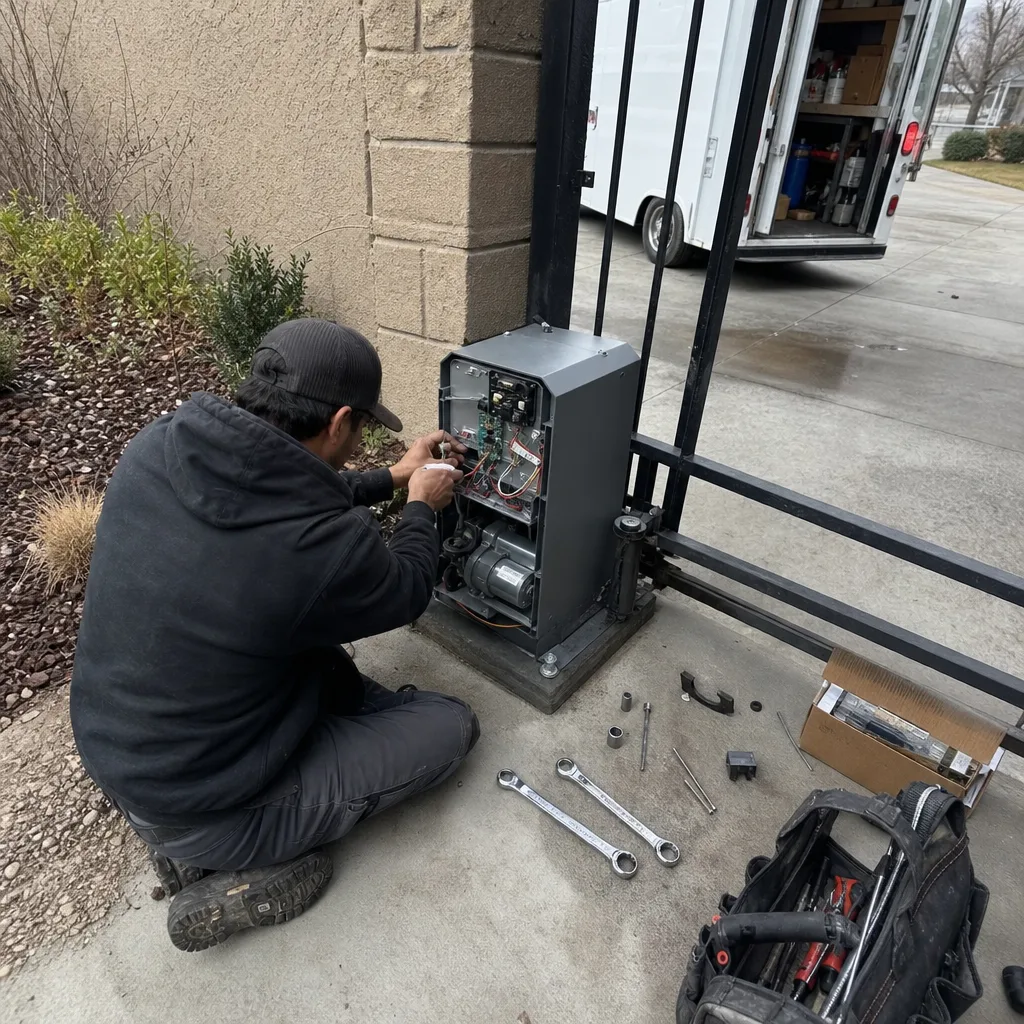
Last updated November 15, 2026
 Wrought iron
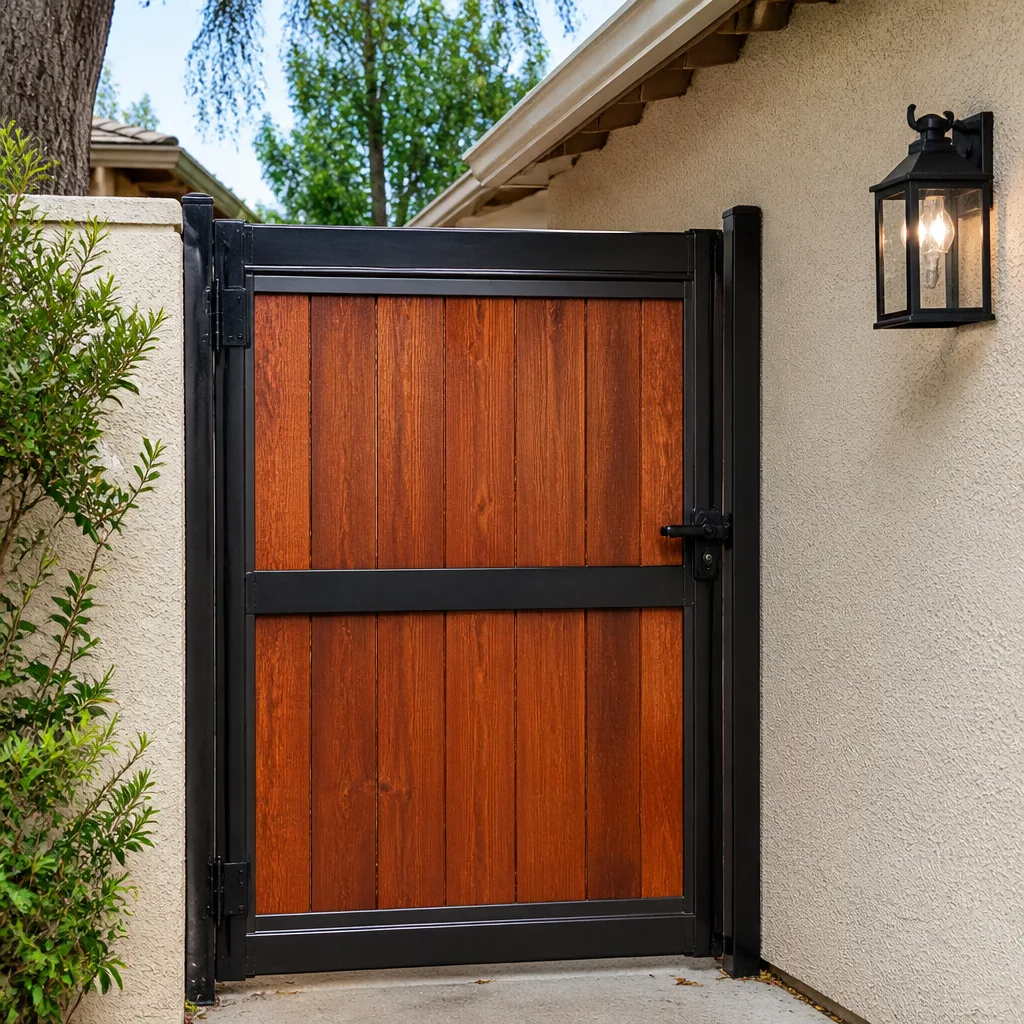 Wood & steel frame
 Farm & ranch
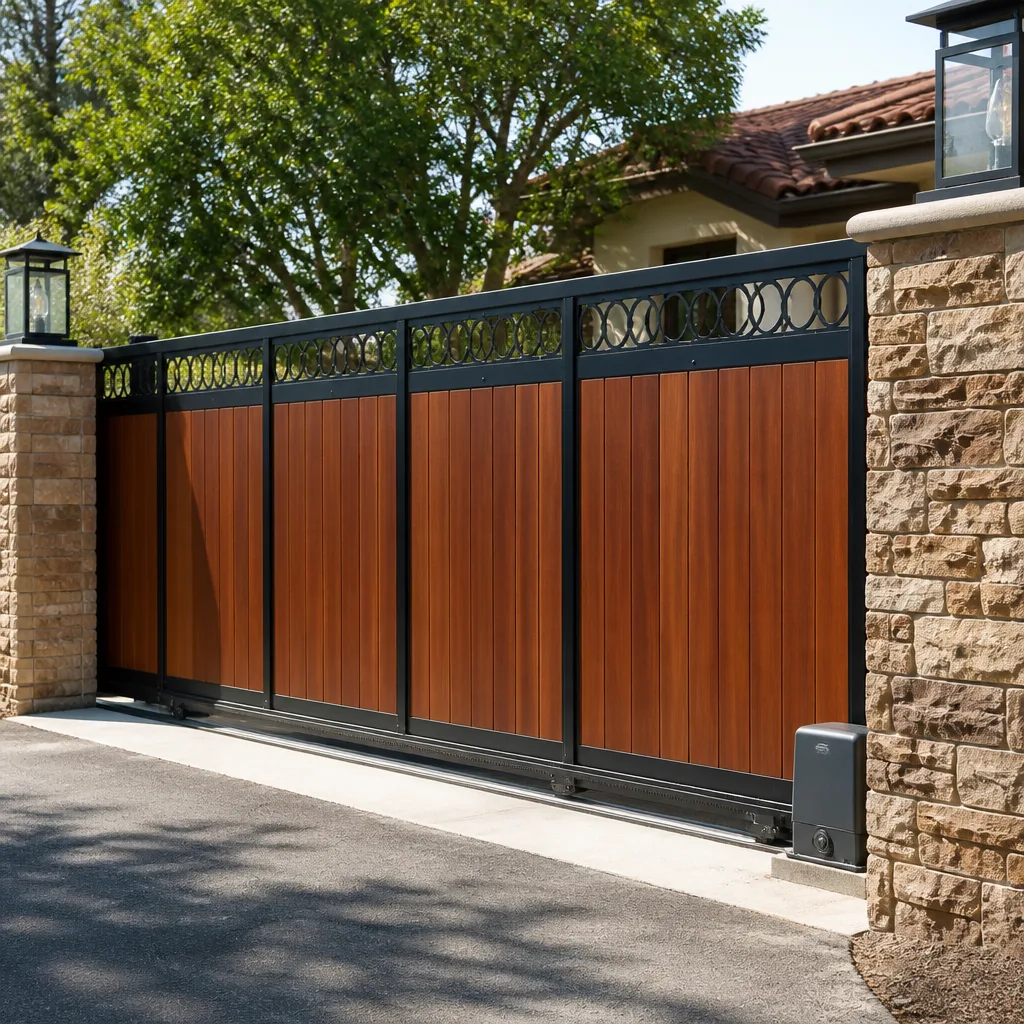 Sliding driveway gates
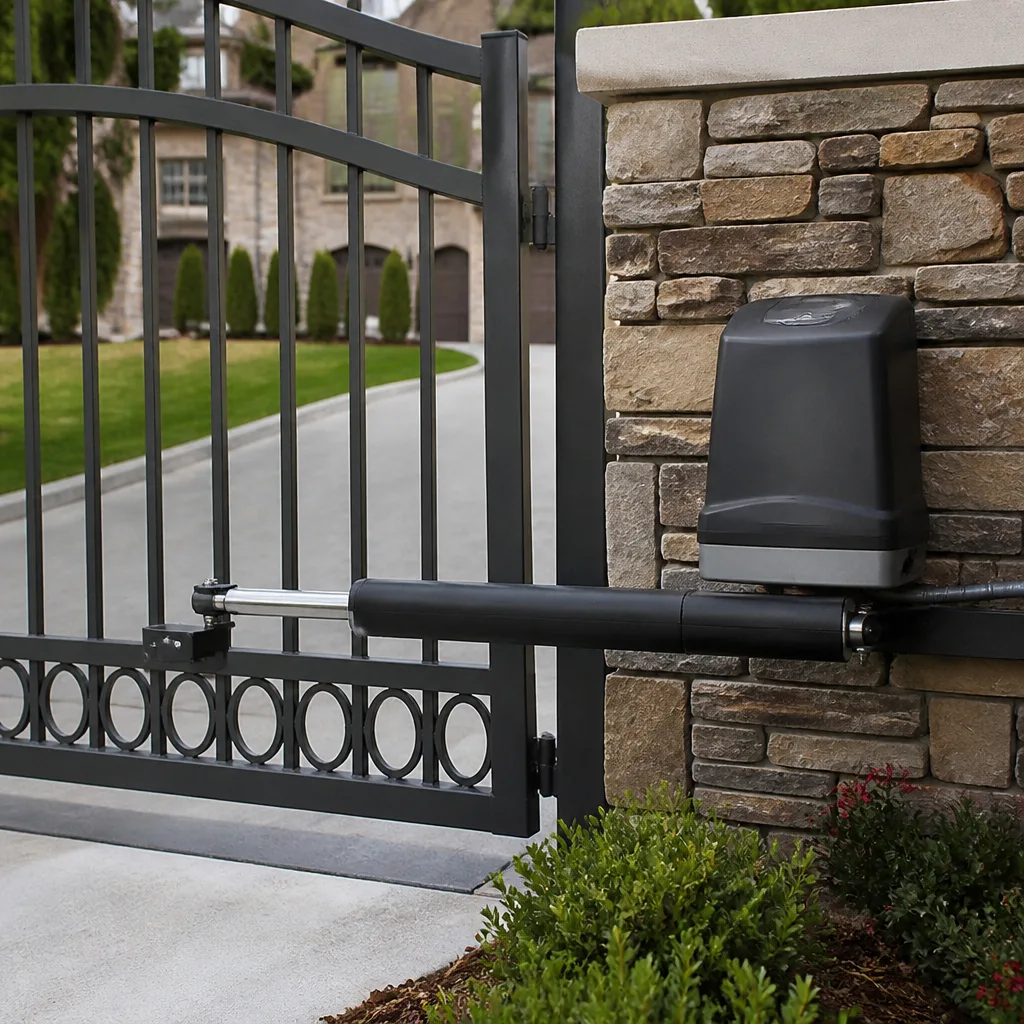 LiftMaster operators
Free on-site gate assessment - hinges, posts, and your LiftMaster or Nice gate operator checked before anything is quoted
The assessment is free and the quote is the invoice.
Get your free estimateGate Repair Warning Signs: A Thornton Homeowner’s Reference Guide
A gate that hesitates for half a second before it moves isn’t “just getting old.” That pause is a symptom, and it points to one of three diagnosable problems: a control board that’s slow to send its signal, a binding hinge or roller that’s fighting the operator, or a safety sensor that’s misreading and stalling the cycle. Caught early, each of these is a repair in the low hundreds. Left alone, they turn into motor replacements and bent gate frames. This guide is written from our gate-only work around Thornton, and it covers the early signals most homeowners miss, how to tell a hinge problem from a post problem, and which warnings need a call today versus a calendar note.
Quick Answer
The earliest warning signs of gate trouble in Thornton are a half-second hesitation before movement, a change in the gate’s sound (a whine, a grind, or a click with no movement), a gate that sags at one corner, intermittent operation that comes and goes with temperature, and safety sensors that trip without an obstacle. The subtle symptoms matter more than the obvious ones, because a gate that’s stopped working entirely has already failed. Catch the small signals and you’re looking at an adjustment or a component swap; ignore them and you’re pricing a motor or a full frame repair.
Styles & brands we work with
- Wrought iron
- Wood & steel frame
- Farm & ranch
- Sliding driveway gates
- LiftMaster operators
Table of Contents
- The Half-Second Hesitation: What It Actually Means
- Intermittent Gate Operation: The Symptom Everyone Misreads
- Hinge Warning Signs vs. Post Warning Signs
- The Sound Profile of a Failing Motor vs. a Binding Gate
- Safety-Critical Signs vs. Signs You Can Monitor
- How to Document Warning Signs Before You Call
- Why Thornton Gates Show These Signs at Certain Times of Year
- Common Mistakes to Avoid
The Half-Second Hesitation: What It Actually Means
When you press the remote or tap the keypad and the gate pauses before it swings, that delay is information. In an electric gate system, three things happen in sequence: the control board receives the signal, the operator motor engages, and the gate leaf physically moves. A pause means one of those three is running slow. Here’s how to narrow it down before anyone touches a screwdriver.
- Board delay: If the pause is consistent and identical every time, and the gate eventually moves smoothly, the control board or the receiver is slow to process the command. This is common on older DoorKing and Linear control boards that have accumulated moisture and dust on the terminal connections.
- Mechanical drag: If the pause is longer in cold weather and shorter when it’s warm, the operator is fine but it’s pushing against resistance from a hinge, roller, or track. The pause gets longer as the drag increases.
- Sensor hesitation: If the gate starts, stops, reverses, and then starts again, the safety sensors are reading something in the path. It could be a leaf, a shadow, or a sensor that’s misaligned by a quarter inch.
We’ve seen a lot of hesitation calls that turn out to be one of these three, and we’ve also seen plenty that the homeowner let run for months until the motor burned out pushing through drag. That’s the expensive version of the same problem. An honest gate repair diagnosis starts with figuring out which of the three you’re dealing with, because the fix is completely different in each case. A board issue is a component-level repair; a drag issue is an adjustment; a sensor issue is a realignment. None of them should require replacing the operator if caught at the hesitation stage.
Intermittent Gate Operation: The Symptom Everyone Misreads
Intermittent operation is the most misdiagnosed electric gate symptom, and “electrical issues” is not an answer. When a gate works in the morning and fails in the afternoon, then works again the next morning, the system is telling you something specific. Intermittent behavior almost always falls into one of these categories:
- Temperature-sensitive connections: Loose terminal screws and aging wire connections expand and contract as the day warms and cools. A gate that works at 7am and fails at 2pm is often a connection that’s losing contact as the metal expands.
- Capacitor drift: The start capacitor on an AC operator motor loses capacitance as it ages, so the motor doesn’t have enough torque to start under load when conditions are marginal. The gate works when it’s unladen, fails when it’s got a little extra drag, then works again when the drag eases.
- Control board thermal fault: Some boards have a thermal protection circuit that trips when the board gets hot, and resets when it cools. That’s not a failure of the board, it’s a sign of a motor drawing more current than it should, which usually traces back to drag.
- Battery and solar systems: On Ghost Controls and Mighty Mule operators that run on solar or battery backup, intermittent operation in winter is often a charging issue, not a failure. The battery doesn’t hold enough charge to complete a cycle, so the gate stops mid-travel.
In our experience around Thornton, the intermittent calls that get misdiagnosed as “the board is bad” are most often a capacitor on the way out or a loose connection at the terminal strip. Both are inexpensive fixes once you know which one it is. That’s part of why we stick to gates exclusively: an intermittent electric gate failure has a specific diagnostic path, and it rewards technicians who see it constantly. Familiarity with both residential-grade operators like Ghost Controls and commercial-grade operators like BFT and DoorKing means we’ve seen how each one behaves when it starts to go intermittent.
Hinge Warning Signs vs. Post Warning Signs
A sagging gate looks like one problem and is often another. The gate droops at the latch end, and homeowners assume the hinges or the gate itself are the issue. But a sag can come from the hinge side or the post side, and the repairs are completely different.
How to tell it’s the hinge
- The gate drops only at the free end, and the gap between the gate and the post at the hinge is unchanged.
- You can see slop in the hinge itself; wiggle the gate and the hinge moves before the leaf does.
- The hinge pin is visibly worn, or the hinge bracket is bent or cracked.
- The gate swings freely by hand but drops when it reaches the latch side.
How to tell it’s the post
- The whole gate frame has shifted; the gap between the gate and the post at the hinge side is wider at the top than at the bottom, or vice versa.
- The post is leaning, tilted, or noticeably out of plumb.
- The gate binds through the whole swing, not just at one end.
- You can see cracking or movement at the point where the post meets the ground.
Hinge repairs are usually small; post repairs require re-setting the post to proper footing depth and re-hanging the gate, which is a much bigger job. If you’re in Thornton and the gate is sagging, the first diagnostic step is to look at which gap has changed. That single check tells you which repair you’re facing before anyone quotes you. And a post that’s moved isn’t a maintenance item; it’s a structural warning that will get worse, because a leaning post puts load on the operator that it wasn’t designed for.
The Sound Profile of a Failing Motor vs. a Binding Gate
Sounds are the second most useful diagnostic tool after the hesitation pause, and they’re specific. A failing motor and a binding gate sound different, and once you know the difference you can tell which one you’re hearing from the driveway.
- Failing motor (AC operator): A rising whine that climbs in pitch as the gate travels, or a hum with no movement at all. The hum is the motor trying to start and failing because the start winding isn’t getting current. A dying motor also tends to click audibly when the capacitor discharges but the motor doesn’t turn.
- Failing motor (DC or battery operator): A slower, labored cycle overall, with the operator straining through the middle of the travel and speeding up at the ends. A dying DC motor usually loses torque before it loses speed.
- Binding gate: A grinding or scraping sound that’s rhythmic and tied to the gate’s position, not the motor’s speed. If the sound gets louder as the gate passes a specific point in the swing, it’s binding at that point, whether from a hinge, a roller, or the ground.
- Loose hardware: A rattle or knock that happens at the moment the gate starts or stops, not in the middle of travel. That’s slack in the hinge pin, the operator arm, or the gate’s frame connections.
- Chain drive: A clicking sound that tracks with the chain, especially near the sprocket, usually means the chain is loose, dry, or has a stiff link. That’s an adjustment, not a new operator.
Recording the sound on your phone is one of the most useful things you can do before calling. A ten-second audio clip is enough for us to tell the difference between a binding gate and a failing motor with some confidence, and it saves a round trip. The Gate Repair Thornton team uses sound profiles as part of the triage process, and we’ll tell you on the phone which category you’re likely hearing.
Safety-Critical Signs vs. Signs You Can Monitor
Not every warning sign requires an immediate call. Some are urgent because they involve a genuine hazard, and some are safe to monitor over 30 days while you gather information. Getting this distinction right is the difference between a sensible repair schedule and an unnecessary panic.
Same-day attention required
- Safety sensors that don’t reverse the gate: If the gate closes on an obstacle without reversing, the photo-eye or safety edge has failed. That’s a safety-critical fault on a moving gate, and it should not be left running until it’s repaired.
- A gate that swings or slides off its track: A sliding gate that comes off the track can crush a person or a vehicle. A swing gate that drops off its hinges can fall. Stop using the gate and call.
- Visible damage to the power supply or wiring: Frayed wiring at the operator, a damaged conduit run, or scorching at a connection is a stop-now issue. Don’t touch it; call a licensed professional.
- The gate starts moving on its own: A control board failure or a stuck receiver can cause random operation, which is dangerous and needs same-day evaluation.
Can be monitored for 30 days
- Minor hesitation: Measure the delay at the start of the week and again at the end. If it’s growing, book a repair. If it’s stable and small, note it and keep watching.
- Small sag: If the gate still clears the ground and the latch still engages, it’s safe to monitor while you note which side has moved.
- Cosmetic rust or paint wear: Not a safety issue unless it’s affecting the gate’s structure or the operator’s mounting.
- Slow cycle time: A gate that’s getting steadily slower is telling you drag is increasing; it’s safe to schedule rather than emergency.
There’s a lot of gray area here, and the honest answer is that the gate’s behavior in the moment matters more than the sign itself. If a gate is on a slope, over a driveway, or near where kids walk, err on the side of calling. Better weather in Thornton makes it tempting to postpone maintenance, but the safety-critical signs don’t care what the forecast is.
How to Document Warning Signs Before You Call
Documenting the symptoms before you call is the single biggest time-saver in gate repair. We can often triage a large share of the early-stage problems remotely from photos and short video, which means we know which part to bring and which diagnostic to run before we arrive. Here’s a systematic way to capture what matters:
- Film a full cycle. Start recording from the moment you press the remote to the moment the gate stops. Include the open and close in one continuous clip. The timing of the hesitation and the sound throughout the cycle are both diagnostic.
- Take a photo of the hinge side and the post side. Stand at a slight angle so the gaps between the gate and the post are visible at both the top and the bottom. That photo distinguishes hinge wear from post movement.
- Record the sound in isolation. Turn off any nearby traffic or equipment and record the gate cycle with audio. Ten seconds is enough.
- Photograph the control panel and the operator. A shot of the make and model plate, plus the terminal strip, tells us the system’s age and which operator family we’re dealing with (Ghost Controls, Viking, BFT, Linear, and so on).
- Note the weather and time of day. “Fails in the afternoon on warm days” is a specific clue that points toward thermal or connection issues. Write it down.
- List what you’ve already tried. If you’ve changed the remote battery, tested the keypad, or pressed the manual release, say so. It saves the diagnostician from repeating the same test.
Send all of that and a gate specialist can usually tell you whether you’re looking at a safety-critical fault, a maintenance item, or a full diagnostic visit. For electric gate repair, that pre-visit triage is the difference between a first-visit fix and a second-visit follow-up.
Why Thornton Gates Show These Signs at Certain Times of Year
Thornton’s Front Range climate does things to gate hardware that other climates don’t. The biggest driver is the freeze-thaw cycle. Winter temperatures drop well below freezing, then climb back above it in the same week, and that cycling does two things: it works fasteners loose and it moves posts. A post that was set to proper footing depth in dry soil can shift a little each time the ground freezes and thaws, which is why sagging gates in Thornton often show up in spring after a hard winter.
Spring also brings wind, and a wind-loaded gate pushes harder against its hinges and operator. If a gate is already marginal, a windy week is when it fails. Summer heat is the other side of the thermal story: control boards in an outdoor housing bake in direct sun, and a board that’s already a little marginal on its thermal protection starts tripping. If your gate is on the south or west side of the property, that’s the one that’s most likely to show intermittent behavior in July and August.
Hail is a factor too. A severe hail event can dent the gate leaf, knock a hinge out of alignment, or damage the operator housing. After a hail storm, it’s worth walking the gate and looking for new dents or bent hardware before assuming the operator has failed. None of this is unique to any one neighborhood in Thornton, but the combination of freeze-thaw, wind, and summer heat is the primary reason we see the same warning signs around the same time each year. Homeowners on the western side of Thornton, closer to the foothills, tend to see more wind-driven wear, while flatter areas see more post movement after a wet spring followed by a hard freeze.
Common Mistakes to Avoid
- Assuming hesitation means old age. A hesitation is a symptom, not a diagnosis. Replacing the operator because the gate hesitates, without checking hinges, sensors, and the capacitor, is the most expensive mistake we see in Thornton.
- Confusing a hinge problem with a post problem. These look similar from the street. Replacing hinges on a gate with a leaning post leaves the actual problem in place and puts new hinges under strain.
- Spraying lubricant on the whole gate. Oil or grease on the operator track, the safety sensor lens, or the control box can cause new failures. Lubricate the hinge pins and rollers only, and keep the sensor lens and electrical components dry.
- Bypassing the safety sensors to get the gate working. It’s tempting and it’s dangerous. A gate that closes without reversing on an obstacle is not a working gate; it’s a hazard.
- Testing the gate repeatedly while it’s failing. Every failed cycle strains the motor and the control board. Once you’ve documented the symptom, stop running the gate until it’s diagnosed.
- Measuring sag from the wrong reference. Measure the gap between the gate and the post at the hinge and at the latch, at both top and bottom, before deciding which one is the problem.
- Waiting for a hard failure before calling. The whole reason for monitoring warning signs is that the repair at hesitation stage is far cheaper than the repair after the motor burns out. In Thornton, the freeze-thaw cycle rewards early maintenance and punishes delay.
See the difference
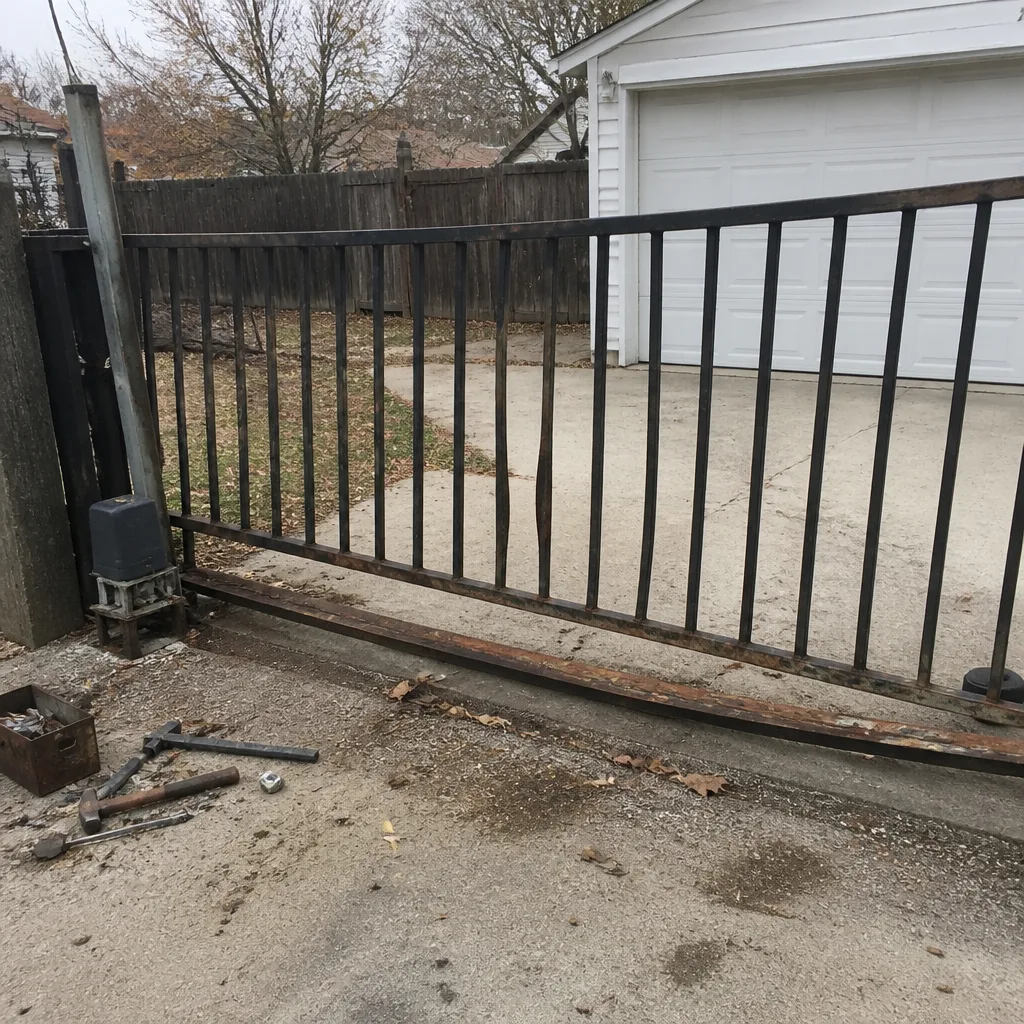 Before
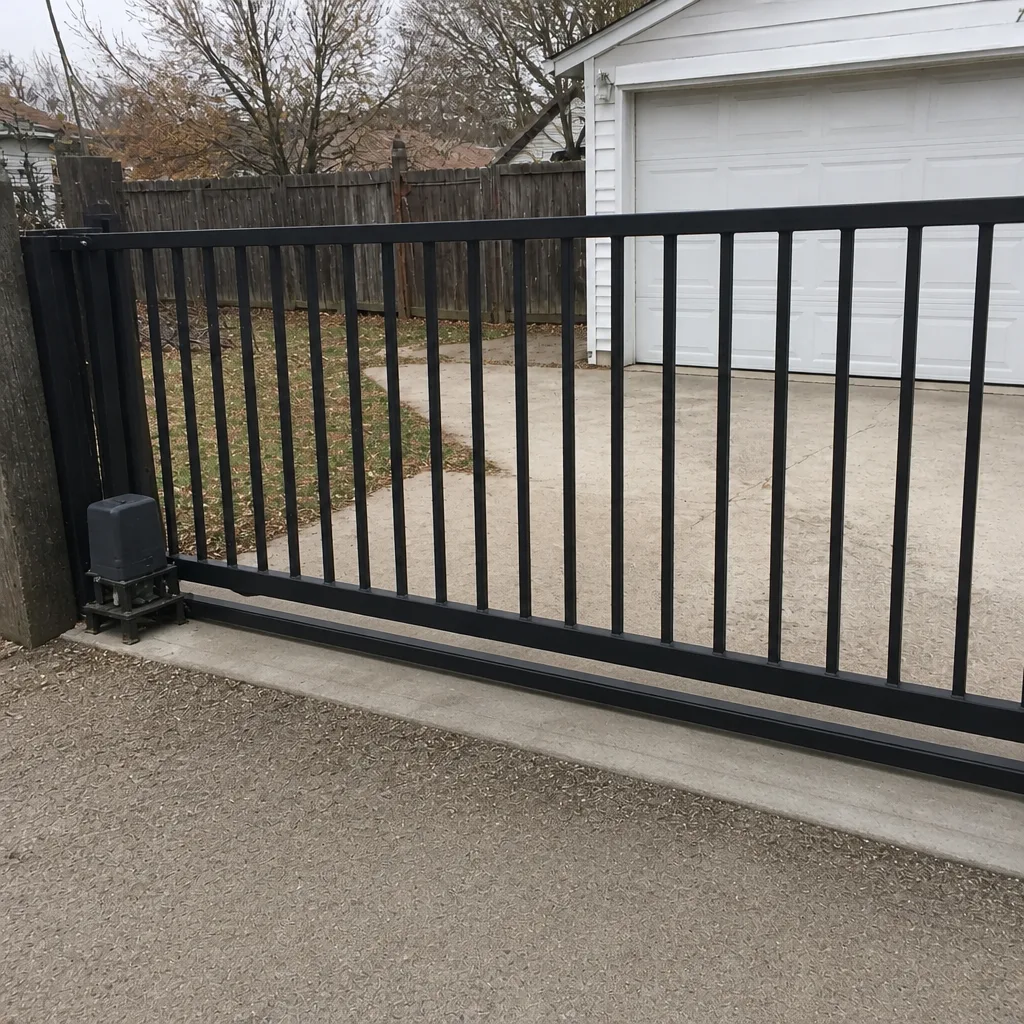 After
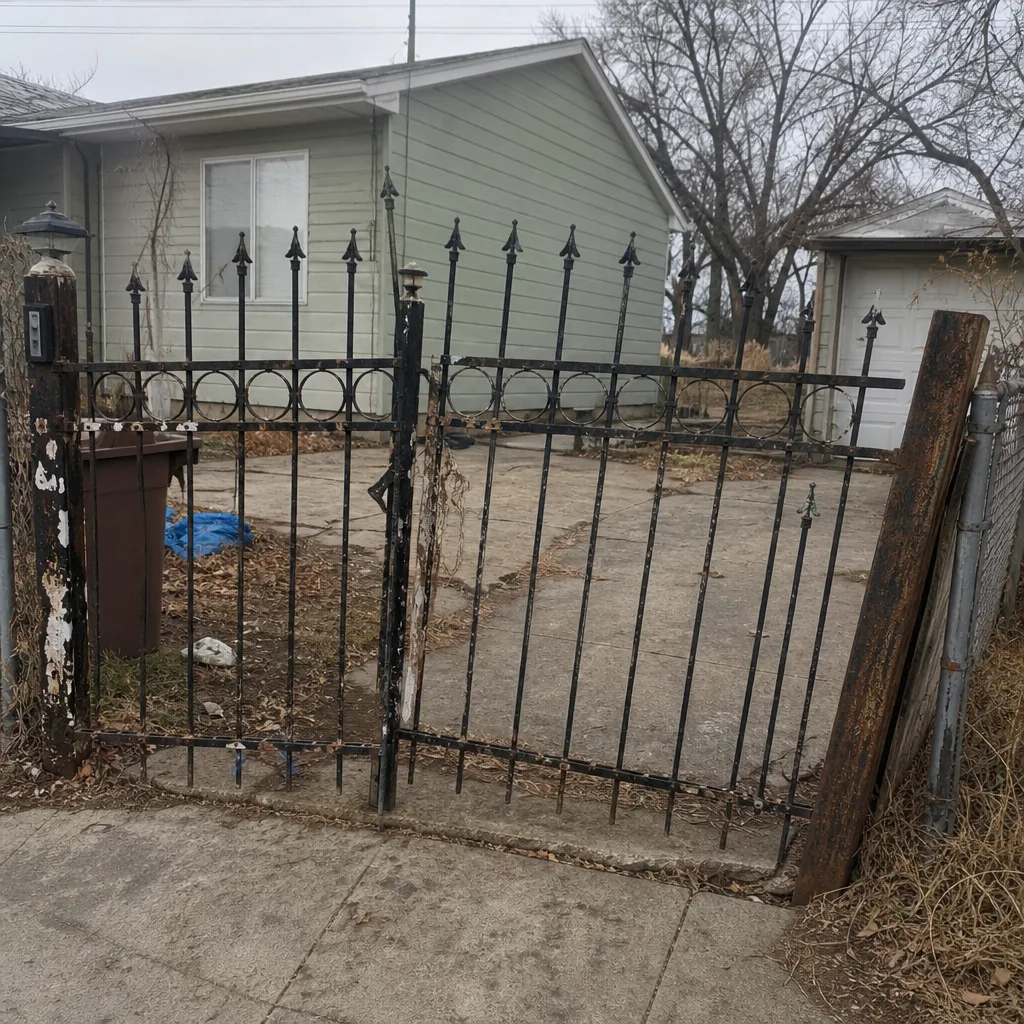 Before
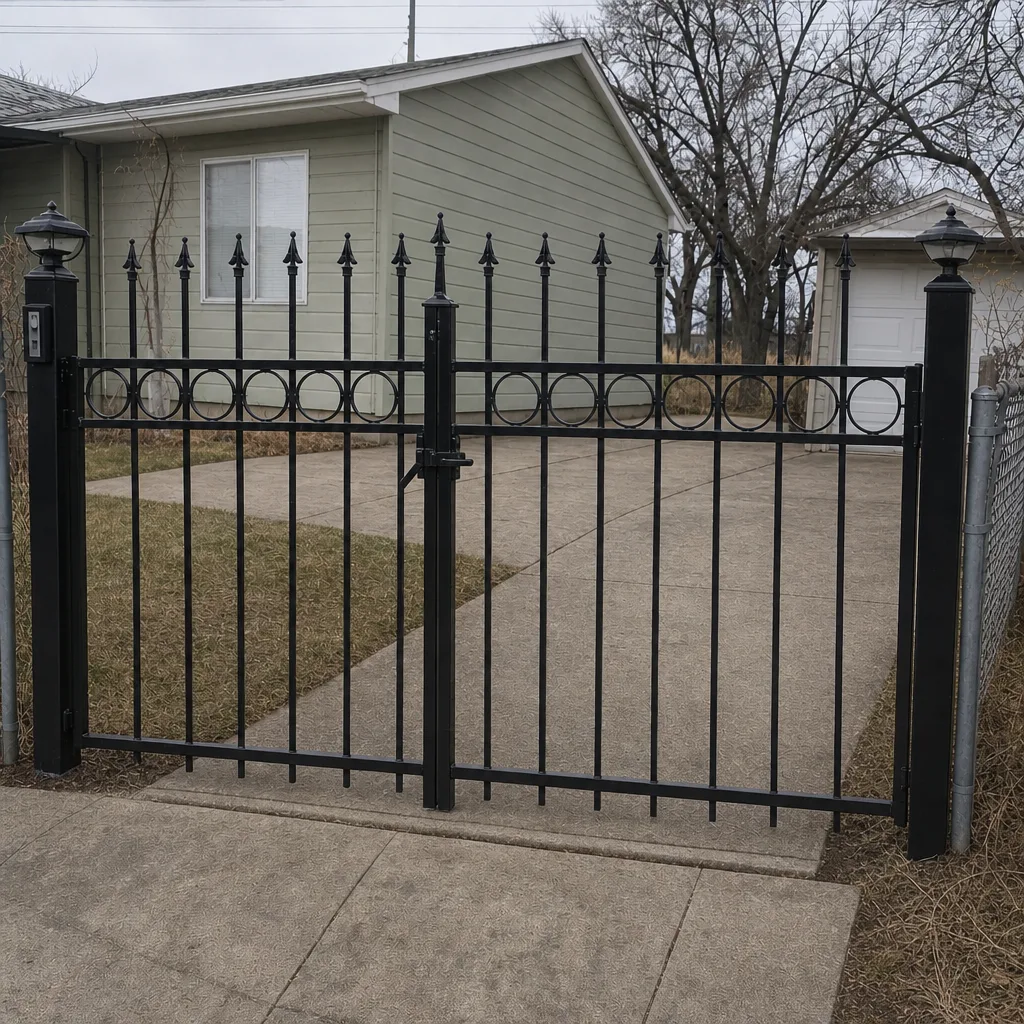 After
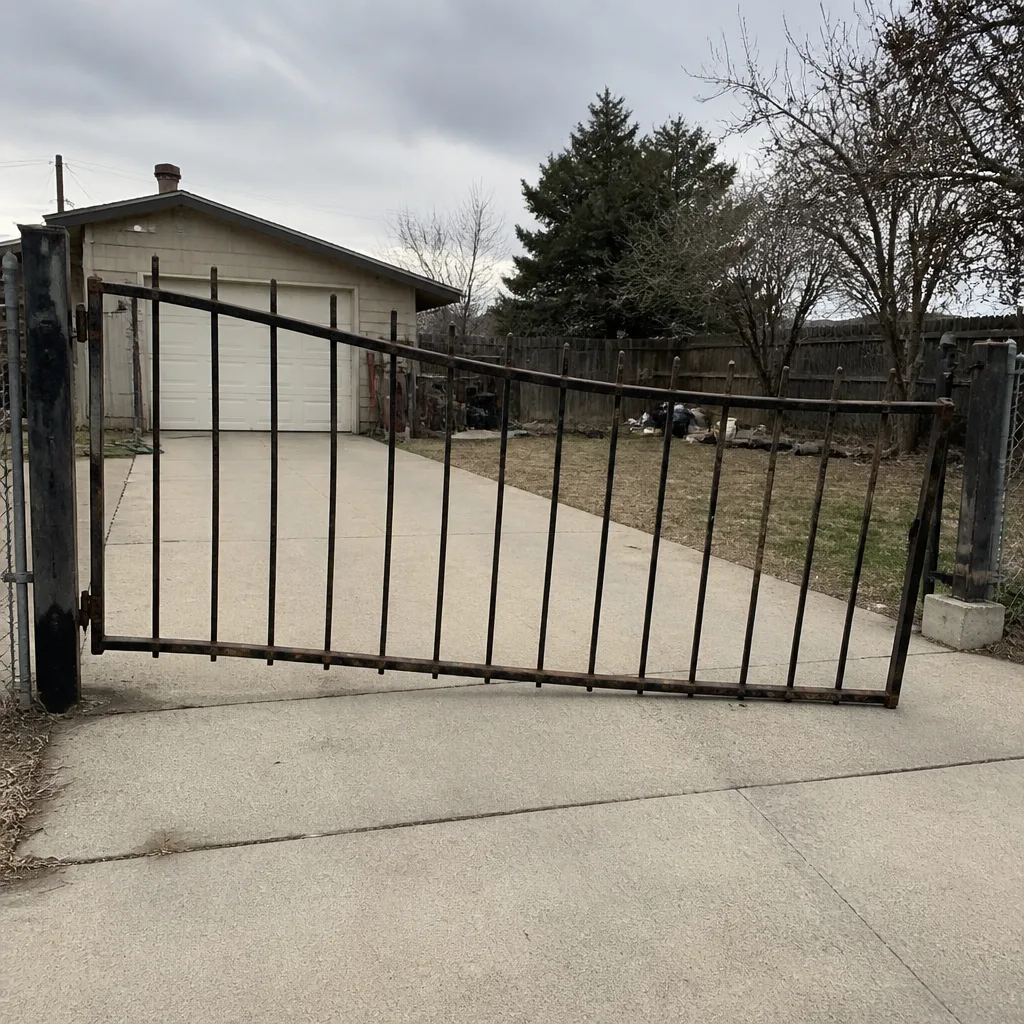 Before
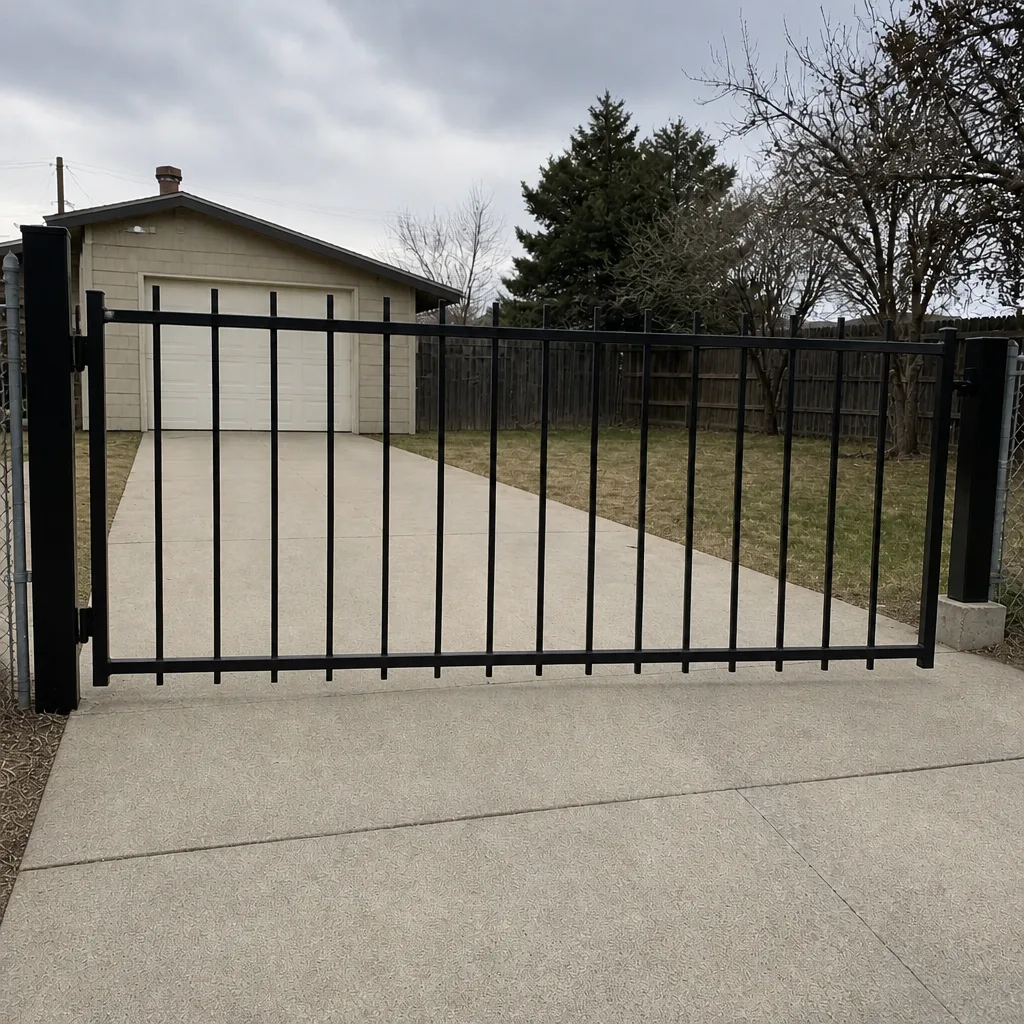 After
When to Call a Professional
Call a gate specialist when any safety-critical sign appears: a gate that won’t reverse on an obstacle, a gate that’s come off its track, visible damage to the wiring, or a gate that moves on its own. Call us also if a hesitation or sag is growing week over week, if the gate’s sound has changed from one cycle to the next, or if you’re not sure which category a symptom belongs to. Gate systems carry live power and heavy components that can cause serious injury, so the “document and diagnose” advice in this guide stops at the point where anyone would need to open the control box or touch the wiring; that work belongs to a trained professional. Gate Repair Thornton offers free estimates in Thornton; call (866) 389-4610 and we’ll talk through what you’re seeing. We answer 24/7, with fast dispatch from 7am to 7pm, Sunday through Friday.
Frequently Asked Questions
The most common are a short hesitation before the gate moves, a change in the gate’s sound, a sag at one end, intermittent operation that comes and goes with temperature, and safety sensors that trip without an obstacle. Of those, intermittent operation and hesitation are the two most often ignored, because the gate still works most of the time. Call (866) 389-4610 for a free estimate if you’re seeing any of these.
Intermittent operation almost always points to one of four things: a temperature-sensitive connection, a capacitor that’s losing capacitance, a control board thermal fault, or a battery and solar system that’s not holding charge. It is rarely just “electrical issues” in a general sense. Documenting when it fails (morning versus afternoon, warm versus cold) narrows it down fast, and a specialist can usually triage it from a short video. Call (866) 389-4610 to talk through your symptoms.
Look at the gap between the gate and the post on both sides. If the gap is unchanged at the hinge side but the free end has dropped, it’s a hinge problem. If the whole gate has shifted and the gap at the hinge side is uneven top to bottom, the post has moved. The two repairs are completely different, so measure before you quote or buy parts. A free estimate will confirm which one you’re facing; call (866) 389-4610.
Safety sensors that don’t reverse the gate, a gate that’s come off its track, visible damage to wiring or the power supply, and a gate that moves on its own all warrant same-day attention. A hesitation, a small sag, or a slow cycle time can usually be monitored for a few weeks while you document the symptoms. We answer 24/7 and dispatch from 7am to 7pm, Sunday through Friday.
You can safely check the hinge gap, record the sound, photograph the control panel, and note when the gate fails. Anything that requires opening the control box, touching the wiring, or adjusting the operator’s power supply belongs to a trained professional, because gate systems carry live voltage and heavy moving parts that can cause serious injury. Call (866) 389-4610 and we’ll tell you what can wait and what can’t.
Have a full-cycle video, a photo of the hinge side and post side, a short audio recording of the sound, a photo of the control panel’s make and model plate, and a note of when the failures happen. That information is often enough to triage the problem before the visit and bring the right parts. Our technicians have up to 15 years of experience, and they work across the major brands, including BFT, Linear, Viking, and Ghost Controls, so most systems can be diagnosed on the first visit. Call (866) 389-4610 for a free estimate.
The Bottom Line
The warning signs that save Thornton homeowners money are the quiet ones: a hesitation, a new sound, a small sag, an intermittent failure. A gate that’s stopped is past the warning stage and into the expensive repair. Document what you see, photograph the hinge and post sides, record the sound, and call when a symptom is growing or safety-critical. We work on gates exclusively, so a diagnosis that starts with a hesitation ends with a specific part and a written price you agree to before we start. From the motor to the keypad, our goal is to get your gate back up and running without the guesswork. Call (866) 389-4610 for a free estimate; we answer 24/7, with fast dispatch from 7am to 7pm, Sunday through Friday.
Written by the team at Gate Repair Thornton.
Ready to get your gate checked? Learn more about Thornton gate service, or call (866) 389-4610 for a free estimate and a written price before any work starts.