
Last updated November 15, 2026
 Wrought iron
 Wood & steel frame
 Farm & ranch
 Sliding driveway gates
 LiftMaster operators
Free on-site gate assessment - hinges, posts, and your LiftMaster or Nice gate operator checked before anything is quoted
The assessment is free and the quote is the invoice.
Get your free estimateSeasonal Gate Repair Care for Thornton: Year-Round Homeowner’s Guide
In our experience, more gate operators fail in late March than in January. That surprises most people, because we assume deep winter is the hard part. But post footings that held steady all winter get shifted by freeze-thaw ground heave as the frost leaves the soil, and the motor that seemed fine in February starts straining the first time you cycle the gate heavily in spring. Thornton sits right in that freeze-thaw band along the Front Range, which means gate care here isn’t one winterization task. It’s four distinct seasonal stress events hitting four different parts of your system. This guide walks through each one and gives you a month-by-month calendar built for this climate.
Quick Answer
Seasonal gate care in Thornton means addressing four separate stress events rather than one winter prep: spring post-heave and alignment, summer UV degradation of photo-eye lenses and sensors, fall battery backup conditioning before the first hard freeze, and winter thermal expansion causing false obstruction triggers. Each season attacks a different component, so a single “winterize it” habit leaves three seasons of damage unaddressed. Inspecting at the start of each season keeps manual and electric gates operating reliably year round.
Styles & brands we work with
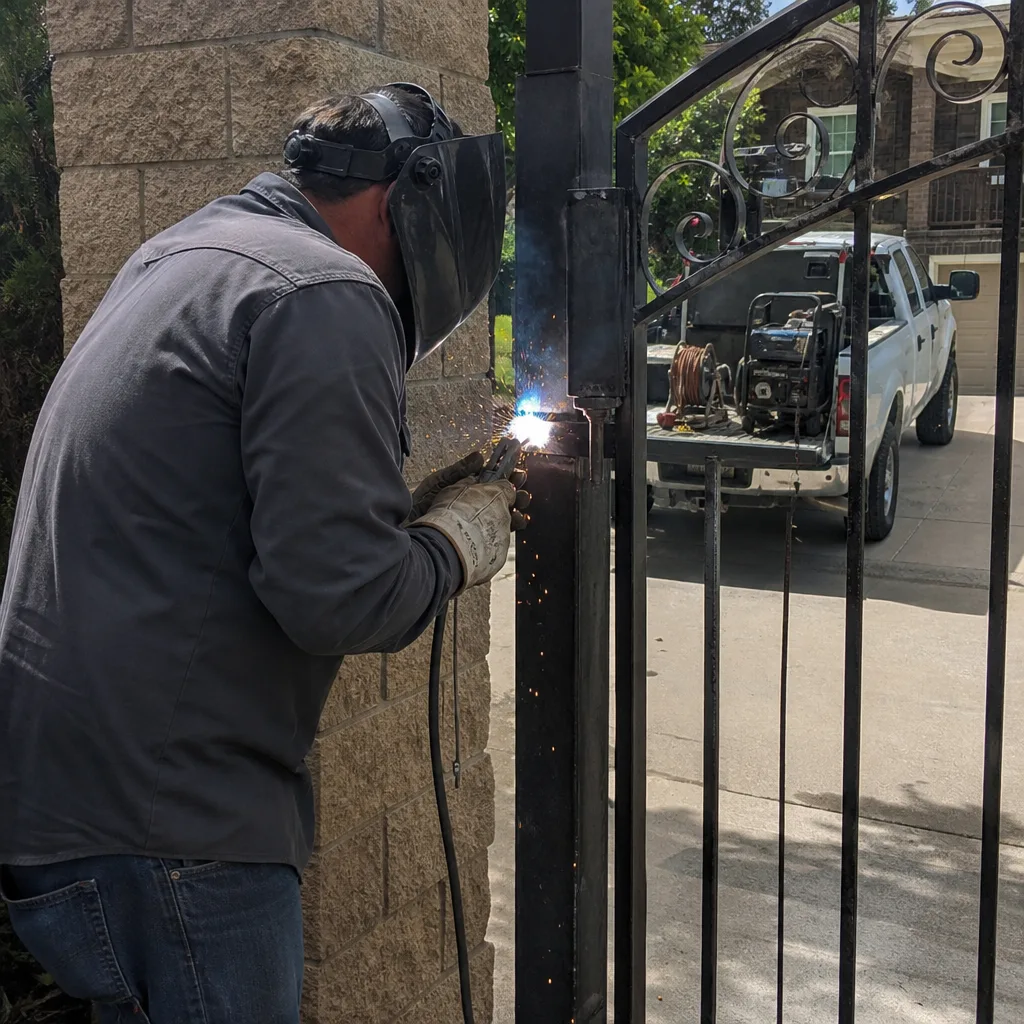
- Wrought iron
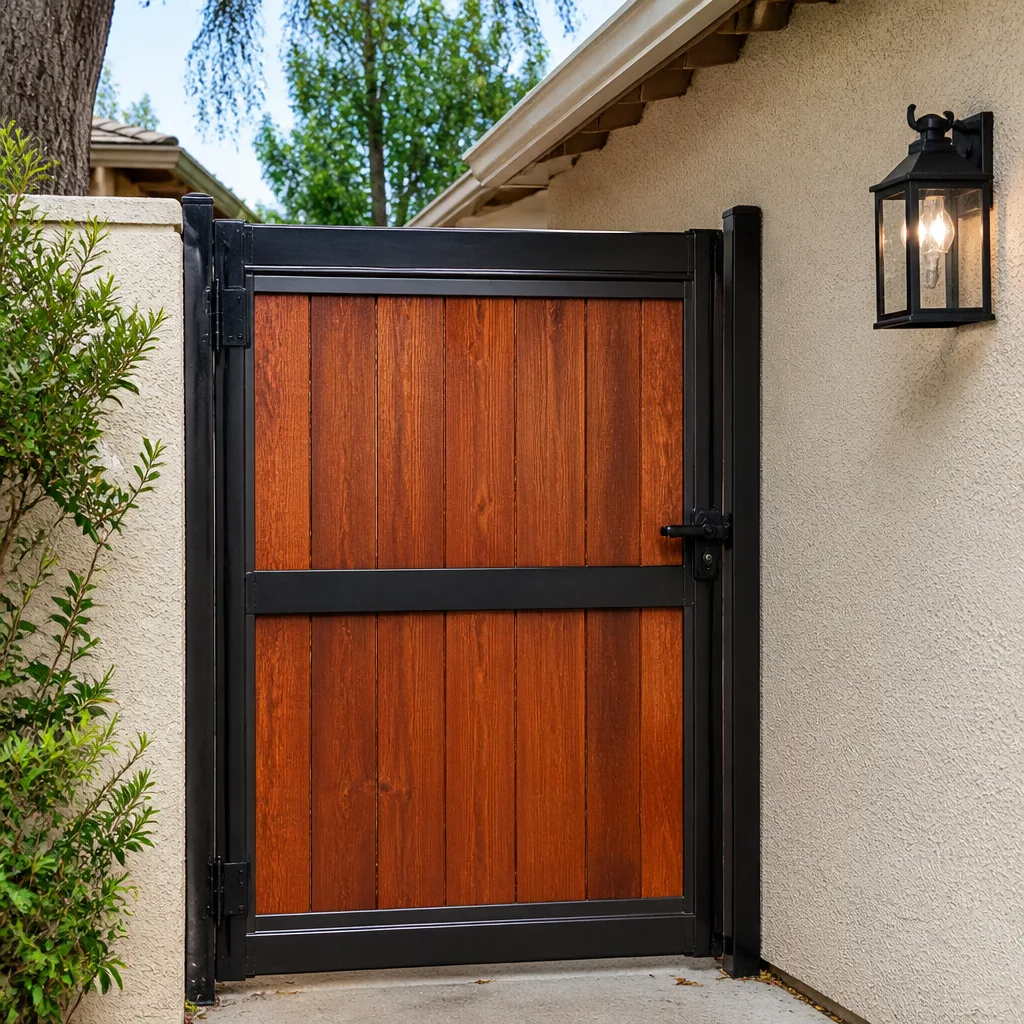
- Wood & steel frame
- Farm & ranch
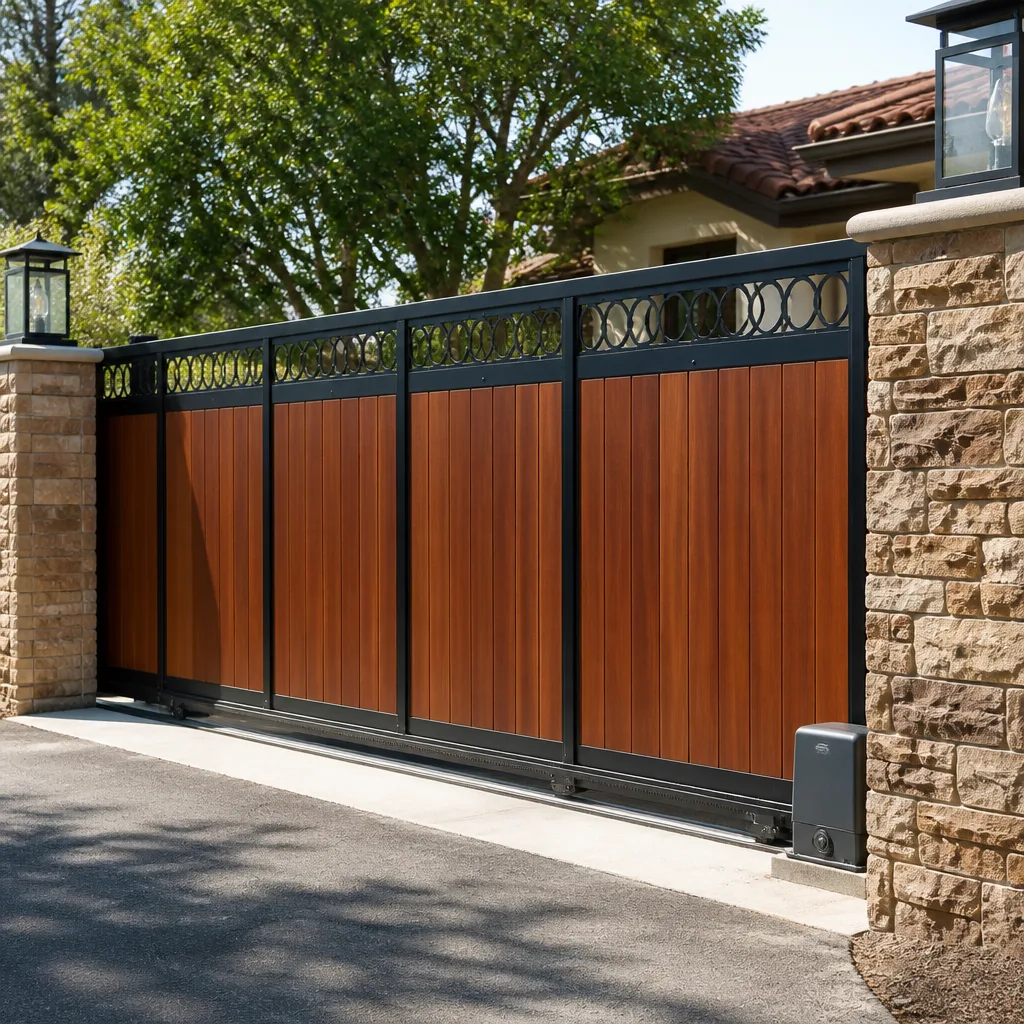
- Sliding driveway gates
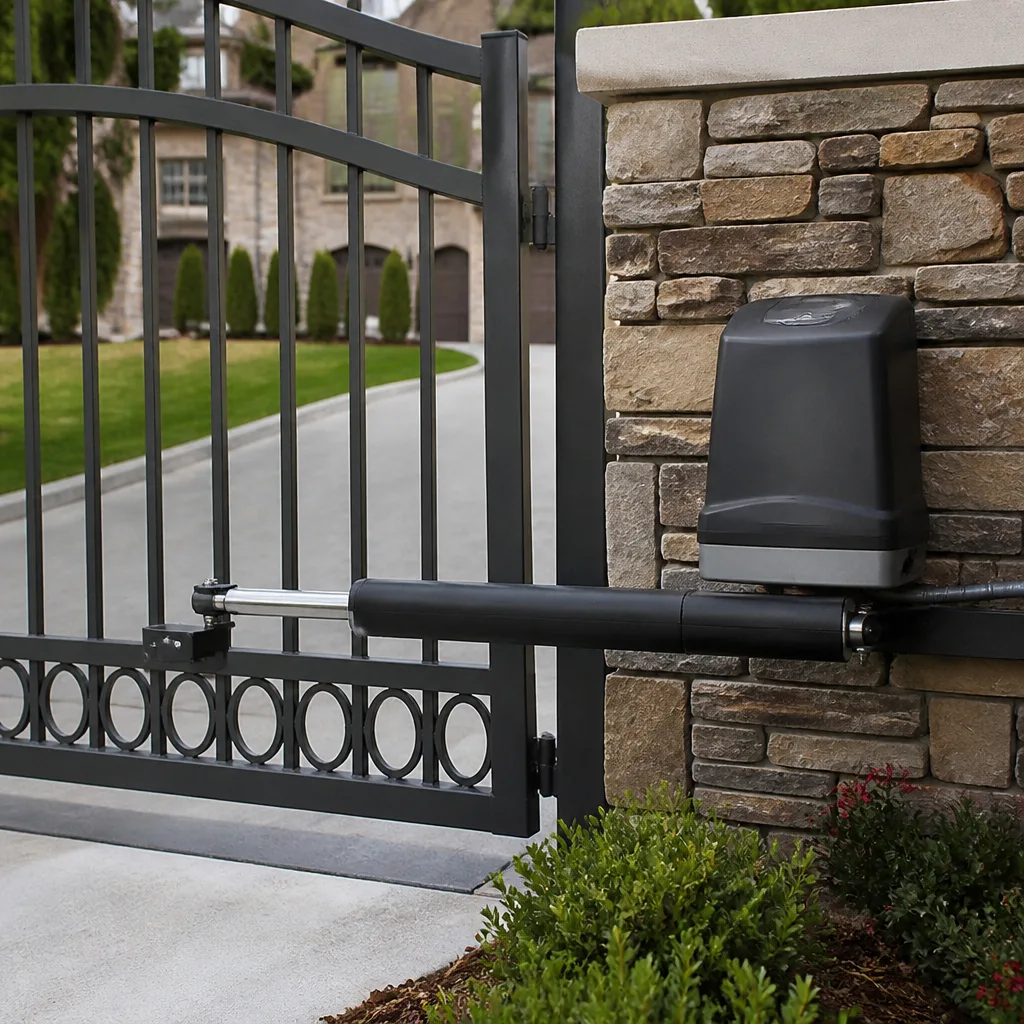
- LiftMaster operators
Table of Contents
- Why Thornton Gates Face Four Seasons of Stress, Not One
- Spring: Post-Heave Inspection and Alignment
- Summer: UV Damage to Photo-Eyes and Sensors
- Fall: Battery Backup Conditioning Before the First Freeze
- Winter: Thermal Expansion and False Obstruction Triggers
- Month-by-Month Gate Care Calendar for Thornton
- The Ten-Minute Monthly Owner Check
- Signs You Need a Specialist, Not a Generalist
Why Thornton Gates Face Four Seasons of Stress, Not One
Gate trouble in Thornton doesn’t arrive on a single schedule. Each season does something different to your gate, and the parts affected aren’t the same. Winter is the season most people prepare for, yet the damage it sets up shows up weeks after the thaw. Treating seasonal care as one “winterize the gate” job means you look at it once a year and miss everything the other three seasons did in between.
Here’s how the cycle plays out along the Front Range, where cold nights and warm afternoons alternate through much of the year:
- Spring: Freeze-thaw cycles heave the soil and shift post footings, twisting gate frames and loading the operator before the season even starts.
- Summer: Intense high-altitude sun breaks down plastic components and photo-eye lenses faster than at lower elevations, and thermal drift knocks sensors out of alignment.
- Fall: Temperatures drop fast, draining batteries in backup systems that haven’t been conditioned for the cold.
- Winter: Extreme swings between daytime highs and overnight lows cause metal components to expand and contract, triggering false obstruction readings.
Each of those hits a different part of the system. A spring problem is mechanical and structural. A summer problem is optical and electronic. Fall is about power storage. Winter is about thermal behavior in moving parts. Once you understand which season stresses what, you can inspect the right thing at the right time instead of guessing.
We work on gates and gate operators exclusively, which is why we can trace these patterns so clearly. If your job is gate repair, it’s gate repair and nothing else for us. That focus means we see the same seasonal failure sequences repeat across Thornton driveways, HOA entrances, and commercial lots year after year.
Spring: Post-Heave Inspection and Alignment
Spring is when post-heave shows up, and it’s the single most overlooked cause of gate failure in Thornton. As the frost leaves the ground, soil that expanded in winter settles unevenly. A gate post set to proper footing depth can still shift a fraction as the ground moves, and that fraction is enough to twist a hinged gate or rack a sliding one sideways. The operator then fights the misalignment every time it cycles.
Why does this overload the motor? Because a gate that tracked cleanly is now being pushed slightly uphill or against its own frame. The motor compensates by drawing more current. That extra current stresses the control board, the motor windings, and the drive hardware, and it’s the reason a system that survived winter quietly fails the first warm week you start using it heavily.
Before you run the operator hard this spring, work through this inspection sequence:
- Disconnect the operator. Switch to manual so you can move the gate by hand and feel any resistance the motor would otherwise mask.
- Sweep the full travel. Open and close the gate manually and note any point where it binds, scrapes, or needs extra push.
- Check the posts. Look for lean, gaps where soil pulled away from the footing, or a hinge side that’s dropped relative to the latch side.
- Check the level. A gate that was plumb in fall but leans now is telling you the footing moved.
- Test the latches and stops. Bind often starts at the latch or the travel stop, not the hinge.
- Only then reconnect and observe one slow, full cycle while watching the gate move, not the remote.
If the gate swings or slides freely, you’re in good shape. If it binds at one spot, that’s structural, and forcing the operator through it shortens the life of the motor and the control board. When alignment is off, an on-site visit to reset the posts and the gate is the right call before the season gets going. Our technicians have up to 15 years of experience reading exactly this kind of spring bind.
Any adjustment to post footings or concrete work should follow what the city requires. Ask the City of Thornton about permits before you have footings reset, because the rules vary with the type and location of the installation.
Summer: UV Damage to Photo-Eyes and Sensors
Summer in Thornton does something that lower-elevation gate guides rarely mention: it attacks the optics. At this altitude, the sun’s ultraviolet intensity is stronger, and photo-eye lenses and sensor housings take far more UV over a single season than they would near sea level. Plastic lens covers cloud and yellow. The alignment of the beam drifts as housings and brackets expand in the heat and shift slightly out of true.
What does that look like to a homeowner? The gate stops mid-travel. Or it reverses for no obvious reason. Or it works in the morning and fails in the afternoon when the sun hits one sensor directly. These symptoms get misdiagnosed as a bad control board when the real problem is a clouded lens or a beam that’s no longer hitting its target cleanly.
Mid-summer is the right time to inspect the safety and detection hardware:
- Look at the lens covers. Cloudy, yellowed, or crazed plastic means the beam is losing strength and the sensor is close to failing.
- Check that the beam lines up. Both sensors should face each other squarely, with nothing bent or leaning.
- Watch for direct sun on a sensor. A beam that trips only in the afternoon points to heat or glare, not a board failure.
- Clean the lenses. Dust and pollen film matter more when there’s already UV clouding.
- Check the brackets. Loose hardware lets a sensor drift out of alignment the moment the housing expands.
On brands like LiftMaster and Elite, the safety sensors are engineered to be robust, but no lens escapes UV forever. If the lenses are clouded and the gate is misbehaving, replacing the sensors restores reliable detection far more cheaply than chasing a board that isn’t the problem. This is why electric gate problems should be diagnosed by someone who works on the whole system. Our electric gate repair covers sensors, wiring, and control boards as one connected job, so we find the actual cause instead of guessing at parts.
Fall: Battery Backup Conditioning Before the First Freeze
Fall is about power, and the clock starts running down before the first hard freeze. Backup batteries are rated at 77°F and lose a large share of their capacity as temperatures drop. A battery that ran the gate fine all summer can’t carry it through a cold night by the time the deep freeze arrives. Conditioning it in early fall, while the weather is still mild, gives it the best chance of carrying the load when you actually need it.
Most residential and commercial operators that support battery backup use sealed lead-acid batteries, often in a 12-volt or 24-volt configuration. Age and cold are both working against them. A battery that’s several years old and never tested can test weak in fall and fail outright in winter, which is how a power outage becomes a gate stuck open at the worst time.
Here’s the conditioning routine we recommend for Thornton before the hard freeze:
- Identify the battery type and voltage for your operator. Check the manual or the label on the battery itself.
- Test the resting voltage with a meter before charging. A healthy charged lead-acid battery at 12 volts typically rests near 12.6 to 12.8 volts; a 24-volt system rests near 25.2 to 25.6.
- Charge it fully on a proper charger, then retest after it rests.
- Check that the operator’s charge circuit works by confirming the battery holds its voltage over a full day of standby.
- Load-test it by running a full open and close cycle on battery power alone and watching for a slow finish or an early stall.
- Replace if it fails the load test. A battery that stalls the gate in fall will strand it in winter.
Specific replacement voltages and charge settings differ by operator and by brand. Ghost Controls and Mighty Mule residential systems and higher-cycle FAAC operators all handle battery management differently, so follow the operator’s own documentation rather than assuming. If you’re not sure whether your backup is holding, that’s a job worth having checked while the weather is still cooperative, because a battery that’s borderline now will only get worse.
Winter: Thermal Expansion and False Obstruction Triggers
Winter brings a specific kind of false alarm. Colorado temperature swings, warm afternoons followed by cold nights, cause metal gate frames, tracks, and operator arms to expand and contract by measurable amounts. A gate that clears its frame by a comfortable margin midday can scrape it after dark. And once the gate drags on anything, the obstruction sensor reads resistance and reverses the gate mid-travel.
The reverse is just as common: warm steel closing against cold steel or a tight latch can look like a jam to the operator’s sensing. You get a gate that reverses for no reason you can see, works fine in the morning, then fails in the evening. Owners often assume the motor is dying when the real cause is thermal.
Winter symptoms worth watching for:
- Reverse-on-close with nothing in the way. Usually a drag point that opens up when the gate warms and closes when it cools.
- Slow or grindy travel. Cold grease and contracted clearances both stiffen the motion.
- Intermittent limit-trip failures. The gate reaches full open but stops short of the programmed limit.
- A latch that sticks on cold mornings and clears by afternoon.
- Random stops on one side of the gate only, pointing at a frame or track that’s drifting thermally.
Don’t “fix” a thermal trigger by disabling the obstruction sensing. That removes the safety function that stops the gate on a child, a pet, or a vehicle. Instead, clear the bind point, adjust the track or latch for cold-day clearance, and confirm the sensors are reading cleanly. That’s a job for someone who knows the operator and its safety logic. Whether it’s an Elite operator or a commercial-grade BFT unit, the principle is the same: diagnose which component is expanding where the gate runs, then adjust for the winter clearance rather than fighting the sensor.
Month-by-Month Gate Care Calendar for Thornton
A calendar built for this climate beats a generic national schedule. National guides put winter prep in November and call it done; here, the real work is spread across the whole year. This is the rhythm we recommend for a Thornton gate:
- March: First post-heave inspection after the thaw. Run the manual bind test. Check posts and hinges.
- April: Address any spring alignment issues. Reconnect the operator and monitor the first heavy-use week.
- May: Full system test before peak summer heat. Check every safety cycle and every limit.
- June: Inspect photo-eye lenses and sensor alignment. Clean lenses and check brackets.
- July: Watch for sun-triggered sensor faults, particularly in afternoon sun.
- August: Second sensor and lens check before UV season peaks.
- September: Begin battery conditioning. Test resting voltage and load-test the backup.
- October: Complete battery work before the first hard freeze. Full system test before cold sets in.
- November: Watch for the first thermal false triggers. Clear any bind points.
- December, January, February: Monitor for cold-related false obstruction triggers as temperature swings peak.
Two seasonal deep-tests anchor this calendar: a full manual and alignment check in spring and a full system and battery check in fall. Everything else is a light monthly touch. The point is that a single “winterize the gate” weekend misses the spring heave, the summer UV damage, and the fall battery drain entirely, which is why the calendar runs year round.
The Ten-Minute Monthly Owner Check
Between the deep seasonal checks, a brief monthly routine catches problems before they become repairs. It doesn’t require tools beyond your own senses, and it takes about ten minutes:
- Listen. Run one full open-and-close cycle and listen for a change in the sound of the motor or a scrape from the gate.
- Watch the movement. A gate that sways, hesitates, or drifts should be checked before it gets worse.
- Test the safety sensors. Pass a hand across the photo-eye beam to confirm the gate reverses as it should.
- Look at the frame. Glance at the posts, hinges, and tracks for anything new: cracked welds, pulled hardware, or loose bolts.
- Check the remote. A remote that needs extra presses or works from a shorter distance may be pointing at a receiver or battery issue.
- Note the season’s change. Whatever the calendar says is coming next month, start looking for it a little early.
Do this once a month and you’ll catch most mechanical and electronic issues before they force a repair. It also gives our technicians a clear picture of what changed when you call, which makes diagnosis faster and keeps the repair focused. Two of the brands we work on, Mighty Mule and LiftMaster, both benefit from this light upkeep because the mechanical drag shows up before the electronics fail.
Signs You Need a Specialist, Not a Generalist
Some gate problems are worth checking yourself. Others need someone whose only job is gates. The difference usually comes down to whether the problem is mechanical and visible or electronic and interlinked. A bind you can feel and a hinge you can see loose are fine to inspect. A motor, control board, sensor, or wiring fault is not, because the components work together and the wrong repair can mask the real cause.
Call a gate specialist when you notice:
- A gate that reverses or stops for no visible reason, especially if it varies by time of day.
- A motor that runs but doesn’t move the gate, which points at the drive, the operator arm, or the control board.
- Safety sensors that won’t clear after a clean lens and a proper alignment.
- Wiring or control panel faults, which require tracing circuits safely.
- Post or footing movement after spring heave that a simple adjustment won’t hold.
- Repeated false triggers through a winter when the bind point isn’t obvious.
Electrical and moving gate components carry real risk. The operator runs on mains power, and the motor, control board, and wiring should be handled by a trained professional, not worked on live. We’d rather you call than guess at a repair that could leave a gate running unsafely. If you’re weighing whether it’s a quick fix or a full replacement, that decision belongs in a proper diagnosis, not a guess.
Common Mistakes to Avoid
- Treating seasonal care as one winter task. A single “winterize it” session leaves spring post-heave, summer UV degradation, and fall battery drain unaddressed. Each season needs its own inspection focus.
- Using the operator hard before a spring alignment check. Forcing a motor through a bind brought on by post-heave is how a cheap spring adjustment becomes a control board or motor repair.
- Ignoring clouded photo-eye lenses. In Thornton’s high-altitude sun, a clouded lens looks like a bad board when it’s really an optical failure. Replace the lens or sensor before chasing the electronics.
- Testing the battery backup on the day of the first freeze. Conditioning in early fall, while the weather is mild, is what gives the battery a chance to carry the load in the cold.
- Disabling the obstruction sensor to stop winter false triggers. That removes the safety function that protects a child, a pet, or a vehicle from a closing gate. Clear the bind point instead.
- Assuming a major milestone neighbor’s gate schedule applies here. Thornton’s freeze-thaw band sets its own timing; a national calendar won’t line up with your actual climate.
- Hiring a generalist who handles gates on the side. Gate systems from LiftMaster, FAAC, and the rest have brand-specific diagnostics. A specialist diagnoses the right component the first time.
See the difference
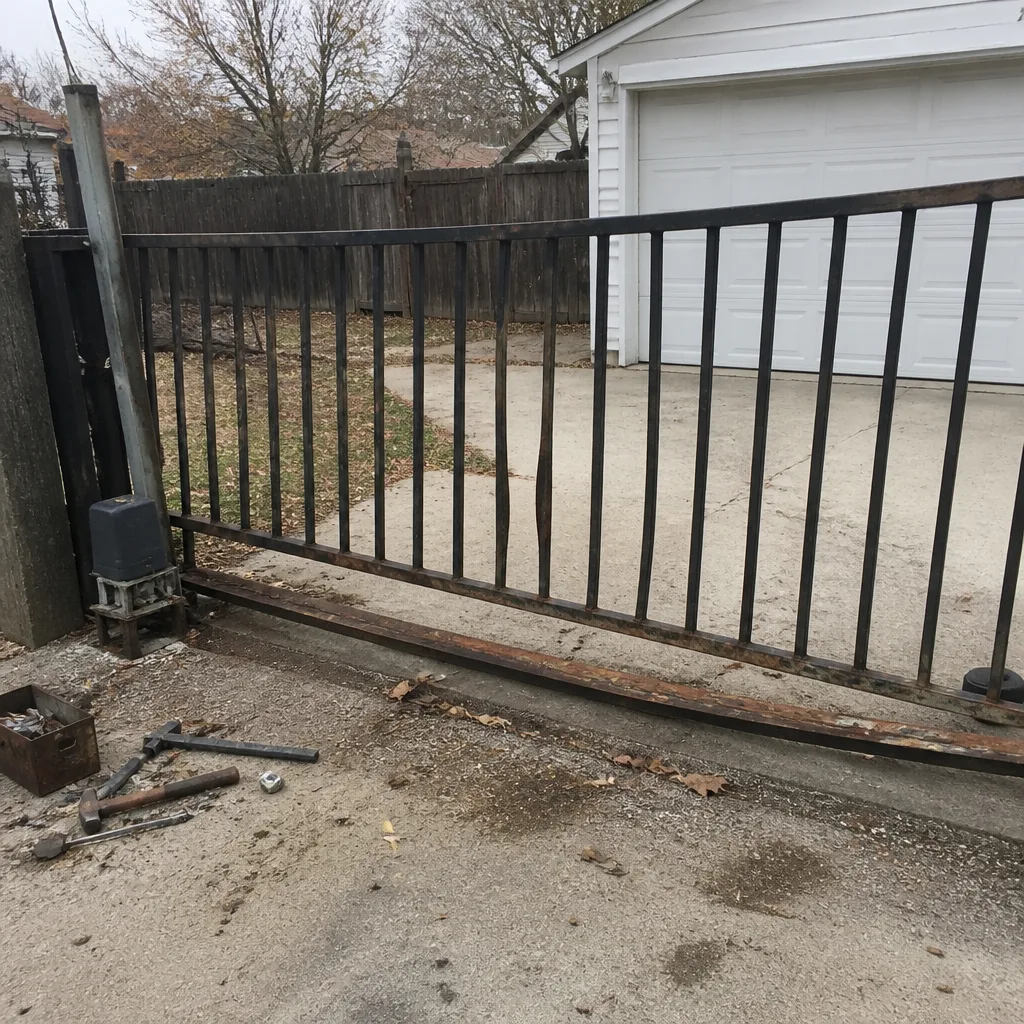 Before
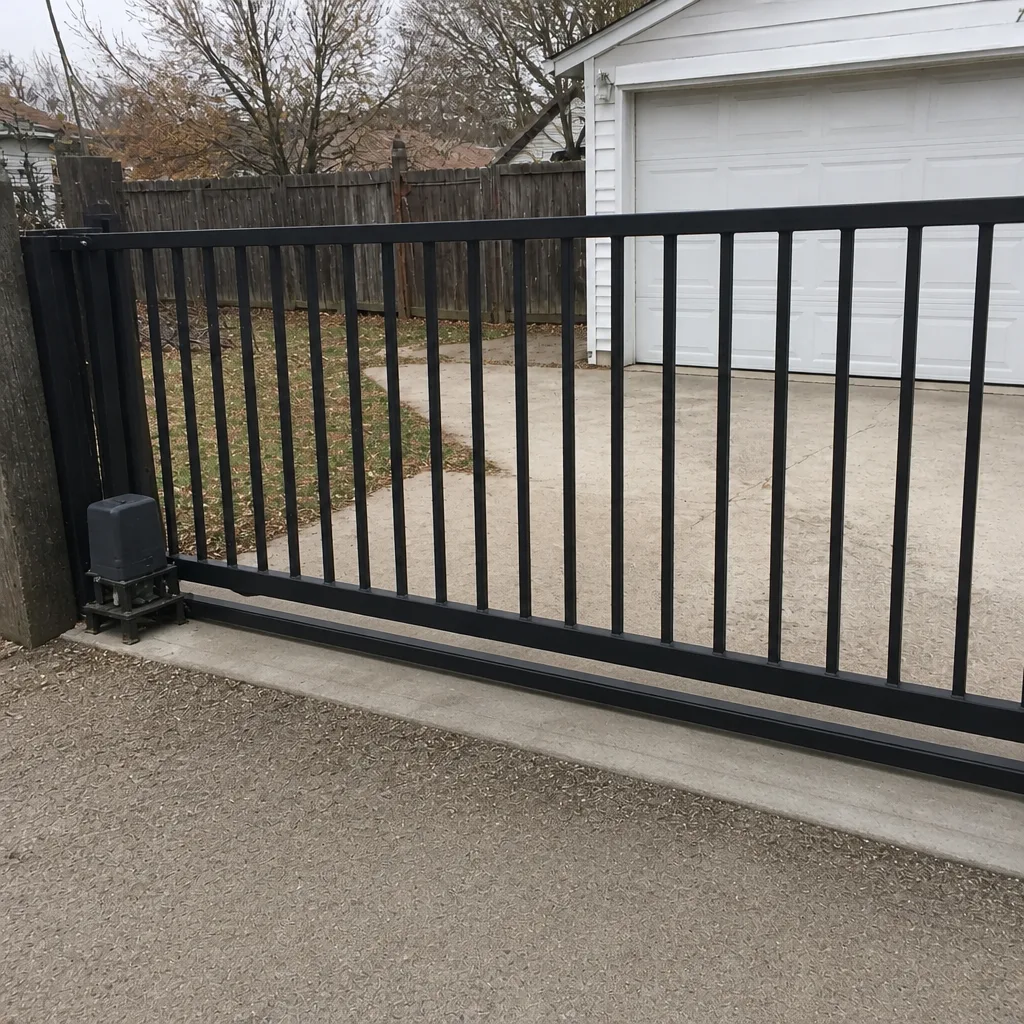 After
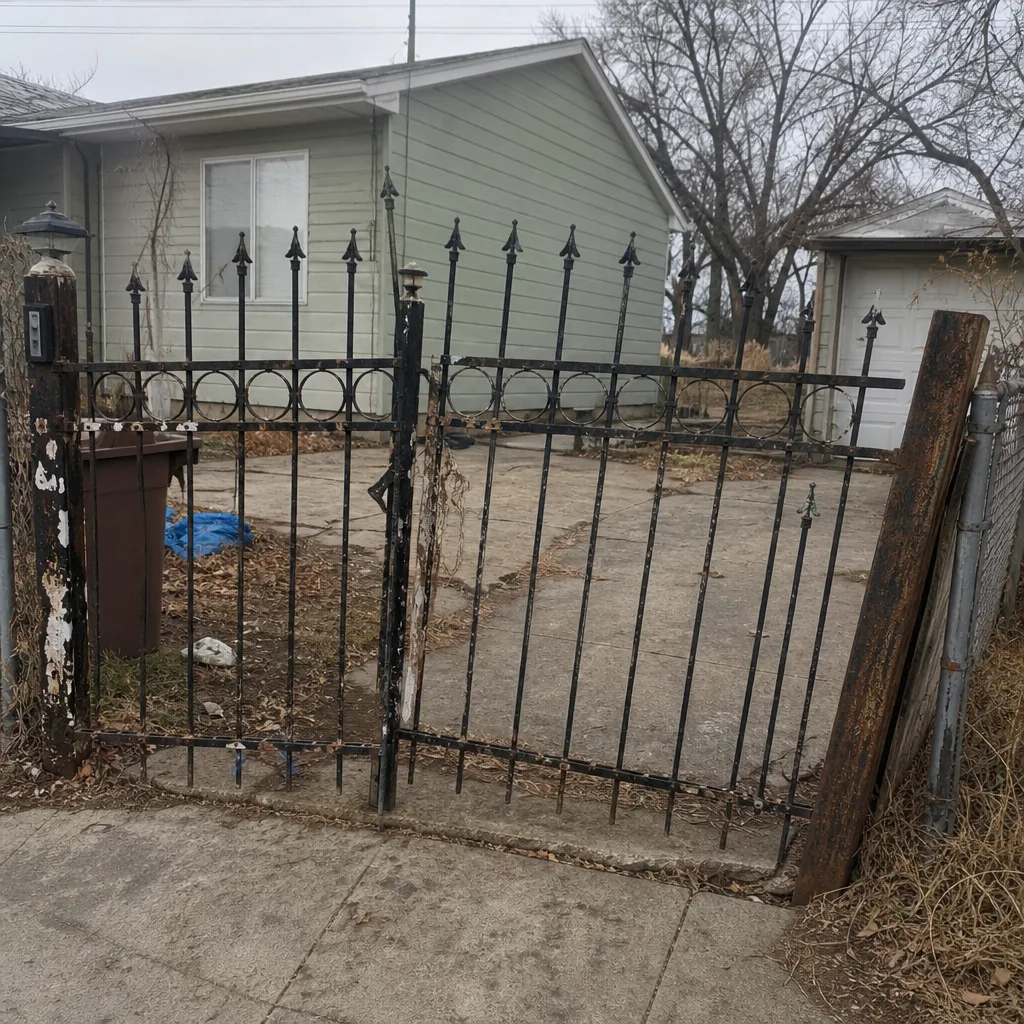 Before
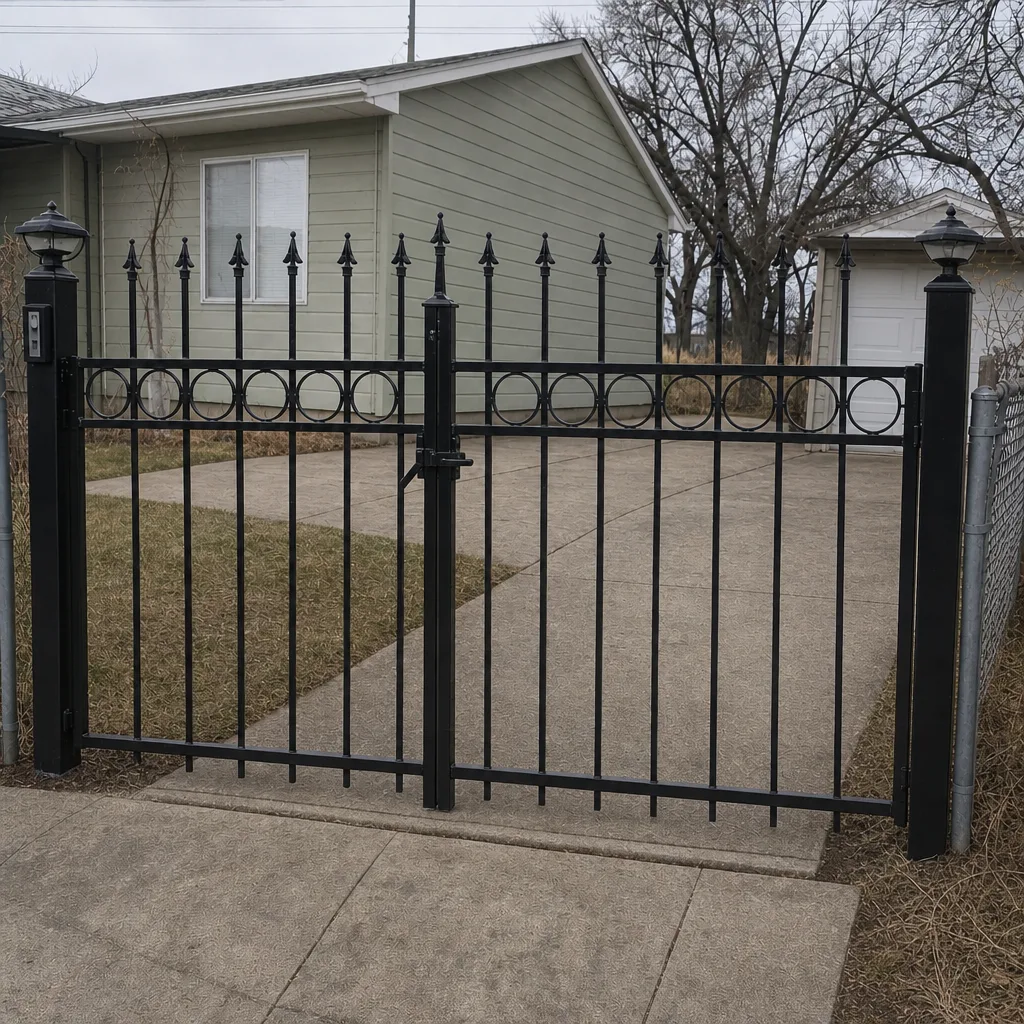 After
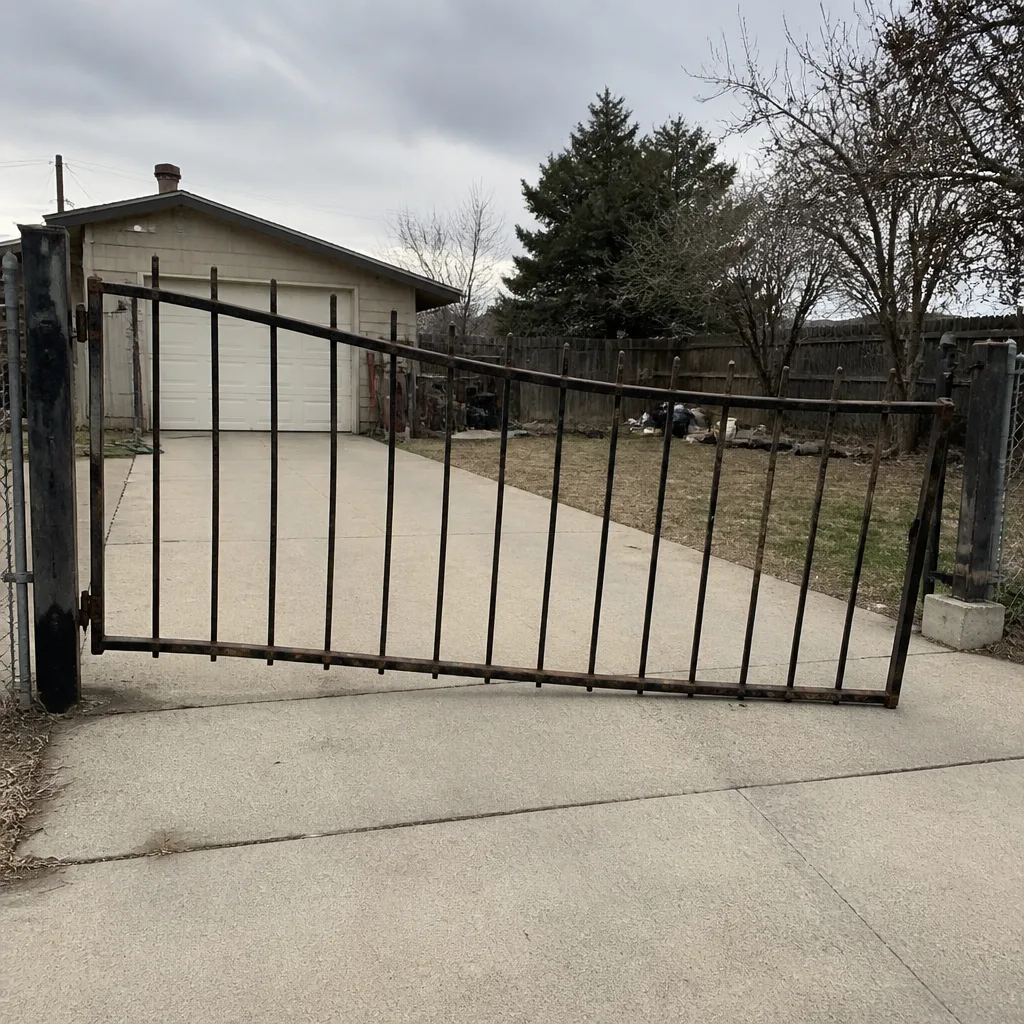 Before
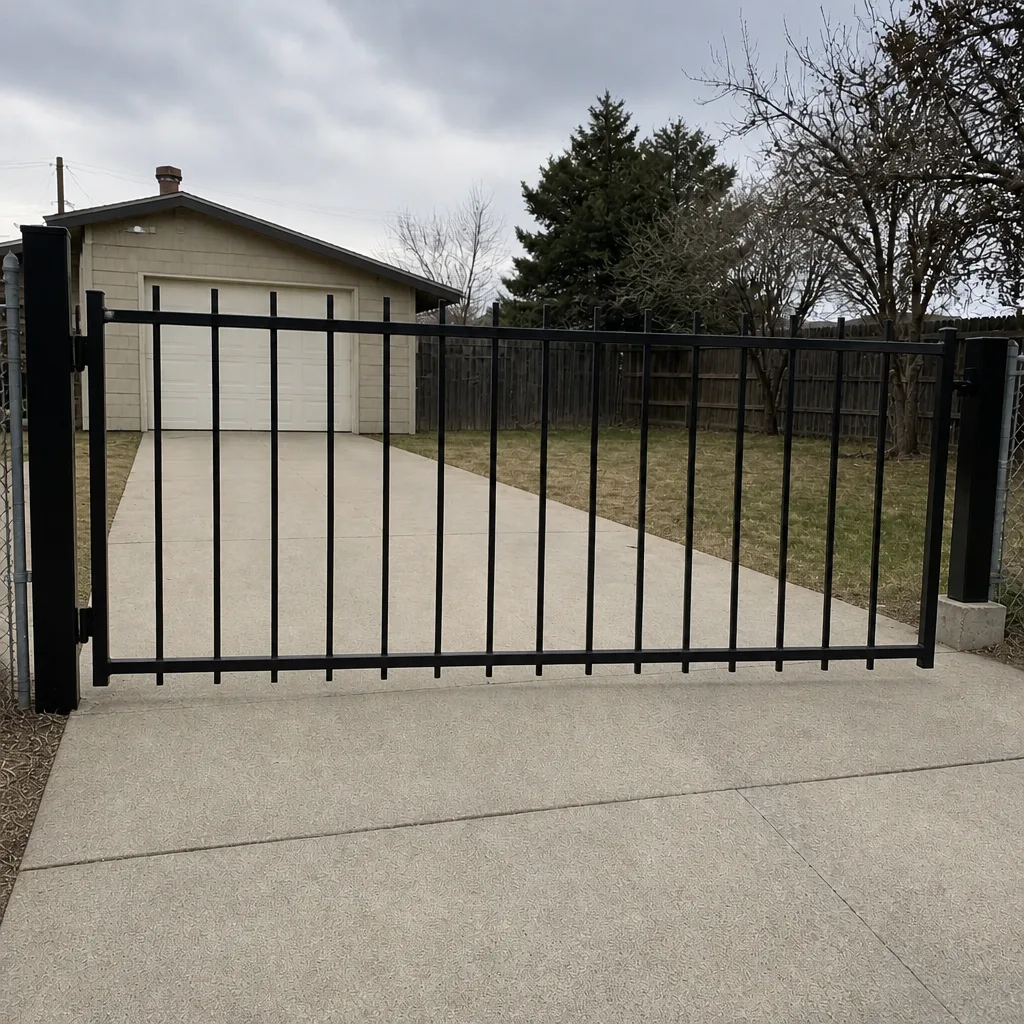 After
When to Call a Professional
Call a professional when a symptom is electronic, interlinked, or unsafe to trace yourself. That includes a gate that reverses or stalls for no visible reason, a motor that runs without moving the gate, safety sensors that won’t clear after a lens clean and alignment, any control board or wiring fault, and a post or footing that keeps moving after a spring heave adjustment. It also includes any repair that requires you to work inside a live electrical enclosure, which is a job for a trained technician. On top of that, if a seasonal check uncovers something beyond a simple mechanical adjustment, that’s the moment to hand it to a specialist rather than keep pushing the operator through it. Gate Repair Thornton offers free estimates in Thornton. Call (866) 389-4610. We answer 24/7. Fast dispatch from 7am to 7pm, Sunday through Friday.
Frequently Asked Questions
Twice a year for deep checks, at the start of spring and the start of fall, with a light monthly owner check in between. Spring matters because that’s when post-heave shows up, and fall matters because the battery backup needs conditioning before the first hard freeze. As for hours, we book seasonal work within the dispatch window, and a call outside it is booked into the next opening, Sunday through Friday, 7am to 7pm. Call (866) 389-4610 for an exact quote – estimates are free.
Because freeze-thaw ground movement shifts post footings that held steady all winter, and the resulting bind overloads the motor the first time you use the gate heavily again. The gate failure shows up in spring, but the stress built up during the thaw. A spring alignment check catches it before it turns into a motor or control board repair. Call (866) 389-4610 for an exact quote – estimates are free.
Yes. Extreme swings between warm afternoons and cold overnight lows cause metal components to expand and contract, and a gate that clears its frame midday can drag after dark. The obstruction sensor reads that drag as a jam and reverses the gate. Clearing the bind point and adjusting for cold-day clearance fixes it; disabling the sensor doesn’t, and it removes a safety function. Call (866) 389-4610 for an exact quote – estimates are free.
Condition it in early fall, before the hard freeze, by testing resting voltage, charging it fully, and load-testing it with a full cycle on battery power alone. Most lead-acid backups rest near 12.6 to 12.8 volts on a healthy 12-volt system, but the exact threshold depends on your operator, so check its documentation. A battery that stalls the gate in fall will strand it in winter. Call (866) 389-4610 for an exact quote – estimates are free.
Yes. Stronger UV intensity at Thornton’s elevation breaks down photo-eye lens plastic faster than at lower elevations, and it also causes sensor housings to expand and drift out of alignment. That produces reverse-on-close and mid-travel stops that look like a control board failure. Checking lens clarity and beam alignment in mid-summer catches it before it turns into a false diagnosis. Call (866) 389-4610 for an exact quote – estimates are free.
You can safely do the mechanical checks: the manual bind test, post and hinge inspection, lens cleaning, and safety sensor testing. What you shouldn’t do yourself is work inside the operator’s live electrical enclosure or trace wiring faults. The motor, control board, and wiring carry mains power, so those are for a trained technician. For anything electronic, or if a seasonal check finds a footing still moving, call a specialist. Call (866) 389-4610 for an exact quote – estimates are free.
The Bottom Line
Thornton gates don’t fail on one schedule. Spring post-heave overloads the motor, summer UV degrades the photo-eyes, fall battery drain sets up winter failures, and winter thermal swings trigger false obstruction stops. Treat each season as its own stress event, inspect the component that season attacks, and the rest of the year takes care of itself. Two deep checks, a light monthly routine, and a clear picture of when to call a specialist keep a manual or electric gate reliable in this climate. That’s gate work, all year, and it’s what we focus on.
If your gate needs a seasonal check, a seasonal repair, or a diagnosis before the next season arrives, Gate Repair Thornton is 100% focused on gates. We work on your brand, including LiftMaster, FAAC, BFT, Linear, Viking, Ghost Controls, DoorKing, Elite, and Mighty Mule. Call (866) 389-4610 for a free estimate. We answer 24/7. Fast dispatch from 7am to 7pm, Sunday through Friday.
Written by the team at Gate Repair Thornton.