
Last updated November 15, 2026
 Wrought iron
 Wood & steel frame
 Farm & ranch
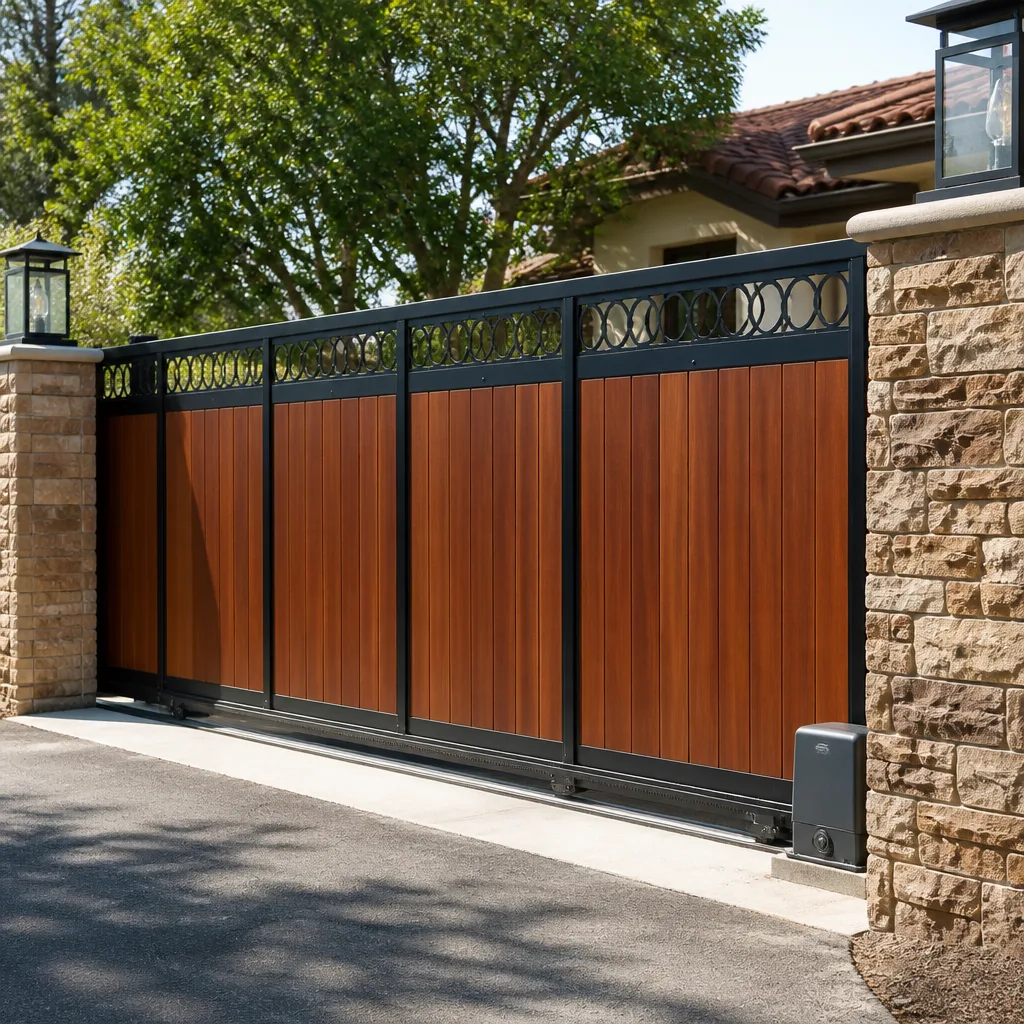 Sliding driveway gates
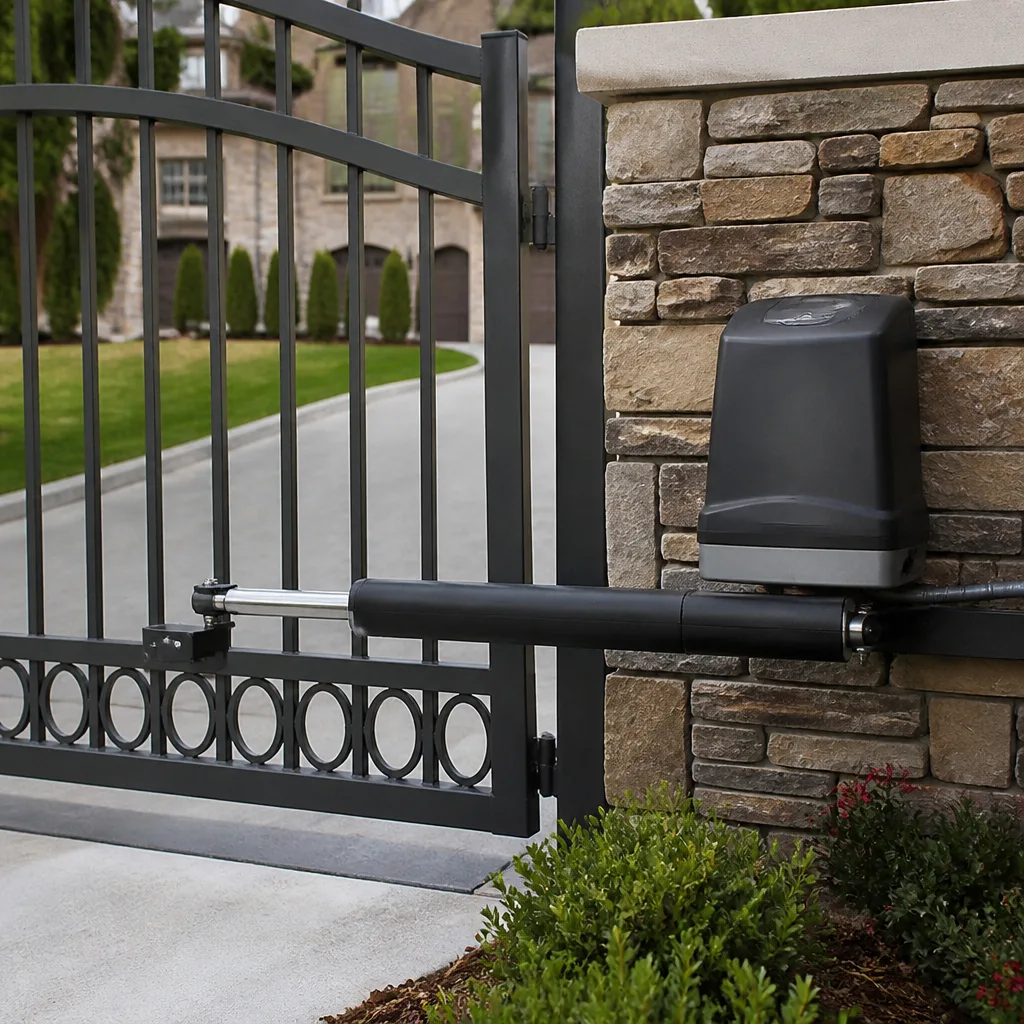 LiftMaster operators
Free on-site gate assessment - hinges, posts, and your LiftMaster or Nice gate operator checked before anything is quoted
The assessment is free and the quote is the invoice.
Get your free estimateChoosing the Right Gate Repair Brand: A Buyer’s Guide for Thornton
Most gate repair advice starts with brand reputation, and that’s a mistake. A drive gate operator can have an excellent build reputation and still be the wrong choice for your property if the nearest distributor who stocks its parts is a long way from Thornton, or if no local technician is familiar with how that controller behaves. Brand reputation tells you how a gate system was made. It doesn’t tell you how quickly it gets fixed. In this guide we’ll walk through parts availability, duty cycle, local certification, retrofit compatibility, and the total cost of ownership question, all framed for Thornton gates and the people who rely on them.
Quick Answer
The right gate repair brand in Thornton is the one a local specialist can diagnose quickly, source parts for without a multi-week wait, and match to your actual usage. That favors brands with strong Adams County technician presence and nearby parts pipelines, like LiftMaster, Linear, Viking, Ghost Controls, DoorKing, and Mighty Mule, over premium systems with thin local support. Brand quality matters. Local supply chain reality decides how long your gate stays down.
Styles & brands we work with
- Wrought iron
- Wood & steel frame
- Farm & ranch
- Sliding driveway gates
- LiftMaster operators
Table of Contents
- Why Brand Choice Affects Repair Time More Than Repair Quality
- Parts Availability and Distributor Proximity in the Thornton Market
- Matching Duty Cycle to Real Thornton Usage: HOAs vs. Private Driveways
- Local Technician Certification Presence in Thornton and Adams County
- The 10-Year Cost of Ownership: Mid-Tier vs. Premium Brands
- Retrofit Compatibility: What to Verify Before You Switch Brands
- Electric Gate Troubleshooting: What the Brand Tells You
- A Step-by-Step Framework for Choosing Your Brand
Why Brand Choice Affects Repair Time More Than Repair Quality
Almost every major gate operator brand on the market can deliver years of service if it’s installed and matched correctly. The variance between a well-made mid-tier brand and a premium one usually shows up in small refinements, not in whether the gate works. Where brands genuinely diverge is in how fast a failed component can be identified, sourced, and replaced. That gap matters more in practice than any spec-sheet advantage.
A gate that fails often fails on a specific part: a control board, a limit switch, the motor, a receiver, a photo-eye, or a keypad. If a technician can pull that part from a local distributor the same day or the next, your gate is back within one or two visits. If the part has to ship from a regional warehouse with a limited stock, you’re waiting. The waiting is what turns a mechanical problem into a daily inconvenience for anyone whose gate is their access control.
In our experience across Thornton driveways, the pattern holds. When we get called out to a gate that’s been down for days, it’s usually not a brand-quality problem. It’s a part that was hard to source because the brand’s local supply chain doesn’t reach here quickly. Picking a brand with a real local pipeline does more for your downtime than paying for the premium label.
This is also why we always ask what brand the gate is before we quote anything on a repair call. The brand dictates the parts path, and the parts path dictates the schedule. If you already own a gate and want it fixed, that path is what a specialist sorts out. If you’re choosing a brand for a new installation, you have a chance to pick a system that’s already easy to keep running.
Parts Availability and Distributor Proximity in the Thornton Market
Parts availability is a geographic question, not a spec-sheet one. The brands that keep a Thornton gate running are the ones with regional distribution coverage that reaches the north Denver metro without a special order. That’s the practical map to build. Here’s what we look at when we evaluate a brand’s local supply path.
What “good parts availability” actually means
- Common failure parts in stock regionally. Control boards, limit switches, motors, and receivers should be available without a special order.
- Multiple stocking distributors. One distributor thinning their inventory shouldn’t stall a repair.
- Reasonable shipping lanes from the nearest warehouse. If the brand’s regional stock doesn’t cover Colorado, the wait is measured in weeks, not days.
- A stable part-number history. Brands that retire parts quickly and replace them with incompatible versions create future sourcing headaches.
- Consumer-grade vs. commercial-grade inventory. Some brands are designed around consumer retail parts channels (Mighty Mule), others around dealer-owned commercial stock (DoorKing). Both can work, but the path differs.
Which brands tend to have strong local support
From what we see in Thornton and the surrounding Adams County market, brands like LiftMaster, Linear, Viking, and DoorKing tend to have the deepest local technician familiarity and the most accessible parts pipelines. Ghost Controls and Mighty Mule are popular for residential DIY-leaning installs, and their parts are usually quick to source through retail channels, though the trade-off is a smaller local specialist base. The premium end of the market has brands with devoted followings and excellent craftsmanship, and some of those have parts lead times that stretch well beyond a week from the nearest stocking distributor. That doesn’t make them bad. It makes them a repair-delay risk if you depend on the gate daily.
If you already own an operator and want to know whether it’s easy to keep running, our electric gate repair page covers how the brand affects what happens once the gate fails. If you’re choosing for a new install, use the parts map above as the first filter. A brand that can’t be serviced locally isn’t worth the premium, no matter how elegant the design.
Matching Duty Cycle to Real Thornton Usage: HOAs vs. Private Driveways
Duty cycle is the specification most Thornton buyers overlook, and it’s the one that most directly predicts whether a brand will last. Duty cycle is a way of expressing how hard the operator can work before it needs to rest. Two gates that look the same in your driveway can need very different operators because one runs a few times a day and one runs dozens.
How usage patterns differ in Thornton
- Private residential driveway: Typically 4 to 12 cycles a day. A standard residential operator (Ghost Controls, Mighty Mule, Linear residential models) can handle this comfortably if it’s matched to gate weight and length.
- Shared HOA entrance: Every homeowner who passes through counts. High-traffic HOA gates can run 100 to 400+ cycles a day during active hours. That’s commercial or high-cycle territory, and consumer operators will burn out.
- Small commercial property or storage yard: Depends on the tenant count and hours of operation, but frequently falls into the high-cycle range where FAAC, BFT, and DoorKing operators are the right match.
- Slope and wind load: Thornton sits on the wind-exposed eastern plains. A gate on an open lot in a windy neighborhood can load the operator harder than the same operator would face on a sheltered, tree-lined street.
The mistake we see most often is a commercial operator spec’d for a single driveway, or a residential operator pushed into HOA duty. The first wastes money. The second fails early. Neither is the brand’s fault.
How to translate your usage into a duty rating
- Count the cycles on a busy day. Not an average day. The gate has to survive the busiest day of the week.
- Note the gate’s weight and length. The operator spec sheet lists maximum weight and gate length. Go by the real numbers, not the label on the box.
- Identify the load factors. A driveway on a slope, a gate that catches wind, or a gate that binds on the track all add load.
- Match the brand and model to that picture. Residential operator for a private driveway. Commercial or high-cycle operator for an HOA or shared entrance.
- Confirm the operator supports the accessories you need. Loop detectors, keypads, access-control readers, and safety edges all draw on the operator’s control board. If the board doesn’t support them cleanly, the install gets patched together.
Getting this right the first time is where most of the money is saved. A brand whose residential line is excellent but whose commercial line is thin can be an easy choice or a bad one, depending on your gate. Thornton properties span both cases, and we see both every week.
Local Technician Certification Presence in Thornton and Adams County
Brand selection isn’t just about hardware. It’s about the technicians who already work on that hardware every week. A brand with a strong local technician community responds faster to repair calls, because the technician doesn’t have to learn the controller on your gate. That’s a real difference in diagnostic speed, and it’s the reason we’re certified to work on nine major brands, from LiftMaster and FAAC to Ghost Controls and DoorKing.
What to look for in a local specialist
- Familiarity with your brand’s control logic. Every brand names things differently and sequences diagnostics differently. A specialist who knows your controller reads the fault patterns faster than one who doesn’t.
- Brand-specific parts knowledge. Which part replacements are common, which are discontinued, and which have compatible substitutes. This is the difference between a repair and a stall.
- Diagnostic capability across the automation stack. Motor, control board, sensors, wiring, and mechanical components. If the technician doesn’t cover all five, they’ll hand you off eventually.
- Repair and installation under the same roof. A specialist who does both is more likely to have been hands-on with the brand across its product lifecycle, not just at install time.
- Comfort with both residential and commercial operators. A brand’s residential line and its commercial line behave very differently. A specialist who works both has a broader picture of what’s likely to fail.
One practical filter: when you call a gate company, ask what brands their technicians are certified to work on. The answer tells you whether you’re speaking to a gate specialist or a generalist who’ll subcontract the brand-specific work. For more on what gate repair covers across the major brands, our service page lays out the scope. In Thornton and the rest of Adams County, brands with deep local technician presence are easier to get repaired, and that’s a stronger predictor of total cost than any price sheet.
The 10-Year Cost of Ownership: Mid-Tier vs. Premium Brands
Over a 10-year window, premium-brand gate operators don’t automatically cost less to own. Sometimes they do. Sometimes the parts premium and sourcing delay more than cancel the reliability advantage. What makes the difference is how well the brand matches your property. A premium operator that’s brand-matched to your property can outlast a mid-tier one that isn’t, but the opposite is also true. This is why the total cost of ownership question doesn’t have one answer.
A framework instead of a fake number
We don’t publish a per-brand cost table because real numbers are property-specific, but here’s how we break down total cost of ownership when we evaluate a brand choice for a Thornton property:
- Install cost. Premium brands typically cost more up front. Sometimes meaningfully more.
- Parts cost per repair. Control boards and motors tend to be the two most expensive part replacements. Premium brands usually price those parts higher.
- Parts lead time. A branded part that takes 10 to 14 days from the nearest distributor costs you downtime even if you don’t pay more in dollars.
- Repair frequency. A well-matched operator fails less often across 10 years. A poorly matched one fails more, regardless of brand pedigree.
- Operator lifespan. A properly matched commercial-grade operator can outlast a residential-grade one under the same load. Under light residential use the difference narrows considerably.
- Accessory compatibility. Newer operators often require updated receivers, keypads, or safety edges. Older premium accessories can get expensive to replace individually.
Where the mid-tier often wins
For a private residential driveway with moderate usage, mid-tier brands like Linear, Viking, and Ghost Controls often deliver excellent total cost of ownership because the parts are widely available and service is fast. For an HOA that runs a gate hard for 10 years, the premium or commercial-grade operator is often worth the increased up-front cost because the duty-cycle match prevents mid-life failure. We’ve seen both outcomes repeatedly on Thornton properties, and the pattern is consistent. Match first, spend second.
Retrofit Compatibility: What to Verify Before You Switch Brands
When you’re replacing an operator, the new brand has to play nicely with the access control hardware you already have. A loop detector that worked perfectly with the old controller might need a different output, or a keypad might not be programmable with the new receiver. Retrofitting is usually where unprepared installs get expensive.
Checklist before you commit to a new brand
- Existing loop detectors. Confirm the new operator accepts the same loop signal type. Most do, but not all, and some need a different detector card.
- Keypads and readers. Verify that the new operator’s receiver supports the keypad or access-control reader you have. If it doesn’t, budget for a replacement.
- Safety edges and photo-eyes. Confirm the new controller has the input terminals and logic for the safety devices you have installed. This is a safety-critical check, not an optional one.
- Power supply and voltage. Most residential operators run on standard household voltage, but commercial units may not. Verify the supply matches the new operator’s spec.
- Wiring runs. Existing conduit and wiring types may or may not be compatible with the new controller. Running new wiring is the most expensive retrofit surprise.
- Gate weight and length compatibility. The new operator must be rated for the gate you have, not just for the property type.
- Brand-specific accessories. Some brands only pair with their proprietary keypads or receivers. If you have third-party access control, that can matter a lot.
If you’re not sure what your existing access control hardware is or how it’s wired, that’s a conversation for a specialist. We work on your brand so we can typically evaluate compatibility on a site visit before recommending a replacement. When you’re ready to talk through an install or a retrofit, the Gate Repair Thornton team handles the brand-by-brand assessment so the new operator and your existing hardware agree on day one.
Electric Gate Troubleshooting: What the Brand Tells You
Electric gates fail in predictable ways, and the brand influences which failure points dominate. A controller-heavy system stresses its control board first; a mechanically-driven operator stresses the motor and limit switches. Knowing which failure patterns your brand tends to have tells you what to keep an eye on as your gate ages.
- Control-board-heavy brands often show intermittent faults (a gate that opens but doesn’t close, or stops partway) before a board failure. Those symptoms are worth a diagnostic before they become a dead gate.
- Motor-and-mechanical brands usually show physical strain (a slower gate, binding, unusual noise) before a motor failure.
- Receiver-and-accessory brands often fail at the point of entry (keypad or remote doesn’t trigger the gate) even when the gate itself is healthy.
- Sensor-heavy brands (particularly commercial operators with photo-eyes and loop detectors) often tripping in wind or after a power dip is usually a sensor or alignment issue, not a controller failure.
This is where brand-specific knowledge saves real time. A technician who doesn’t know your brand reads every symptom from scratch. A specialist recognizes the pattern, checks the most likely part, and often finds the issue on the first visit. If your gate is already acting up and you want the diagnosis side sorted quickly, that’s what our Thornton page is for, and it’s also why we stay brand-certified rather than trying to cover gates generically.
A Step-by-Step Framework for Choosing Your Brand
Brand selection is a short process when you sequence it correctly. Here’s how we’d walk a Thornton homeowner or property manager through it.
- Define the usage. Private driveway, HOA entrance, or commercial access. Count the busy-day cycles, note the gate weight and length, and flag slope or wind exposure.
- Pick a duty class. Residential operator for a private driveway; commercial or high-cycle operator for anything shared or commercial.
- Filter by local parts availability. Of the brands that match your duty class, which ones have strong Adams County distributor and technician presence?
- Check technician familiarity. Ask what brands the technicians are certified on. If your brand isn’t in the answer, that’s a strong signal to reconsider.
- Verify accessory compatibility. Loop detectors, keypads, readers, safety edges, and wiring. Confirm compatibility before you commit.
- Evaluate total cost of ownership. Install cost, parts cost, parts lead time, repair frequency, and operator lifespan. Weight lead time heavily if the gate is your primary access.
- Confirm the install scope in writing. Gate, operator, accessories, wiring, and any site work. The written estimate is what sets the price.
None of these steps requires you to become a gate expert. They require you to ask the right questions of the specialist you’re working with. The right specialist asks them back.
Common Mistakes to Avoid
- Buying on brand reputation alone. A premium label with thin local parts support can leave your Thornton gate down longer than a mid-tier brand with a full local pipeline. Reputation doesn’t source parts.
- Spec’ing a residential operator for an HOA entrance. High-cycle usage eats residential operators. Match duty class to actual traffic, not to the nice-looking design.
- Switching brands without checking accessory compatibility. Loop detectors, keypads, and safety edges don’t always swap cleanly between brands. A retrofit surprise is expensive.
- Ignoring lead time when comparing parts prices. A slightly cheaper part that arrives two weeks late isn’t cheaper. It’s a two-week gate outage.
- Hiring a generalist for a brand-specific problem. A fence company that also handles gates will often hand the controller work off eventually. A gate specialist won’t.
- Skipping the safety-edge check. Safety devices on an electric gate protect people and vehicles. If the brand switch drops a safety edge off, it’s a real hazard, not a technicality.
- Assuming the middle of the market is the compromise. Mid-tier brands often deliver the best total cost of ownership for a private driveway. The premium isn’t always the better buy.
See the difference
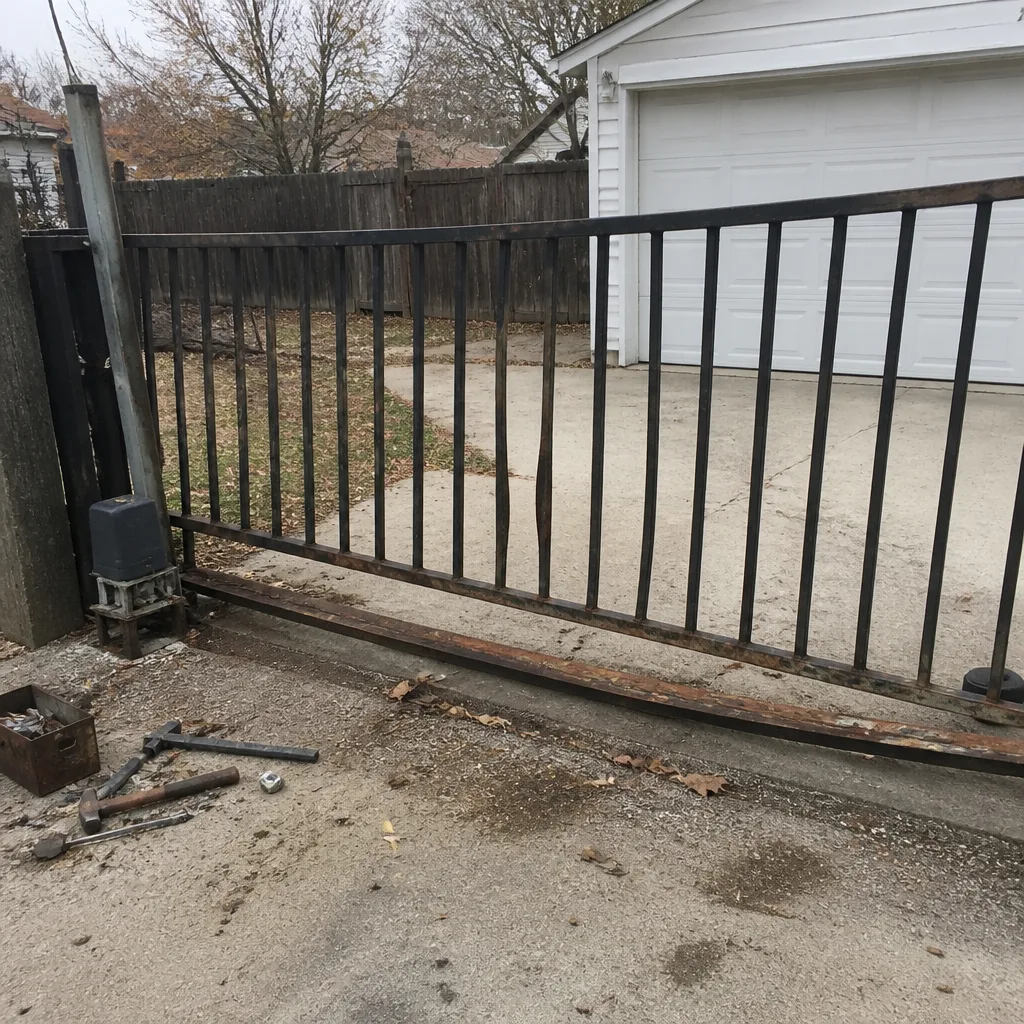 Before
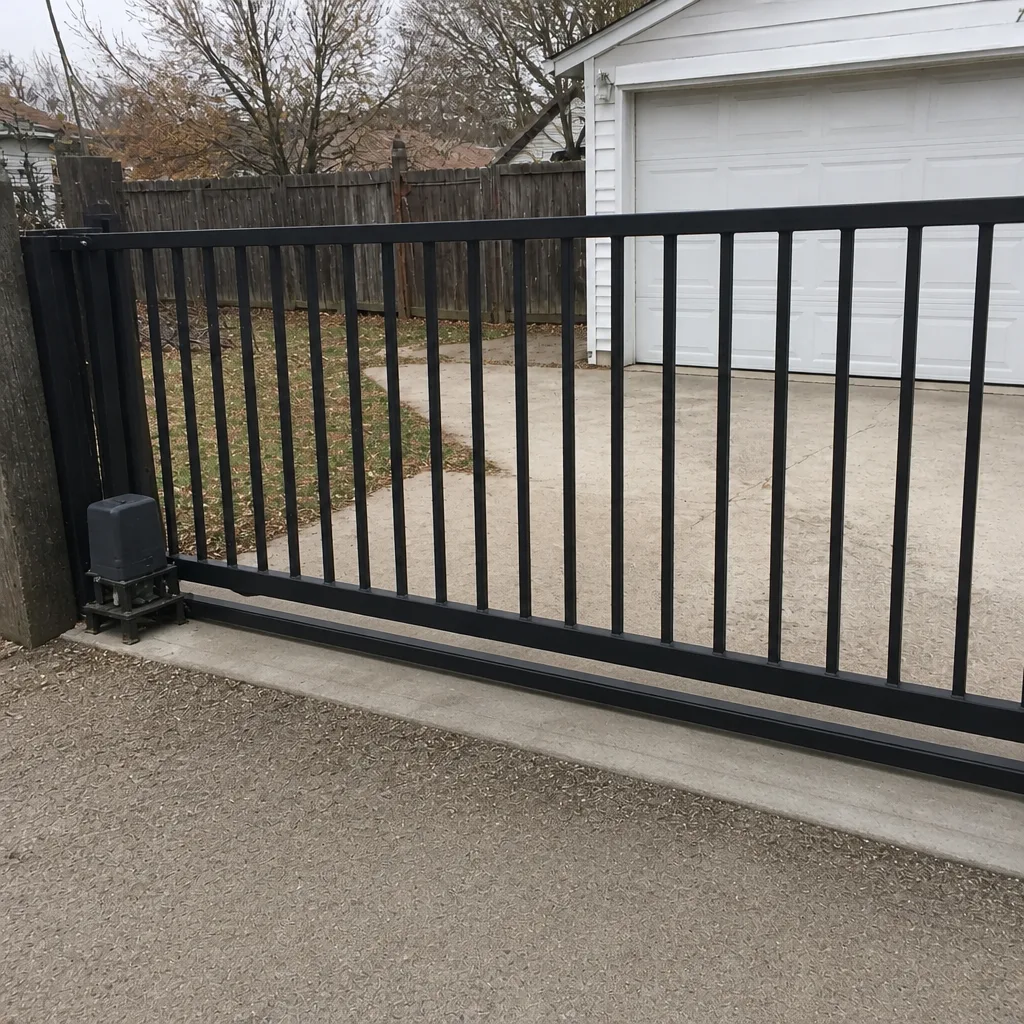 After
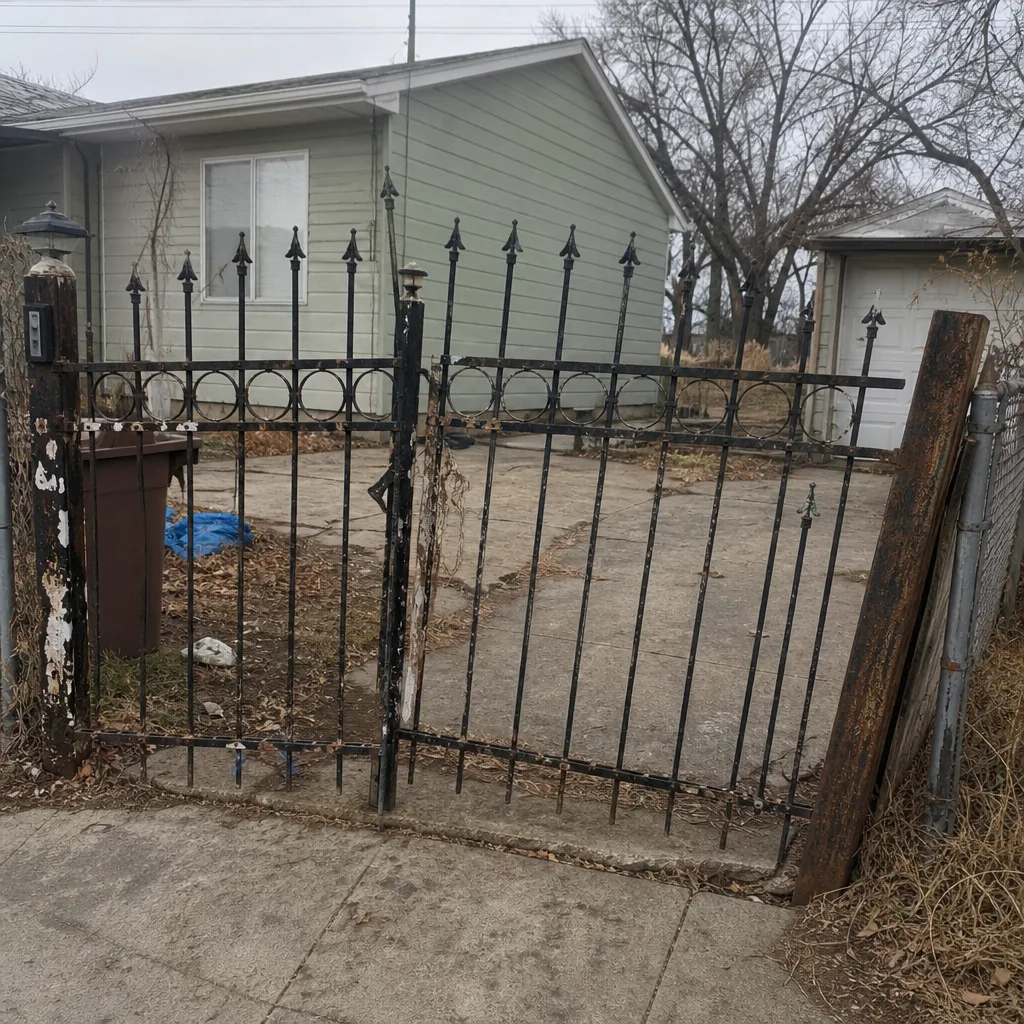 Before
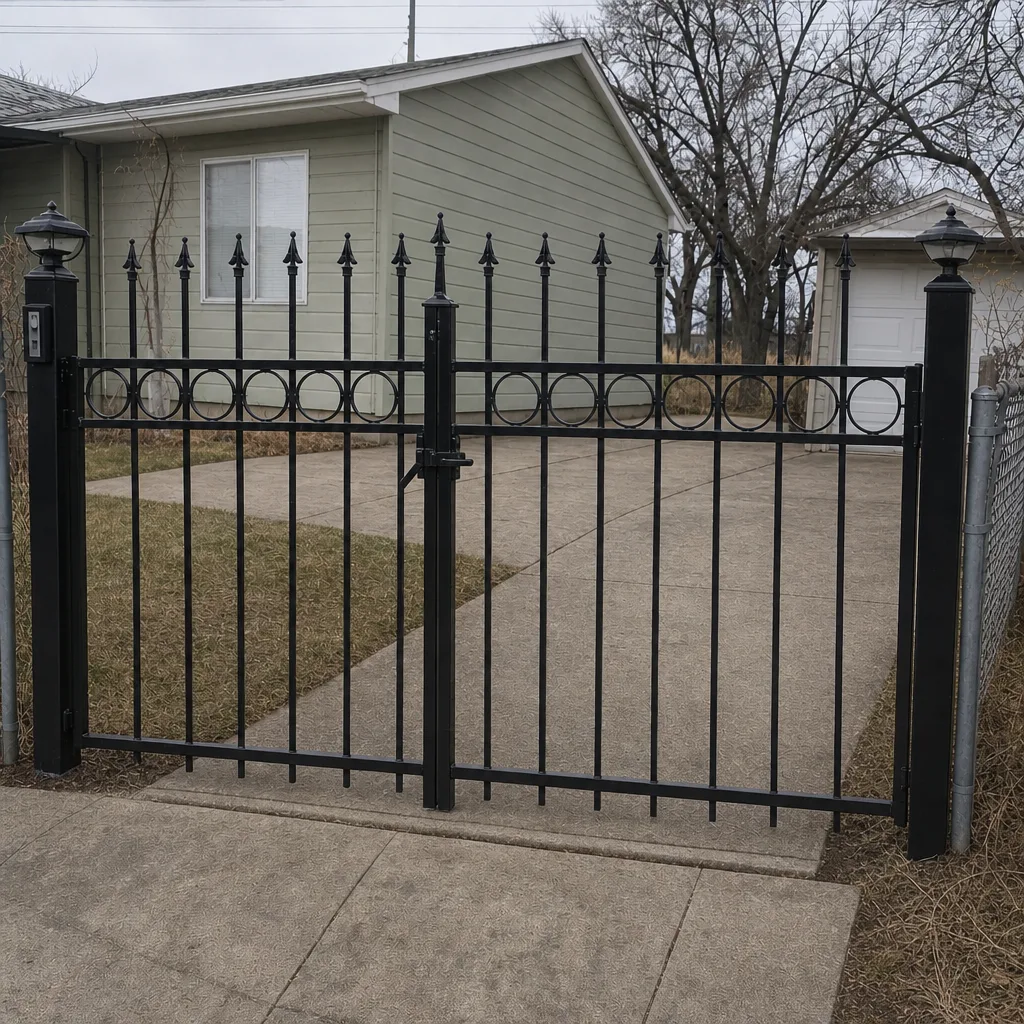 After
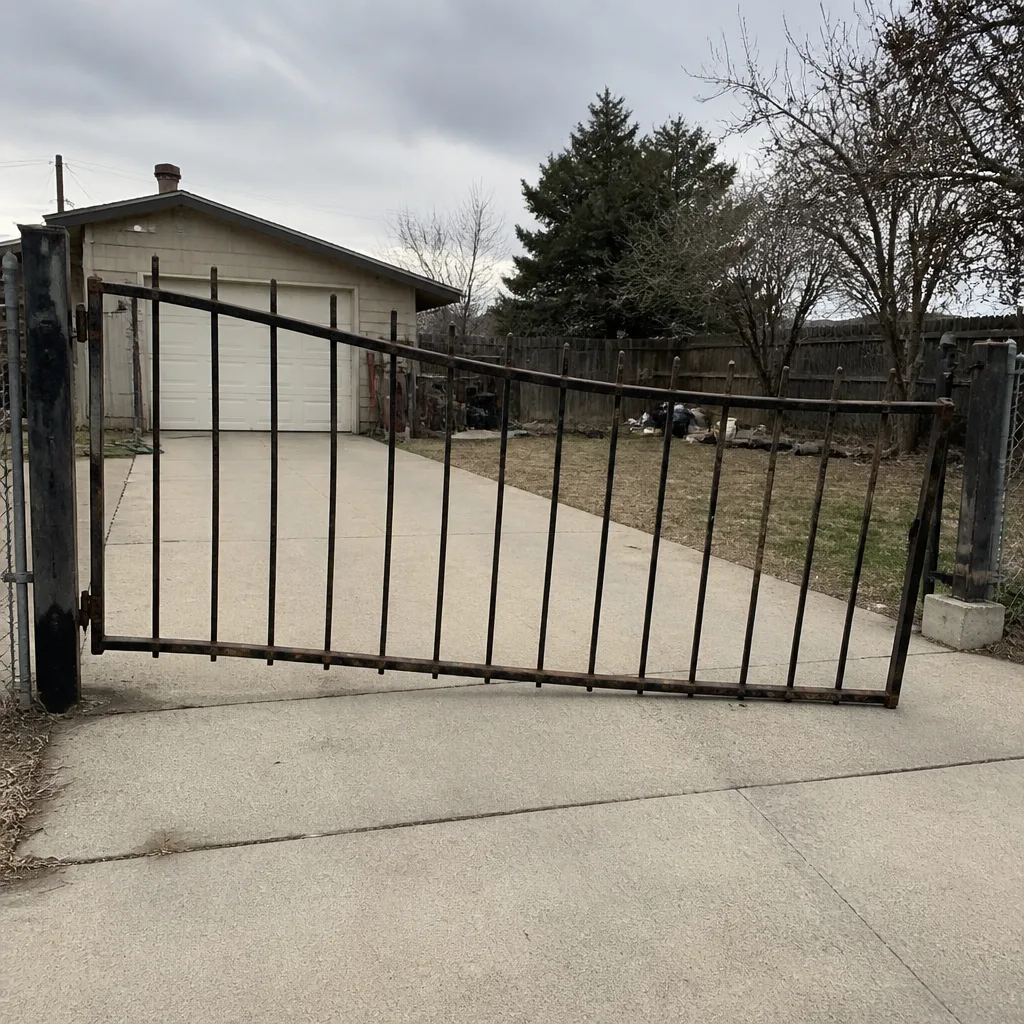 Before
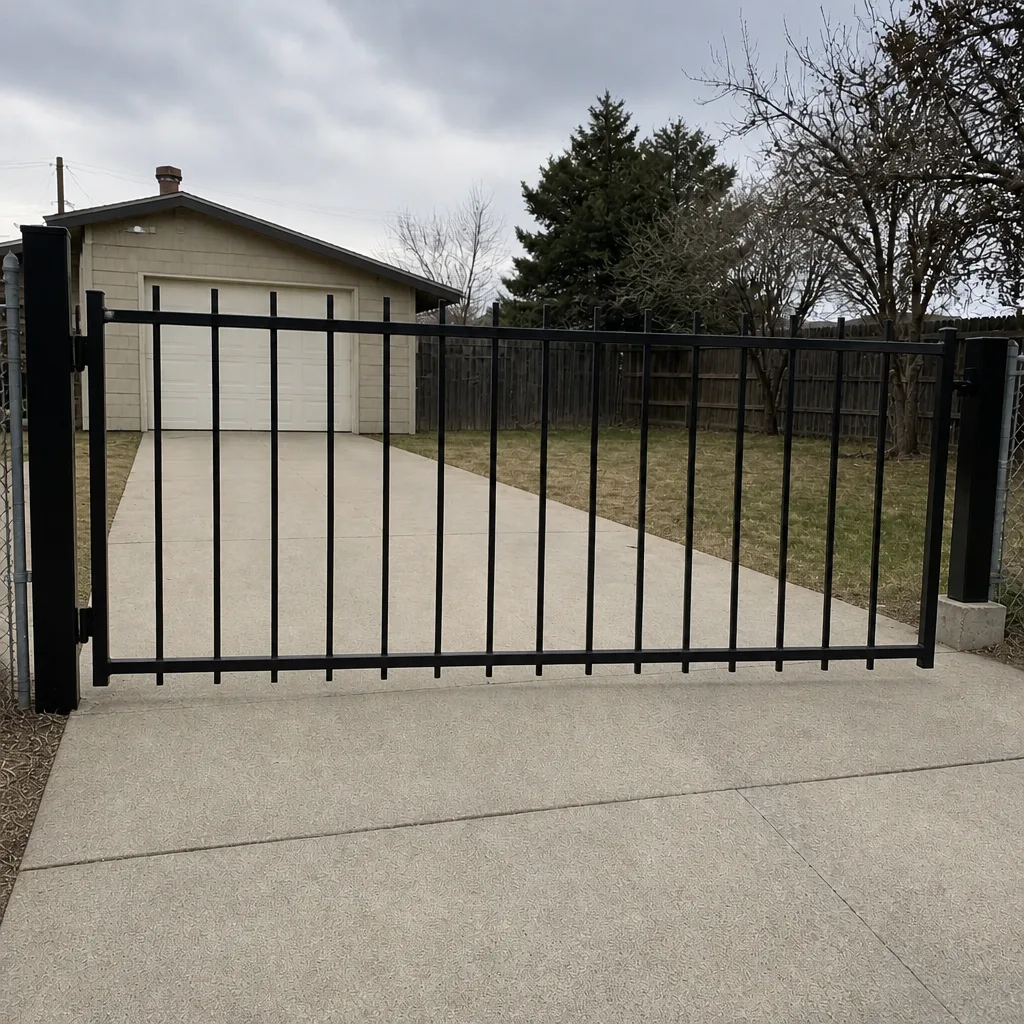 After
When to Call a Professional
Some gate problems are simple enough for a skilled DIY audience to spot without tools: a tripped breaker, a keypad that’s stopped responding, a photo-eye that’s been knocked out of alignment. Most aren’t. Anything that involves opening the operator housing, diagnosing a control board, working near the power run, or adjusting the mechanical linkage is a trained-professional job, and the same is true for any gate whose safety edges have stopped functioning. Heavy gate panels and slide gates that come off their track are a crushing hazard. Gate Repair Thornton offers free estimates in Thornton. Call (866) 389-4610. We answer 24/7. Fast dispatch from 7am to 7pm, Sunday through Friday.
Frequently Asked Questions
For most private Thornton driveways, mid-tier residential brands like Linear, Viking, or Ghost Controls balance local parts availability and reasonable install cost well. For an HOA or commercial entrance with high-cycle usage, a commercial operator (FAAC, BFT, or DoorKing) is usually the better match. Match your duty class and your local parts pipeline first, then your brand preference. Call (866) 389-4610 for an exact quote. Estimates are free.
Parts lead time depends entirely on the brand and the specific part. Common failure parts on brands with strong Colorado distribution coverage usually arrive within a day or two. Premium brands with thinner regional stock can take a week or two and sometimes longer, which is the practical reason to weigh parts availability heavily before choosing. Call (866) 389-4610 if your gate is down and you want to know what the sourcing picture looks like for your brand.
Our technicians are certified to work on nine major gate and operator brands, including LiftMaster, FAAC, BFT, Linear, Viking, Ghost Controls, DoorKing, Elite, and Mighty Mule. That coverage spans residential brands and commercial-grade brands, so most Thornton gates fall within our workshop. Call (866) 389-4610 to confirm your brand and discuss the repair. Estimates are free.
Yes, but the accessories around the operator need to stay compatible. Loop detectors, keypads, readers, safety edges, and existing wiring are the retrofit points to verify before committing. Some brands accept third-party accessories cleanly, and others require matching equipment, so the check matters. Call (866) 389-4610 to talk through a retrofit before you buy.
Not automatically. Premium brands often cost more up front and in parts, and their total cost of ownership advantage depends on whether they’re matched to your usage. On a high-cycle HOA entrance they usually earn the extra spend; on a light residential driveway they often don’t. Match the duty class first, then the brand. Call (866) 389-4610 for an exact quote. Estimates are free.
Count the cycles on your busiest day, not an average day. A private driveway typically runs a handful of cycles a day and fits a residential operator cleanly. A shared HOA entrance can run hundreds, which pushes it into commercial or high-cycle territory. Wind exposure on the eastern plains adds load, so factor in the gate’s real conditions. Call (866) 389-4610 and we’ll talk through your gate’s actual usage before recommending anything.
The Bottom Line
The right gate repair brand in Thornton is the one that gets your gate running again quickly, not the one with the best reputation. That means matching duty class to real usage, weighing parts availability and local technician coverage ahead of brand prestige, verifying access-control compatibility before you switch, and judging total cost of ownership across 10 years rather than at the point of sale. Premium isn’t always better, and mid-tier isn’t a compromise. Brand choice is a local supply chain decision, and picking with that in mind is how your gate stays running.
If your gate needs a repair, a diagnosis, or a new operator install, call Gate Repair Thornton at (866) 389-4610 for a free estimate. We answer 24/7. Fast dispatch from 7am to 7pm, Sunday through Friday. Our technicians have up to 15 years of experience, we work across the major gate and operator brands, and the estimate is free with the price set per job in writing before any work starts.
Written by the team at Gate Repair Thornton.