
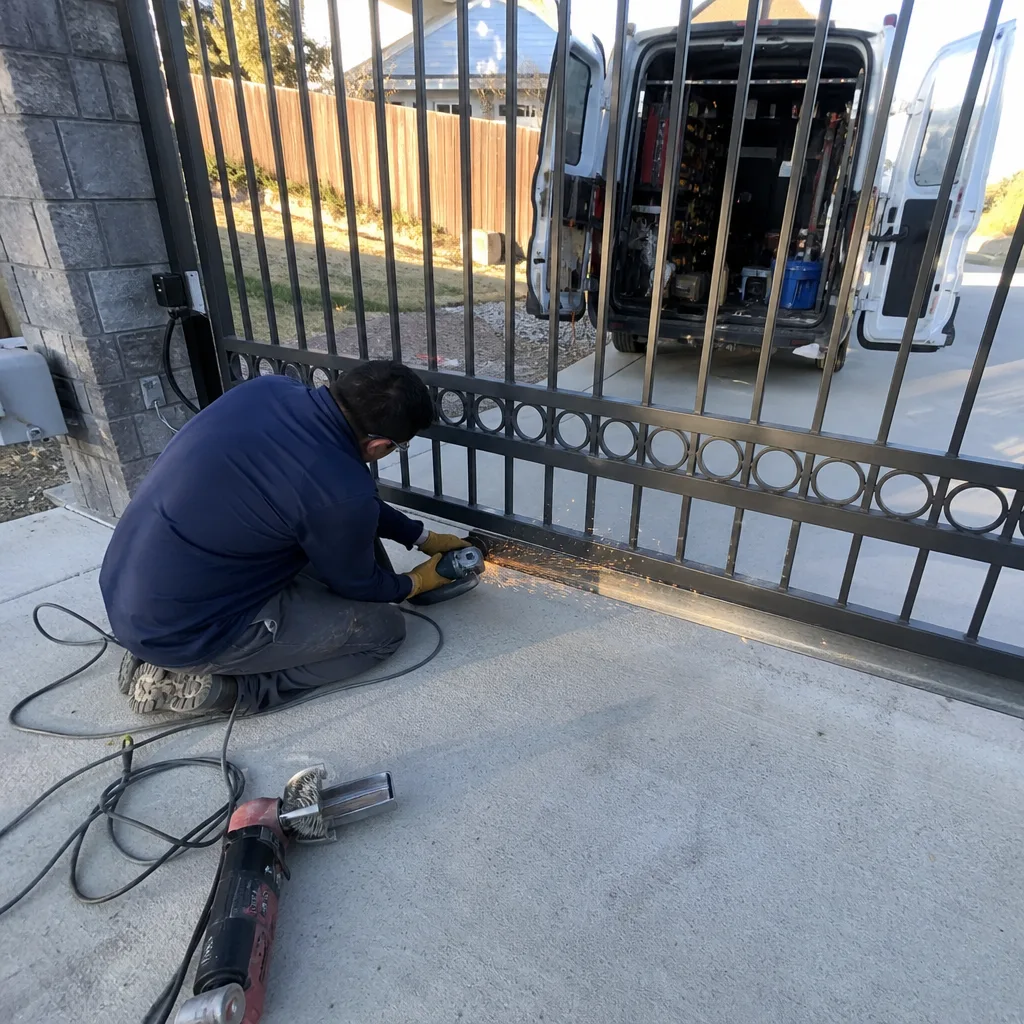
Last updated November 15, 2026
 Wrought iron
 Wood & steel frame
 Farm & ranch
 Sliding driveway gates
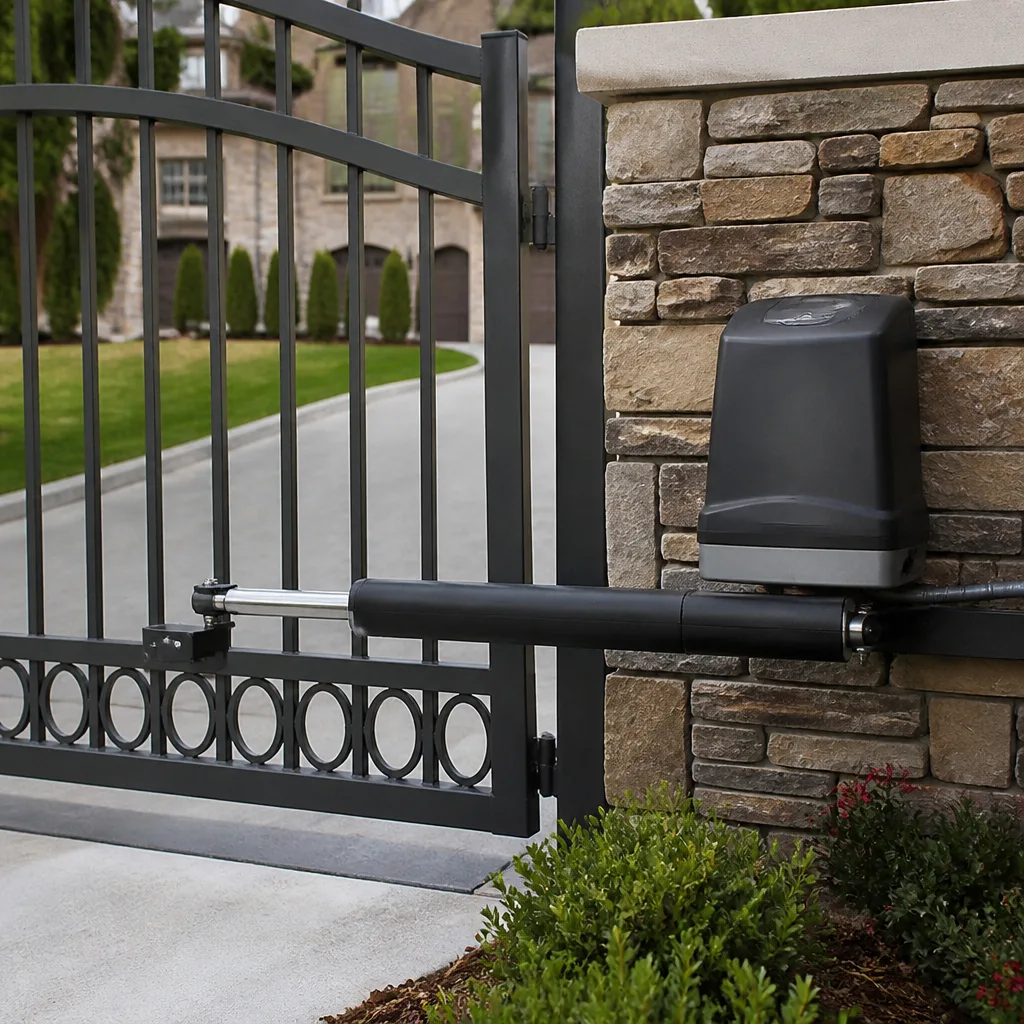 LiftMaster operators
Free on-site gate assessment - hinges, posts, and your LiftMaster or Nice gate operator checked before anything is quoted
The assessment is free and the quote is the invoice.
Get your free estimateThe Complete Guide to Gate Repair in Thornton
The most expensive gate repair mistake in Thornton isn’t hiring the wrong contractor. It’s replacing a motor when the real culprit is a misaligned limit switch that costs $15 to fix. It’s paying for a new control board when a clay-shifted post has been torquing the gate arm for months. We’ve seen both. We’ve also watched homeowners spend three weekends adjusting sensors that were never the problem. Gates fail in a handful of predictable ways, and once you can match a symptom to its actual cause, you stop paying for repairs that don’t repair anything. This guide maps every common failure to the cause behind it, explains how Thornton’s soil and weather shape the way gates break here, and tells you which problems are urgent and which can wait a week. You’ll learn how to read your own gate before you call anyone.
Quick Answer
Most gate failures in Thornton trace back to one of five root causes: power and wiring faults, control board or limit switch problems, operator motor wear, mechanical damage to panels or hinges, or gate post movement caused by shifting soil. Identifying which category you’re dealing with before you call determines whether a small adjustment fixes the gate or a component genuinely needs replacing. A trained technician can usually narrow it down during a single on-site visit.
Styles & brands we work with
- Wrought iron
- Wood & steel frame
- Farm & ranch
- Sliding driveway gates
- LiftMaster operators
Table of Contents
- What Are the Five Root Causes of Gate Failure in Thornton?
- Why Does Thornton’s Clay Soil Make Gates Fail?
- Repair or Reconfigure? What Changed on Your Property?
- Brand-Specific Failure Patterns: What We See in Thornton Subdivisions
- Why Electric Gate Repairs Follow a Different Sequence
- The Decision Tree: Which Failures Can’t Wait?
- What to Check Before You Call Anyone
- What Drives the Cost of a Gate Repair in Thornton?
What Are the Five Root Causes of Gate Failure in Thornton?
Almost every non-working gate we look at falls into one of five buckets. Sorting a problem into the right bucket is the single most useful thing you can do before requesting gate repair. It tells you what a technician will need to bring, roughly how long the visit will run, and which questions to ask on the phone.
- Power and wiring. The gate is dead, the operator has no lights, or it works intermittently when the wind blows. Low-voltage runs to the operator, damaged wire in a driveway expansion joint, or a tripped breaker at the panel are the usual suspects. Wiring faults are common in Thornton because our freeze-thaw cycles work buried conduit and direct-burial wire loose over several seasons.
- Control board and limit settings. The gate moves but stops short, reverses for no reason, or runs past its intended stop point. A limit switch that’s slipped out of position, a board that’s lost its programming after a power surge, or a photo-eye that’s misaligned can all produce symptoms that look like motor failure. This is where the misdiagnosis happens most often.
- Operator motor wear. The motor strains, hums without moving, or overheats and shuts down. On residential operators this is usually genuine wear after years of cycles. On high-cycle commercial operators it’s a matter of duty rating and usage.
- Mechanical damage. Sagging hinges, a bent panel from a vehicle nudge, a slide gate that’s jumped its track, or a roller that’s seized. These are visible problems and easy to confirm with a visual inspection.
- Post movement and footing. The gate looks fine but drags, scrapes, or binds at one end of its travel. The gate post has moved, not the gate. This is the failure category most often mistaken for an operator problem, and it’s the one that costs homeowners the most in unnecessary parts.
Notice that only one of the five is a motor problem. In our experience, a large share of gates brought in as “motors gone bad” turn out to be items one, two, or five. That’s why the diagnostic step matters more than the parts list.
Why Does Thornton’s Clay Soil Make Gates Fail?
Thornton sits on expansive clay soil, and that soil moves with moisture. It swells after a wet spring and shrinks through a dry summer, and it can shift noticeably between seasons. A gate post that was set properly at proper footing depth can still be worked loose over time as the ground around it heaves and settles. When that happens, the gate doesn’t look broken. It looks like the operator has lost power, or the motor has weakened, or the gate “just doesn’t close all the way anymore.”
Here’s how to tell post movement from operator failure before you call anyone:
- Disconnect the operator and try the gate by hand. If the release is available to use safely, a manual swing or slide tells you a lot. A gate that binds, scrapes, or drags when you move it by hand has a mechanical or post problem, not a motor problem.
- Look at the gap at the bottom of the gate along its full swing or slide. A gap that changes from a finger width to touching the ground across the travel points to a post out of plumb.
- Check the post itself with a level if you have one. Slight lean is often enough to make a gate bind at the latch end.
- Listen at the open and close limits. A motor that labors only near one end is fighting resistance, and post movement is a leading cause of exactly that pattern.
If the gate moves freely by hand but the operator still struggles, the problem is in the operator or its settings. If the gate fights you by hand, fixing the motor won’t fix the gate. We’ve seen homeowners replace a perfectly serviceable operator on a gate that needed a post reset and a hinge adjustment. The post work comes first, or the new motor will strain against the same resistance the old one did.
This is why Thornton gates need a diagnostic that goes beyond checking the operator box. A technician who only works on gate systems learns to check the mechanical side first on any gate older than a few seasons, because on clay-heavy ground it’s the more likely culprit.
Repair or Reconfigure? What Changed on Your Property?
Sometimes the gate isn’t broken at all. Something around it changed, and the gate was never updated to match. This distinction matters because a repair restores a working system and a reconfiguration adapts the system to a new condition. They’re different jobs with different scopes, and a technician who doesn’t ask what changed on the property can spend an hour chasing a fault that isn’t there.
Common changes that make a working gate act broken:
- An HOA fence modification or shared-fence replacement. If a fence line was rebuilt or a panel was replaced near your gate, a post, a hinge anchor, or the gate frame itself may have been disturbed. The operator is still trying to move the gate as it did before, but the geometry has changed.
- Driveway repaving or resurfacing. New asphalt or concrete raises the surface by a small amount. On a slide gate, that can lift a track or change the clearance under a gate leaf. On a swing gate, the pivot relationship can change enough to bind the gate at the latch.
- Landscaping near the gate. New planting or grading at the gate end of a driveway can push soil against a post or shift the ground under a track.
- A new sensor or safety device added. Installing a photo-eye or loop detector in a different position can cause the operator to read a false obstruction. The gate isn’t failing; it’s doing exactly what its safety circuit tells it to do.
- A power event. A surge can reset operator programming, wipe the limit positions, or leave a control board in a state where it needs to be re-taught. That’s a configuration issue, not a failed part.
If the gate worked reliably before a fence, driveway, or landscaping project and stopped afterward, tell that to whoever you call. It shortens the diagnostic step and often avoids a part replacement entirely. A good technician will ask about recent changes anyway. A great one will ask before quoting anything.
Brand-Specific Failure Patterns: What We See in Thornton Subdivisions
Gates installed across Thornton’s subdivisions and newer neighborhoods tend to cluster around a set of operators that contractors and builders specify repeatedly. That pattern of installed equipment means we see certain failure habits repeat more than others. None of these are design flaws so much as predictable wear paths to know about.
LiftMaster Systems
LiftMaster operators are common on residential driveway gates, and the most frequent pattern we diagnose is limit switch drift. The gate travels a few degrees past or short of its stop, or reverses at the end of travel. The limit switch or its programming has moved, sometimes after a power interruption. The second pattern is a control board that has lost a setting rather than failed outright. Re-teaching limits and checking the safety edges usually resolves it without a part replacement, which is a relief for homeowners who were quoted a new board.
Viking Systems
Viking swing operators in residential settings tend to show their age at the hinges and gate sag point first. As the gate leaf settles, the operator has to work harder through part of its swing, and the symptom presents as a weak motor near one end of travel. Check hinge wear and gate sag before condemning the operator. When the hinges are tight and the gate swings freely, the operator is usually fine.
FAAC Systems
FAAC operators appear on both residential and light-commercial gates in Thornton, and the failure pattern we see most is voltage-related. Low supply voltage at the operator, or a power run that’s degraded over time, can leave the operator working intermittently or failing to complete a cycle. On high-cycle commercial gates, the load on the operator shows up as overheating during busy periods. FAAC hardware is robust, which is why we look at the electrical side before the motor on a FAAC gate that seems weak.
We also work on Mighty Mule, BFT, Linear, Ghost Controls, Elite, and DoorKing systems. The pattern across brands is consistent: the operator is blamed first and diagnosed last. Our technicians have up to 15 years of experience, and the habit they’ve built is to test the gate and the power before pulling a motor or a board.
Why Electric Gate Repairs Follow a Different Sequence
An electric gate has two systems layered on top of each other: the mechanical gate and the powered operator. A manual gate only has one. That sounds obvious, but it changes the repair sequence completely, and it’s where a generalist who dabbles in gates goes wrong. electric gate repair is a specialized sequence, and skipping the early steps is how parts get ordered that didn’t need to be.
The correct sequence for an electric gate in Thornton looks like this:
- Confirm the gate is safe to test. Disconnect the operator before touching the gate by hand. On a swing gate, a gate that moves under operator power while you’re checking it is a crushing hazard. On a slide gate, a gate that’s jumped its track can come off. We don’t start a diagnostic until the gate is isolated and stable.
- Test the mechanical gate without power. Manual swing or slide, check for binding, hinge wear, and post movement. This is the step that’s skipped most often, and it’s the one that catches clay-soil post problems before anyone opens the operator cover.
- Check power and wiring at the operator. Is the operator getting the voltage it needs? Is the wiring intact along the run? Is the breaker and any in-line disconnect sound? A gate isn’t “dead” until you know power is reaching the box.
- Check the control board and safety circuits. Photo-eyes, safety edges, loop detectors, keypads, and access controls all feed the board. A misaligned photo-eye looks exactly like a failed board. Test the safety circuit before replacing the board.
- Test the operator under load. Once the gate moves freely and the electrical side checks out, then and only then do you test the motor’s ability to move the gate. If it fails here with everything else confirmed, you’ve got a motor or operator problem worth the part.
- Reconfigure and re-test. Limits, safety, and access controls get set and tested in sequence before the job is closed out.
For a manual gate, the same job collapses to steps one and two, plus any repair to the gate itself. For an electric gate, the added steps are where focus matters. A company that splits its time between fences, garage doors, and general contracting may run the operator steps and skip the mechanical ones, which means a gate with a moving post gets a new motor and comes back. When every job a technician handles is a gate job, the sequence becomes second nature. On the operator side, an expert gate repair in Thornton visit also checks the keypad and access controls, not just the motor and board.
One more note on the electrical side: the line voltage feeding a gate operator is not a DIY project. Terminals and wiring at the operator are live, and a mistake there can injure someone or damage equipment. We recommend a licensed electrician or a trained gate technician for anything beyond a visual check and a breaker reset.
The Decision Tree: Which Failures Can’t Wait?
Not every gate problem is urgent, and treating every issue like an emergency leads homeowners to pay for rush work that wasn’t needed. Some failures are genuine safety issues that need attention right away. Others can wait a week without risk to anyone or anything. Here’s the split we use.
Same-day, safety-critical (don’t wait):
- A gate that’s stuck open, especially on an access-controlled property, an HOA, or a commercial lot.
- A swing gate that closes on people, vehicles, or property rather than stopping at its limit.
- A slide gate that has come off its track, is leaning, or is held up only by the operator. This is a crushing hazard and a fall hazard.
- A gate operator with visible damage to the power supply or wiring, or a burning smell at the operator box. Stop using it and get it looked at.
- A safety photo-eye or safety edge that isn’t stopping the gate. The gate is no longer safe to operate.
Can wait several days (schedule a visit):
- A gate that’s stuck closed on a residential property with no access-critical need. It’s inconvenient, not dangerous.
- A gate that operates but has a new rattle, squeak, or slow spot near one end of travel.
- A keypad or remote that’s stopped working while the gate still functions from the operator.
- A gate that’s harder to open by hand than it used to be, with no crash or binding.
- Cosmetic damage to a panel or a finish with no effect on operation.
On either side of the split, the safe move is the same: stop forcing the gate. If the gate is stuck and you can leave it where it is, leave it. Forcing a heavy swing or slide leaf by hand can bend a hinge, damage a track, or drop a gate leaf. Our technicians are trained on both residential and commercial operators, so if the problem looks commercial-grade, say so on the call.
If you’re unsure which bucket a failure falls into, call and describe it. We answer 24/7, and fast dispatch from 7am to 7pm Sunday through Friday gets a technician out to look.
What to Check Before You Call Anyone
A few minutes of checking at the gate before you call saves time and often heads off an unnecessary visit. None of these checks involve opening the operator or touching wiring. They’re visual and safe.
- Watch the gate move and note exactly where it fails. Does it fail at open, at close, partway through, only in cold weather, only after a power flicker? Specifics speed up the diagnosis.
- Note whether the operator has any lights or display. A dead display usually points to power or the board. A live display points more often to a setting, a safety circuit, or a mechanical issue.
- Look for physical obstructions and damage. A branch in a slide track, debris on a photo-eye, a bent hinge, a panel out of line. Clear the safe ones and see if the gate behaves differently.
- Check the breaker and any disconnect at the operator. A tripped breaker is worth resetting once. If it trips again, stop and call.
- Test the remote and keypad separately. If one works and the other doesn’t, the problem may be the remote or the access controller, not the gate operator.
- Note what changed recently. Fence work, paving, landscaping, a windstorm, a power outage. Tell the technician. It’s often the fastest path to the root cause.
What not to do: don’t open the operator housing, don’t touch terminals, don’t try to adjust limit switches or safety edges without knowing the system, and don’t force a jammed gate. The operator is a powered system. Treat it like one.
What Drives the Cost of a Gate Repair in Thornton?
Gate repair pricing is set per job by the written estimate, and the number depends on which of the five root causes is actually at work. A limit switch misalignment or a hinge adjustment is a small job. A control board or operator motor replacement is a larger one. The point of a proper diagnostic is to land on the smaller number when the cause is small, instead of defaulting to the biggest part in the system.
Here’s how the cost drivers line up:
- Diagnostic complexity. A gate with multiple interacting faults takes longer to isolate than a single fault. Wiring problems under a driveway take longer than a visible hinge issue.
- Which component is actually failing. Adjustments and minor hardware are at the low end. Control boards, motors, safety edges, and access controls sit higher. The written estimate maps to the part, not to the symptom.
- Manual vs. electric. Electric gate work involves the mechanical gate plus the operator, safety circuit, and access controls. That’s a broader scope of work than a manual gate.
- Post and footing work. If clay soil has moved a post, resetting a post and correcting the gate’s swing adds work beyond replacing a part. It’s often the repair that actually fixes the gate.
- Gate size and drive type. A heavy slide gate on a commercial duty operator is a different job from a residential swing gate.
- Brand and part availability. Parts for the brands we work on most often are generally straightforward to source. Unusual or obsolete hardware can affect the job.
The estimate is free, and the price is quoted and agreed before any work starts. You’ll know what’s being fixed and why before a technician begins. If a diagnosis turns up a different cause than expected, that should come back to you as a revised estimate before anything gets swapped. If a quote for a repair arrives with no diagnostic behind it, ask what was tested. A motor is the most replaced part on a gate and the least often the actual fault.
If you’re weighing repair against replacement, ask about both. Sometimes a gate has reached the point where a new system makes more sense than repeated repairs, and a specialist who handles new gate installation as well as repair can give you a straight comparison rather than steering you to one outcome. Our technicians are experienced with LiftMaster, FAAC, Viking, Mighty Mule, BFT, Linear, Ghost Controls, DoorKing, and Elite systems, so whether your gate is a residential operator or a high-cycle commercial system, the diagnostic starts from a place of familiarity.
Common Mistakes to Avoid
- Replacing a motor before testing the gate by hand. On Thornton’s clay soil, a binding gate is far more common than a failed motor, and a new motor on a binding gate will fail too. Always test the mechanical gate first.
- Paying for a new control board when the safety circuit is misaligned. A dirty or knocked photo-eye looks exactly like a board fault. Test the safety circuit before authorizing a board.
- Ignoring what changed. If a fence or driveway project preceded the failure, say so before the visit. The repair might be a reconfiguration, not a replacement.
- Choosing a generalist for an electric gate. Fence and garage-door companies often skip the mechanical diagnostic steps and jump to parts. A gate specialist runs the full sequence.
- Forcing a jammed gate by hand. A heavy swing or slide leaf pushed hard can bend a hinge, jump a track, or drop a gate leaf. Stop and call instead.
- Treating every failure as an emergency. A stuck-closed residential gate with no access need can wait. A stuck-open gate on a commercial lot or HOA cannot. Match the urgency to the actual risk.
- Opening the operator box to “take a look.” Line voltage and control terminals are live. Leave the inside of the operator to a trained technician.
See the difference
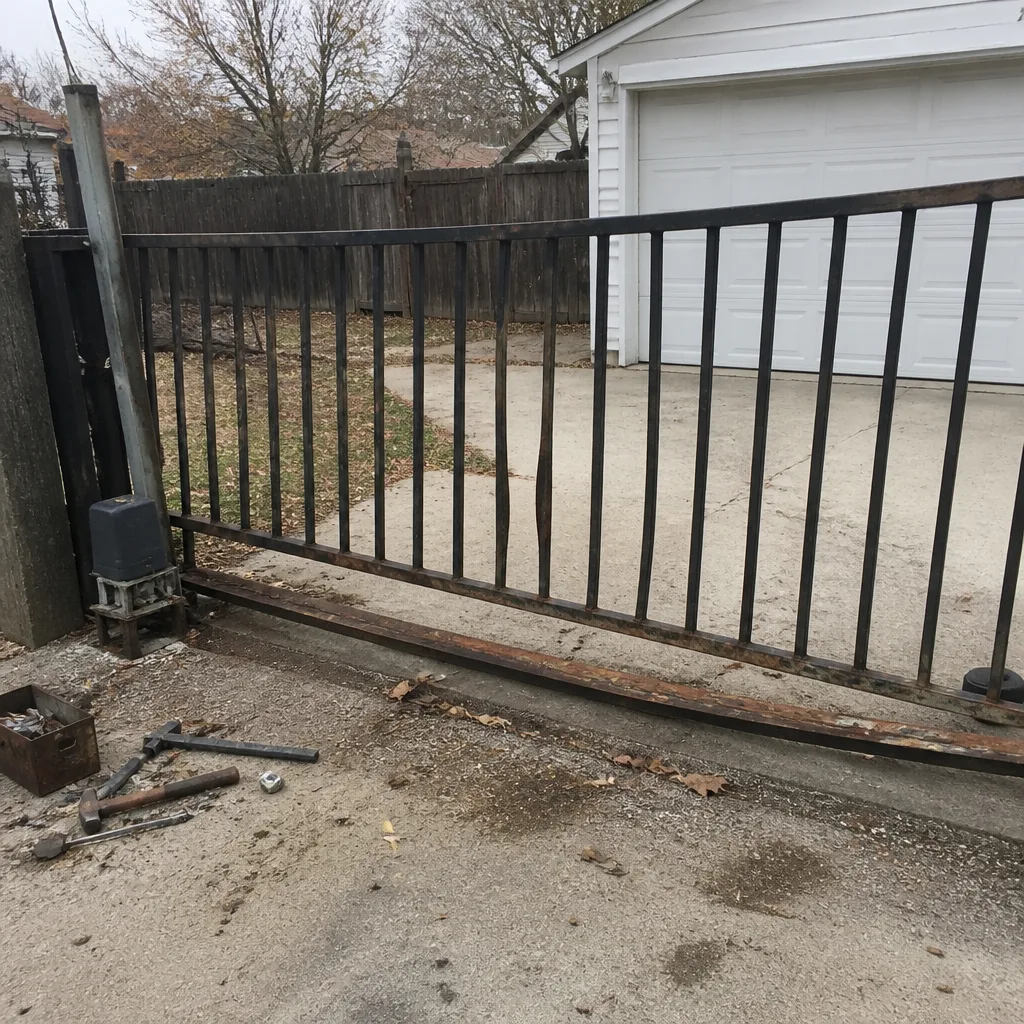 Before
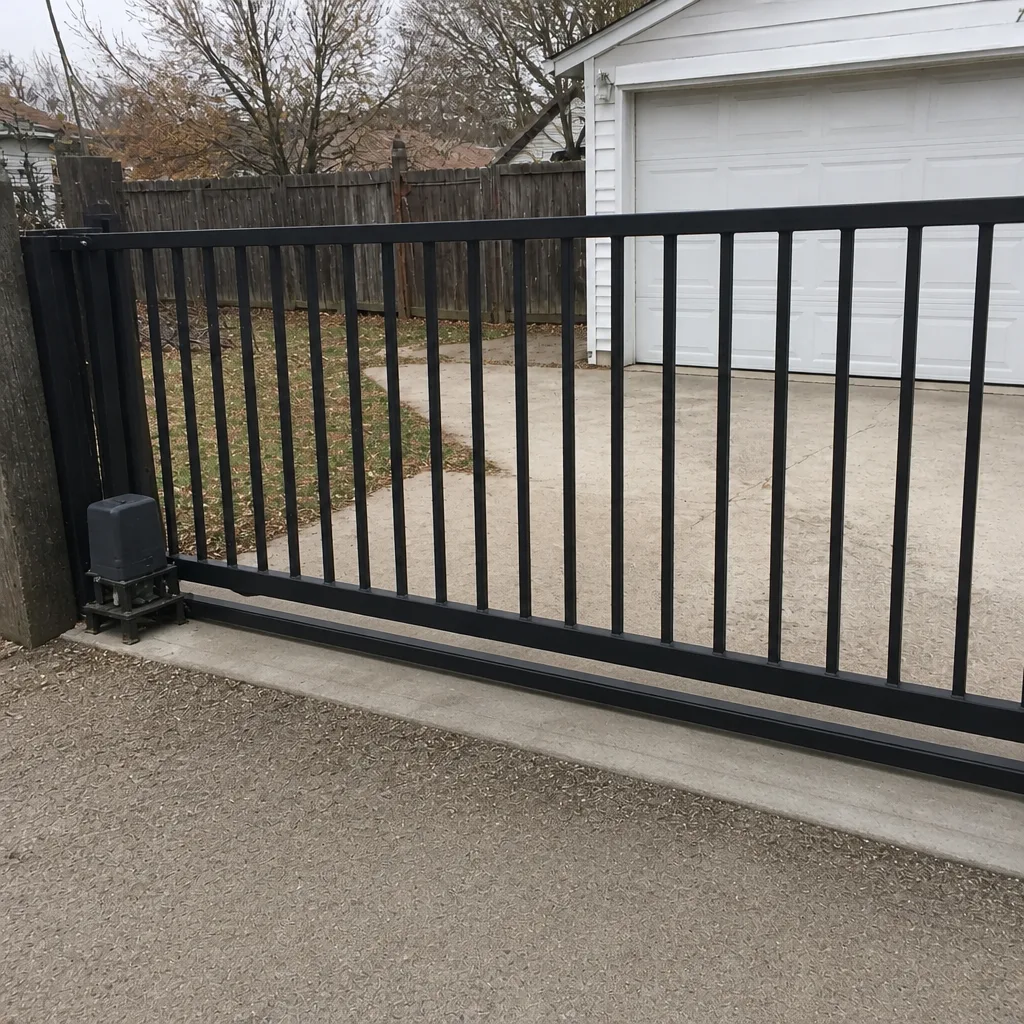 After
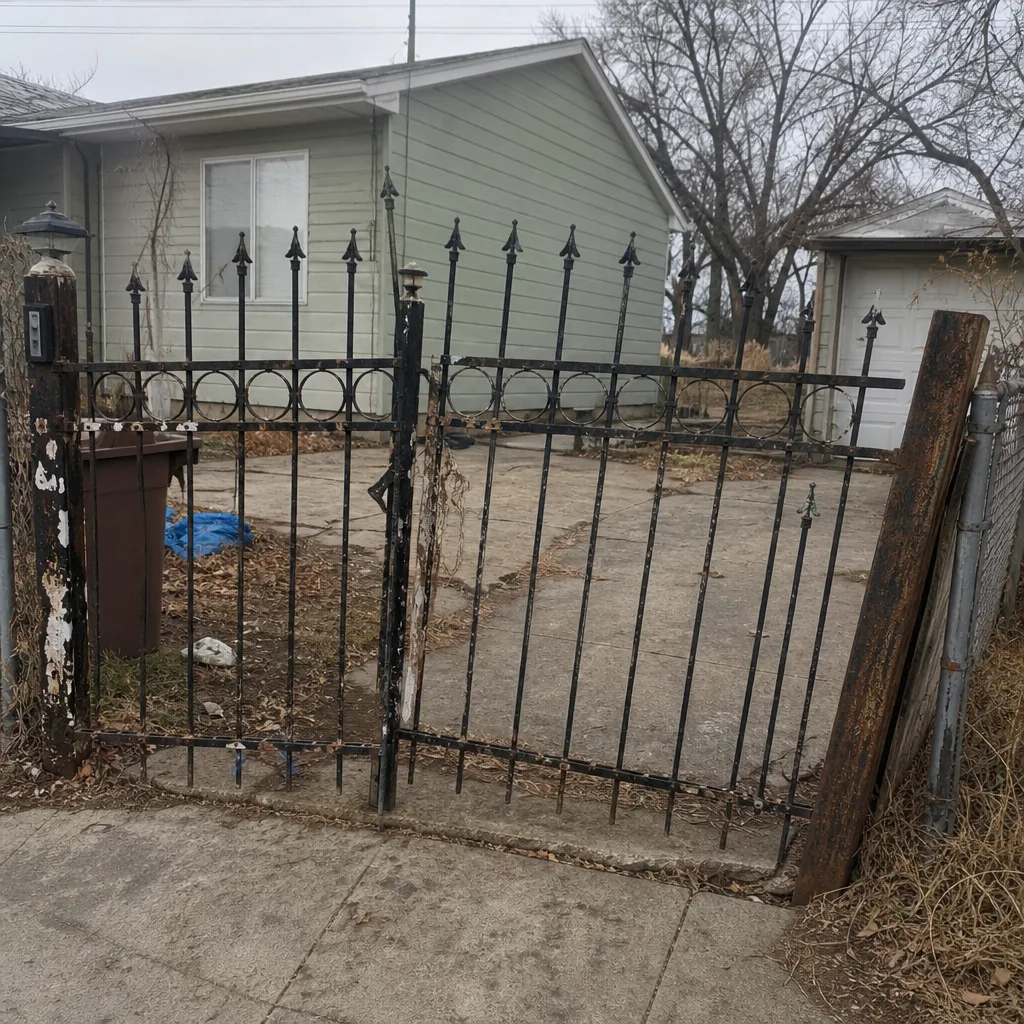 Before
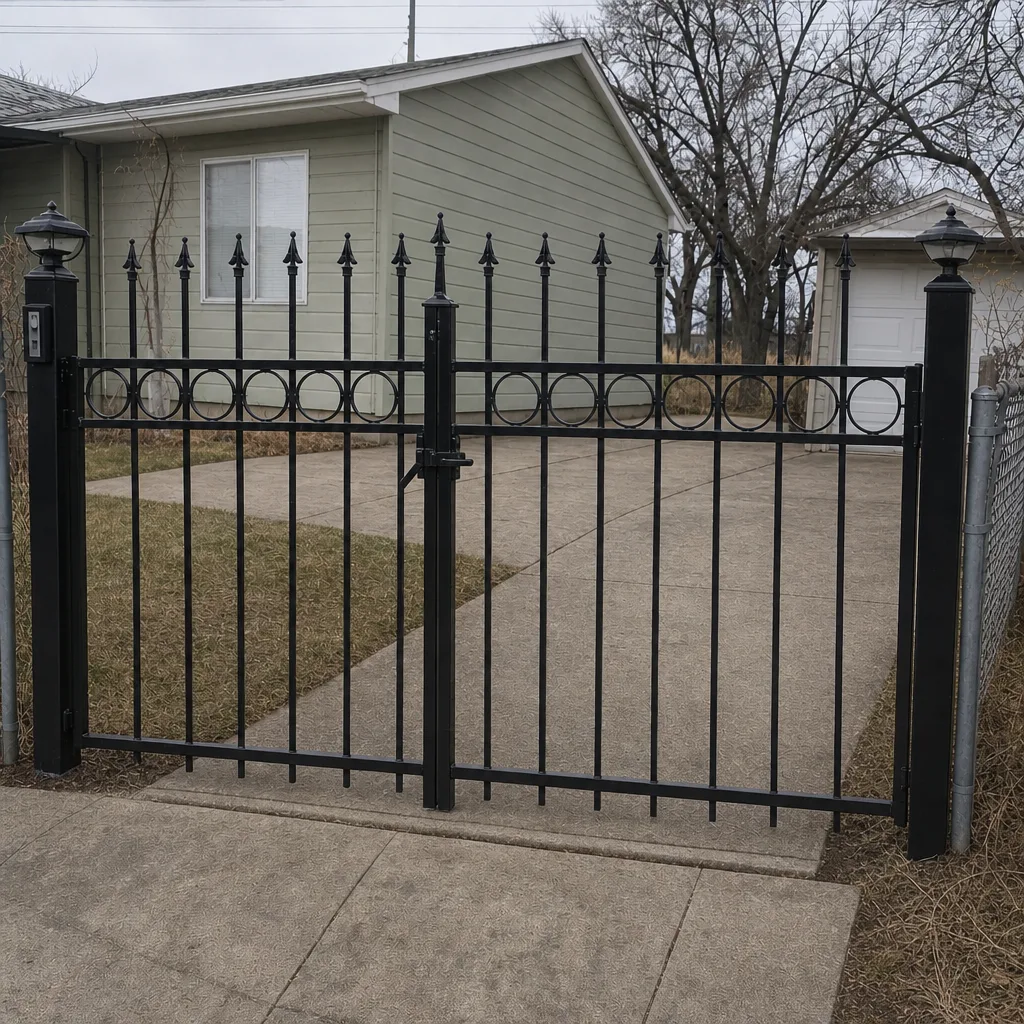 After
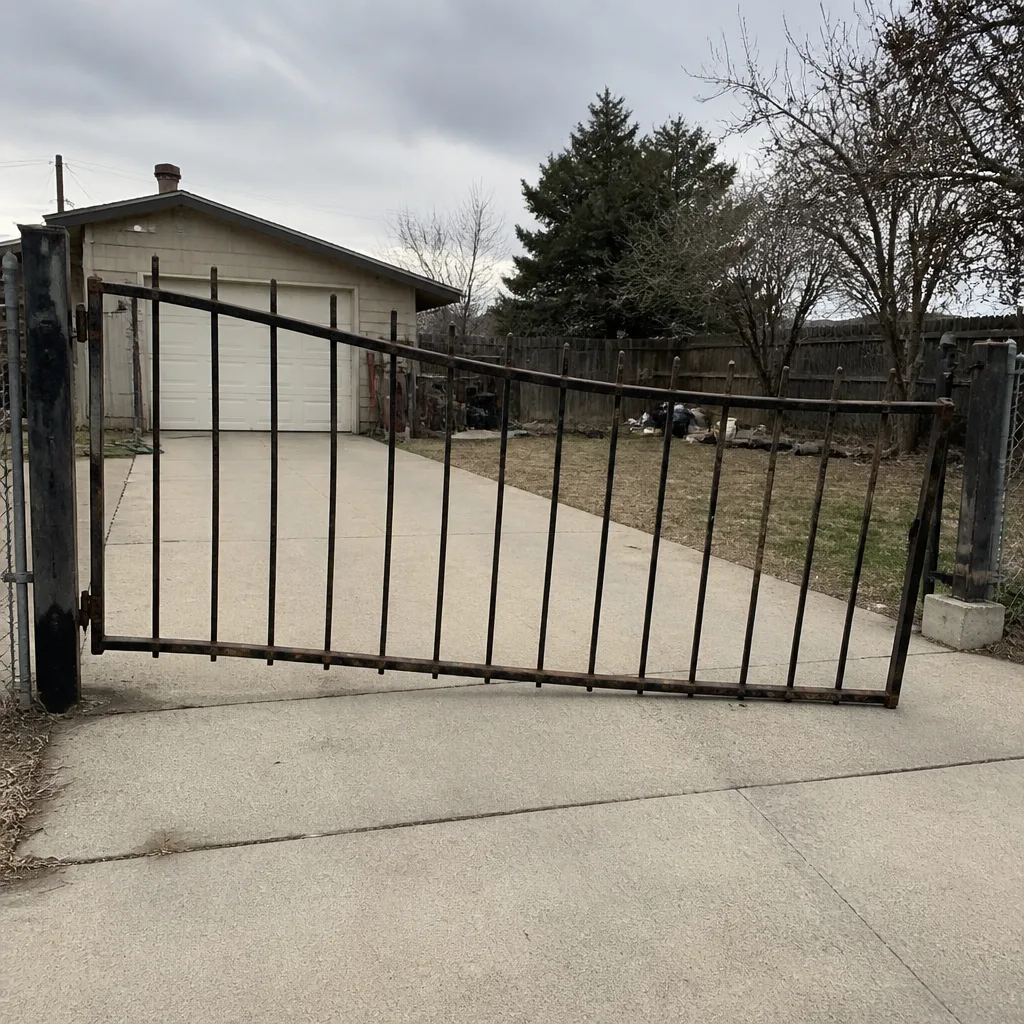 Before
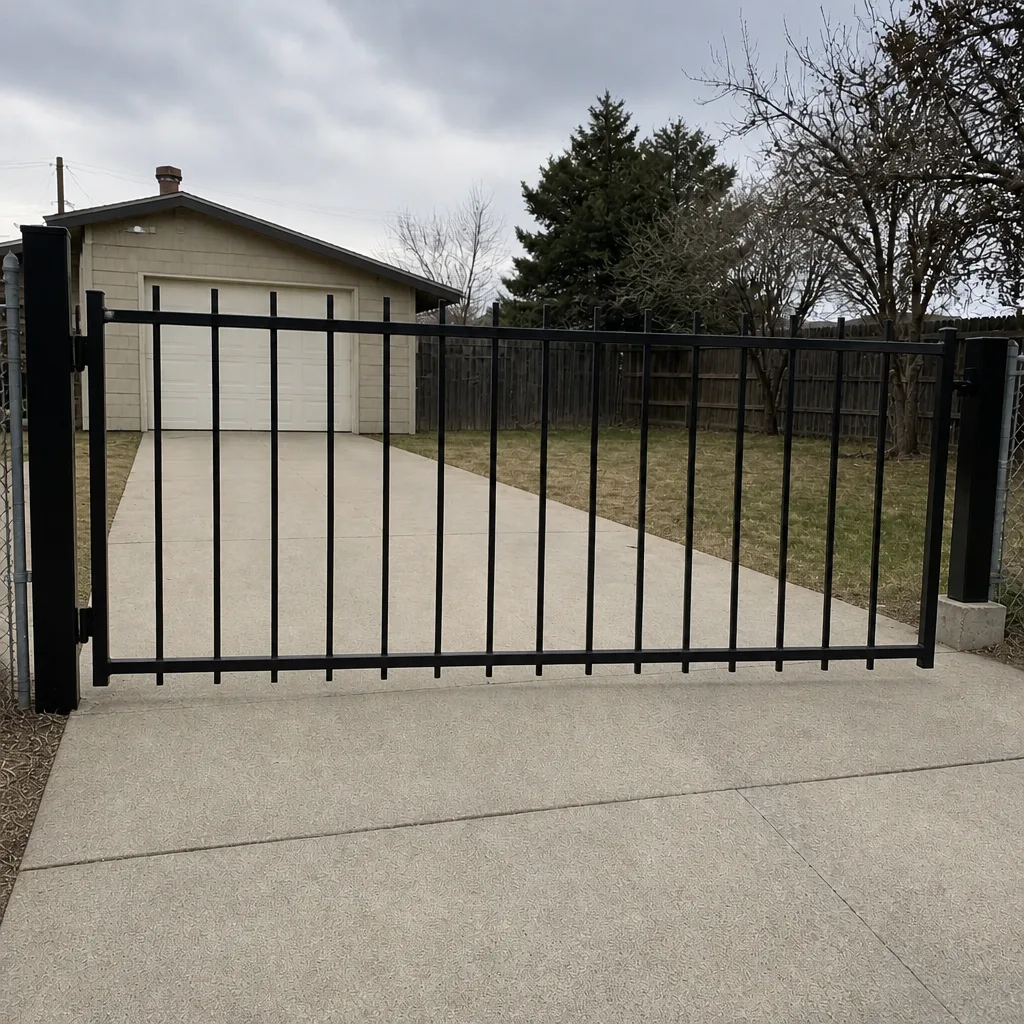 After
When to Call a Professional
Call a professional the moment the gate becomes unsafe: a slide gate off its track, a swing gate that closes into a person or vehicle, a safety edge or photo-eye that’s not stopping the gate, or visible damage at the operator’s power supply. Call us sooner rather than later if the gate is stuck open on an access-controlled property. For a stuck-closed residential gate with no security concern, or a new noise or slow spot, you have time to schedule a visit rather than rush one. When in doubt, describe the symptom and let us help you sort the priority. Gate Repair Thornton offers free estimates in Thornton. Call (866) 389-4610.
Frequently Asked Questions
Gate repair in Thornton is priced per job by a free written estimate, so the number depends on which root cause is behind the failure. A limit switch adjustment or hinge repair is a small job, while a control board, motor, or post reset adds scope. The estimate is confirmed with you before any work begins. Call (866) 389-4610 for an exact quote. Estimates are free.
We can often reach a gate the same day when it’s a safety issue like a gate stuck open or off its track. We answer 24/7, and fast dispatch from 7am to 7pm Sunday through Friday sends a technician out. A call outside those dispatch hours is booked into the next opening. Call (866) 389-4610 to find out what’s available.
The most common cause is the safety circuit, not the motor. A photo-eye that’s misaligned, dirty, or blocked will stop a gate from closing while still allowing it to open, because the gate reads an obstruction. A second common cause is a limit setting that’s drifted, and in Thornton, a gate post that’s shifted in clay soil can trigger the same symptom. Start with a visual check of the photo-eye and then call for a diagnostic. Call (866) 389-4610 to book a visit.
Yes. We work on LiftMaster, FAAC, Viking, Mighty Mule, BFT, Linear, Ghost Controls, DoorKing, and Elite systems, both residential and commercial. If you don’t see your system’s brand on that line, it’s still worth calling, since gate operators share a lot in common and there are a limited number of manufacturers behind even the branded controls. Call (866) 389-4610 to book a visit.
A gate that drags at one end of its travel is usually showing post movement, not operator failure. In Thornton’s expansive clay soil, a post can shift over a few seasons without any visible damage, and the gate then binds against the ground or changes its latch alignment. Check the gate by hand with the operator disconnected if you can do so safely, and call for a post and hinge assessment. Call (866) 389-4610 to book a visit.
Often, yes, and sometimes it’s a reconfiguration rather than a repair. Fence replacement near a gate can disturb posts, hinges, or the gate frame, and a gate that worked before the project may just need its geometry and limits reset. Tell us what changed before the visit and the technician can bring the right approach. Call (866) 389-4610 to book a visit.
The Bottom Line
Most gate failures in Thornton are one of five things: power and wiring, control board and limits, motor wear, mechanical damage, or clay-soil post movement. Sorting a problem into the right cause before a technician arrives is how you avoid paying for a motor on a gate that needed a hinge, or a control board on a gate with a misaligned photo-eye. Test the gate by hand, note what’s changed on the property, and match the urgency to the actual risk. When you call, expect a diagnostic that covers the gate and the operator, a free estimate, and a price agreed before work starts. If the gate’s a worry, don’t force it. Call a gate specialist who does nothing else, from the motor to the keypad.
Contact Gate Repair Thornton for a free estimate on your gate. Call (866) 389-4610. We answer 24/7, and fast dispatch from 7am to 7pm, Sunday through Friday, gets a technician to your gate. We work on LiftMaster, FAAC, Viking, Mighty Mule, and the rest of the major brands, on residential and commercial systems alike.
Written by the team at Gate Repair Thornton.