
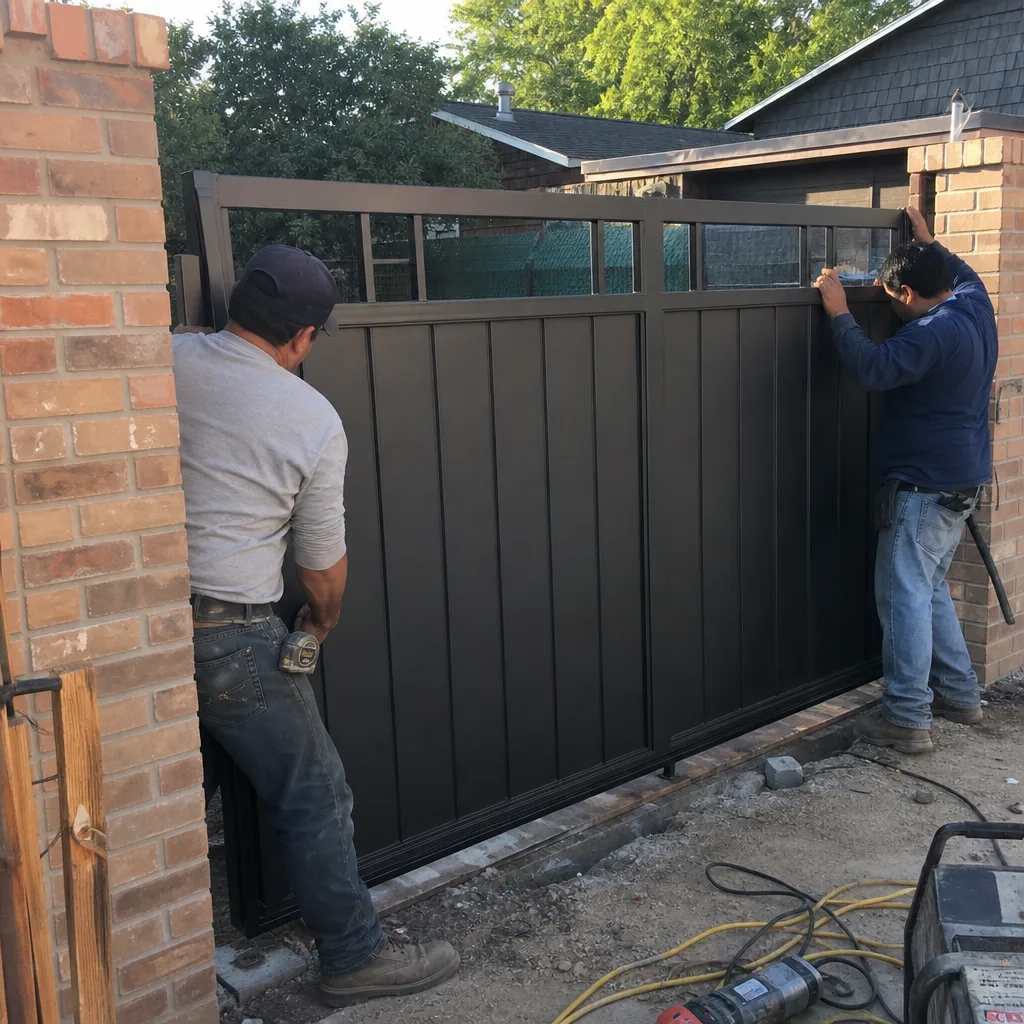
Last updated November 15, 2026
 Wrought iron
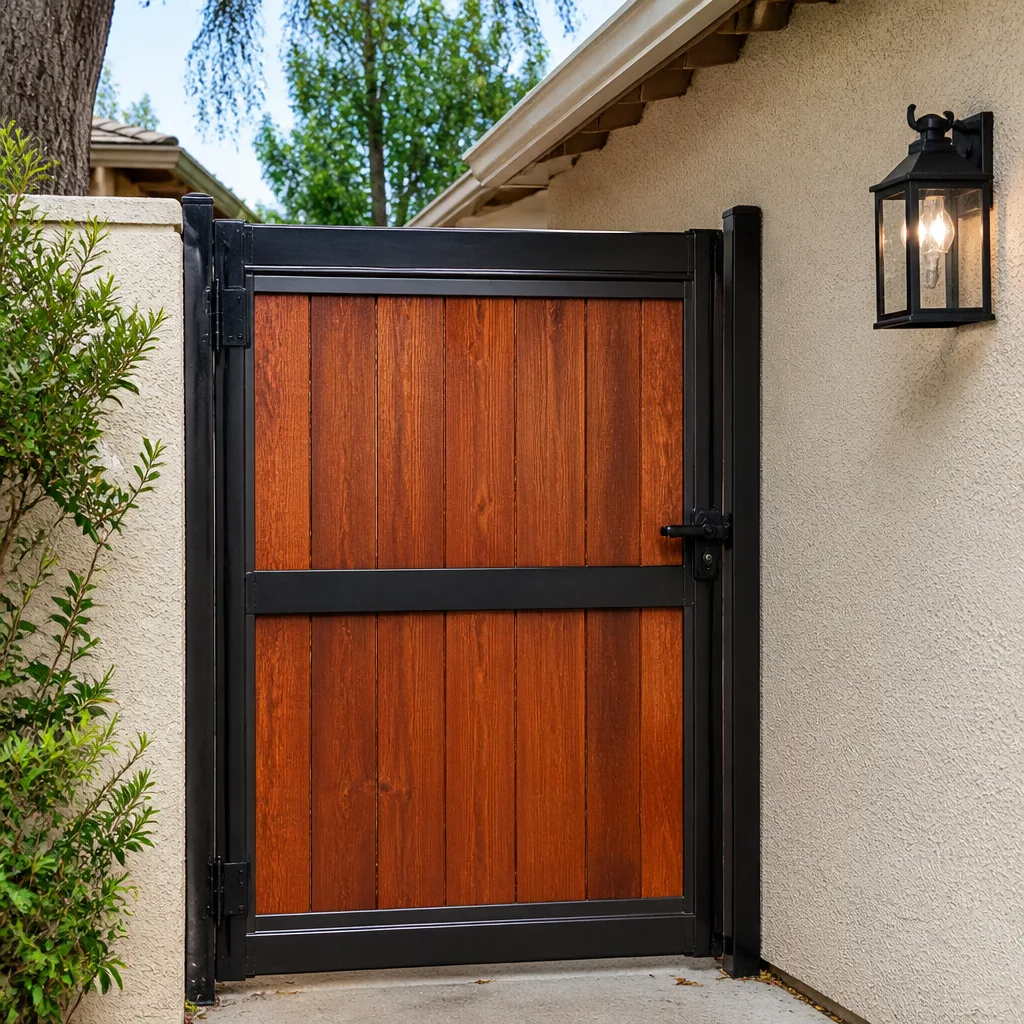 Wood & steel frame
 Farm & ranch
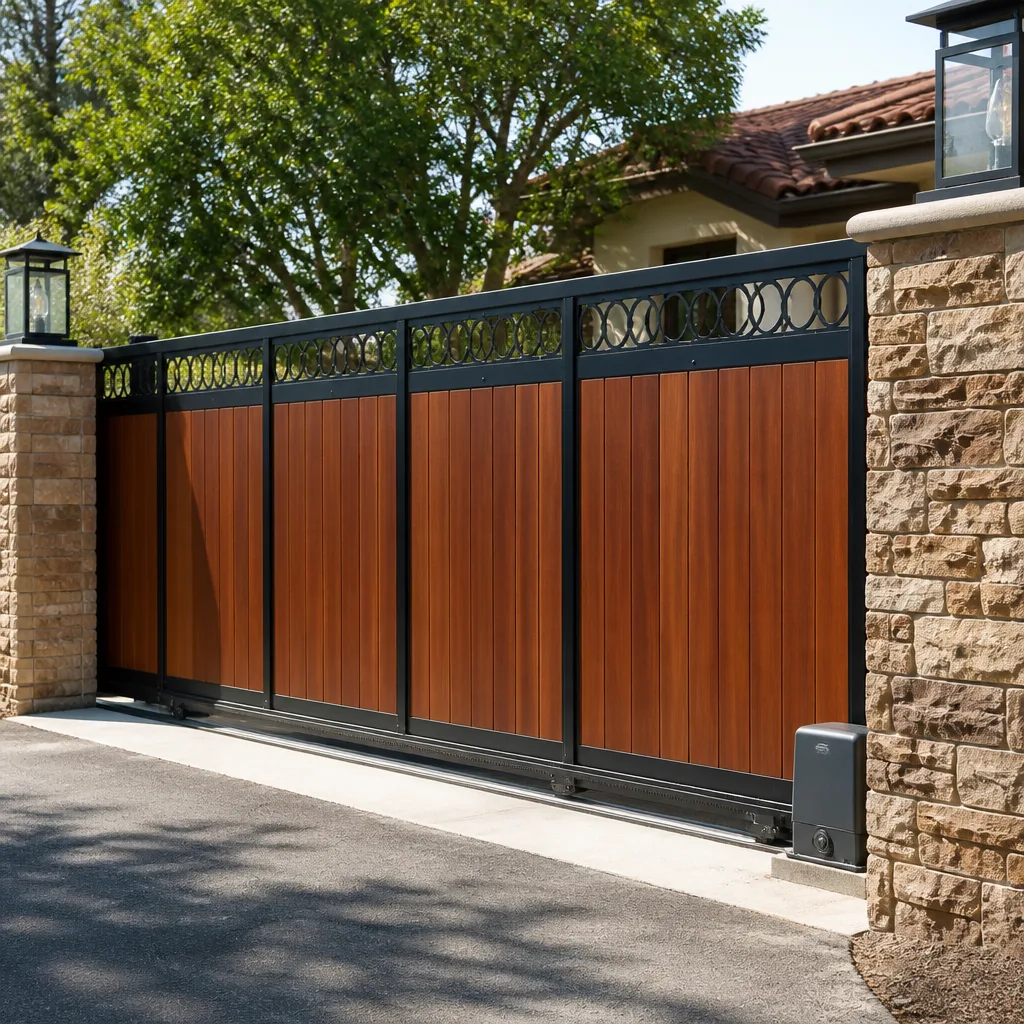 Sliding driveway gates
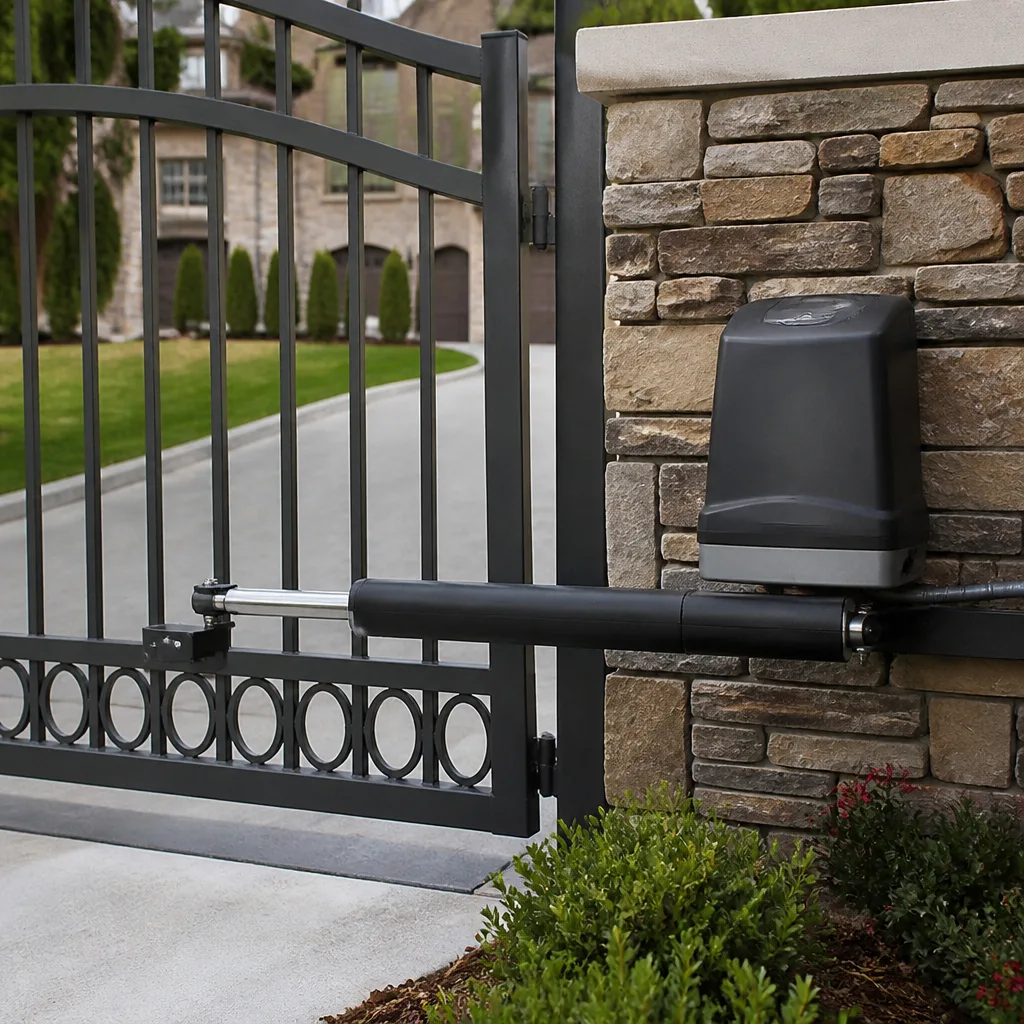 LiftMaster operators
Free on-site gate assessment - hinges, posts, and your LiftMaster or Nice gate operator checked before anything is quoted
The assessment is free and the quote is the invoice.
Get your free estimateGate Repair Troubleshooting in Thornton: Common Problems and How to Fix Them
The gate that won’t close isn’t necessarily a motor problem. In our experience across Thornton, a large share of failures that look electrical never are: misaligned hinges, sagging posts, and warped tracks masquerade as control-board faults, and homeowners end up replacing parts that were never broken. The symptom you see from the driveway is rarely the cause. What you’re reading is a diagnosis guide, built to help you figure out why a gate is failing before you spend money on a fix. We’ll walk through the three root causes behind most gate problems, the manual-release test that separates mechanical from electrical faults, and the Thornton climate factors that throw gate systems off in ways warmer places never deal with.
Quick Answer
Most gate problems in Thornton trace back to one of three root causes: a mechanical misalignment (sagging hinge, heaved post, warped track), an electrical fault (control board, sensor, or wiring), or a safety lockout the gate is designed to trigger. Run the manual-release test first to sort mechanical from electrical, then diagnose by cause rather than chasing the symptom. Freeze-thaw cycles here heave posts and knock limit switches out of adjustment, which is why so many “electrical” failures start in the structure.
Styles & brands we work with
- Wrought iron
- Wood & steel frame
- Farm & ranch
- Sliding driveway gates
- LiftMaster operators
Table of Contents
- The Three Root Causes Behind Most Gate Failures
- How to Tell Mechanical From Electrical Before You Touch Anything
- The Manual-Release Test: Your Best Diagnostic Tool
- How Thornton’s Freeze-Thaw Cycle Heaves Posts and Throws Off Limit Switches
- Safety Lockout Conditions: What Resets and What Needs a Technician
- Symptom-to-Cause Matrix: Five Common Failure Modes
- What Brand Has to Do With Your Diagnosis
- The DIY Go/No-Go Line
The Three Root Causes Behind Most Gate Failures
Almost every gate that stops working in Thornton comes down to three things: a mechanical misalignment, an electrical fault, or a deliberate safety lockout. The dozen symptoms homeowners describe (“it opens halfway and reverses,” “the arm grinds,” “the keypad beeps but nothing happens”) are downstream of one of those three. Diagnosing by symptom sends you toward the wrong part. Diagnosing by cause gets you to the actual failure.
Mechanical failures are the most common and the most misread. A hinge that has sagged a quarter inch, a post that has lifted from frost heave, or a track that has warped can make a perfectly healthy operator strain, stall, or detect an obstruction and reverse. The motor isn’t broken, but it behaves as if it is. Electrical faults are the second category: a failed control board, a misaligned photo-eye, corroded wiring, or a dead battery in a solar setup. Safety lockouts are the third, and they’re the ones that confuse people most, because the gate is doing exactly what it was designed to do.
Sorting your failure into one of these three categories takes about ten minutes with the manual-release test covered below. Once you know the category, the specific part becomes obvious. Skip that step and you’re guessing.
How to Tell Mechanical From Electrical Before You Touch Anything
Before you open a control box or test a circuit, rule out the mechanical side. The rule is simple: if the gate is hard to move by hand with the operator disengaged, the problem is mechanical, no matter what the control board says. Electrical diagnostics come after the gate travels freely.
Here’s the order we use:
- Disengage the operator. Use the manual release (more on this below) so the gate moves freely by hand.
- Walk the gate through its full swing or slide. Does it bind, scrape, or resist? If yes, it’s mechanical, and no amount of electrical work will fix it.
- Check the hinges and rollers. Watch for sag at the hinge side on a swing gate, or lift and wobble at the rollers on a slide gate.
- Check the post and track. Look for a post that has lifted or tilted, and a track that has bowed.
- Only then check electrical. If the gate glides freely by hand but won’t move under power, the fault is in the motor, board, sensor, or wiring.
We’ve seen this rule save a lot of money for Thornton homeowners. A gate that reverses halfway is often flagged as a sensor or board problem, when in reality a sagged hinge is adding resistance the operator reads as an obstruction. Replacing the board doesn’t fix a hinge. Reconciling the structure does. That’s the single most useful diagnostic habit in gate work, and it’s why we tell folks to rule out mechanical before touching a single wire.
The Manual-Release Test: Your Best Diagnostic Tool
The manual release is the fastest way to find out whether your problem lives in the motor, the control board, or the gate structure itself. Every automated gate has one. Disengaging the operator lets you move the gate by hand, and how it moves tells you almost everything.
Here’s how to read the result:
- Gate moves freely by hand, but not under power. The structure is fine. The fault is in the operator: motor, control board, or wiring.
- Gate binds or resists by hand. The structure is the problem. Hinges, post, track, or rollers need attention before the operator will behave.
- Gate moves freely, powers on, but reverses or stops partway. Likely a safety sensor or limit-switch issue. The gate thinks something is in the way.
- Gate won’t move by hand and the operator seems locked. The release mechanism itself may need service, or the operator is holding the gate under a fault condition.
The manual release also tells you whether your problem is serious. If the gate swings smooth as glass by hand but the operator won’t run, you’re probably looking at a board or sensor fault, which is common and fixable. If the gate fights you by hand, you’ve got a mechanical issue, and running the operator against it can damage the motor over time. Get the structure sorted first. When in doubt, call us and we’ll walk you through the release test for your specific operator.
How Thornton’s Freeze-Thaw Cycle Heaves Posts and Throws Off Limit Switches
Thornton’s freeze-thaw cycle is the single biggest environmental factor in local gate failures, and it’s something gate systems in warmer climates simply don’t contend with. When the ground freezes, expands, thaws, and refreezes through the colder months, gate posts can lift, tilt, or shift slightly. Even a small movement throws off the geometry of a swing or slide gate, which in turn throws off the limit switches that tell the operator where to stop.
That’s the chain: heave moves the post, the post moves the gate, the gate no longer hits its limit positions, and the operator either runs past its stop, reverses unexpectedly, or refuses to close. From the outside it looks like an electrical failure. From the ground up it’s a structural one. We see this pattern repeatedly across Thornton, and it’s why so many gates act up after a hard cold snap and then “fix themselves” when the ground settles.
A few climate-driven symptoms worth knowing:
- Limit switches that need re-adjusting seasonally, especially after a freeze.
- Posts that have lifted a fraction of an inch, causing a slide gate to bind or a swing gate to sag at the latch.
- Hinges that have shifted with ground movement, adding resistance the operator reads as an obstruction.
- Tracks that have warped from temperature swings, causing rollers to catch.
Proper footing depth matters here. A post set to the correct depth resists heave far better than one that was underset. When we look at a balky gate in Thornton, we always check the post and footing before digging into the electronics, because the ground here is the first thing that moves.
Safety Lockout Conditions: What Resets and What Needs a Technician
Some gates are supposed to stop. When a gate refuses to close, it may be working exactly as designed, holding position because a safety sensor detects an obstruction, a limit has been tripped, or the operator has entered a fault state. Knowing which lockouts are resettable and which point to a real fault saves you from calling for help on a working gate and, more importantly, keeps you from overriding a real safety condition.
What you can usually reset yourself:
- Photo-eye obstruction. Clear debris, spiderwebs, or growth from the sensors on both sides of the gate and the safety lockout should clear on the next cycle.
- Tripped limit switch. Some operators reset limits automatically on the next full cycle; others need a controller reset per the manual.
- Power-cycle reset. Kill power at the disconnect, wait a moment, restore it. Many operators clear transient faults this way.
What needs a technician:
- A sensor that’s clean and clear but still reads an obstruction (misalignment or wiring fault).
- An operator that trips a fault on every cycle regardless of gate position (board-level issue).
- Wiring that’s damaged, or a control box that shows signs of water intrusion or burnt components.
- Any condition where bypassing the safety system is the only way to make the gate move. Don’t do that.
Safety edges and photo-eyes exist to stop a gate on a person, a pet, or a vehicle. If a gate is deliberately holding because it “sees” something, overriding it is the wrong move. Fix the reason it’s seeing something, or call a pro.
Symptom-to-Cause Matrix: Five Common Failure Modes
Here’s how the five most common gate symptoms map to their likely causes, along with the point where DIY stops and a technician starts. Use this as a cheat sheet once you’ve run the manual-release test.
- Gate won’t close, but opens fine. Likely cause: a safety sensor reading an obstruction, or a limit switch that’s off. DIY-able: clear the photo-eyes and check for misalignment. Call a pro if the sensors are clean and clear and the gate still won’t close.
- Gate reverses halfway through travel. Likely cause: the operator detecting resistance, usually from a sagging hinge, a binding roller, or a warped track. DIY-able: rule out mechanical binding by hand. Call a pro if resistance can’t be traced to an obvious obstruction.
- Operator runs but the gate doesn’t move. Likely cause: a stripped gear, a slipping clutch, or a broken arm connection. This is an operator-side issue. Call a pro; internal operator repair isn’t a DIY job.
- Gate is completely dead, no power to the operator. Likely cause: tripped breaker, dead battery on a solar setup, or a wiring fault. DIY-able: check the breaker and battery. Call a pro for wiring faults.
- Gate moves sluggishly or the motor strains. Likely cause: mechanical resistance, often freeze-thaw related post shift. DIY-able: check for binding by hand. Call a pro if the post or footing has moved.
The DIY threshold usually falls at “can I confidently identify and fix the cause without bypassing a safety device?” If the answer is no, that’s the line. We’d rather diagnose a gate for free than have a homeowner replace a control board when the real problem was a hinge.
What Brand Has to Do With Your Diagnosis
Different operators fail in different ways, and knowing the brand shortens the diagnostic path. Residential-grade systems and commercial high-cycle systems have different service intervals, different fault codes, and different common failure points. A Ghost Controls or Mighty Mule residential operator has a different set of usual suspects than a FAAC, BFT, or DoorKing commercial unit, and a technician who works on all of them reads the symptoms faster.
We work on your brand because we’ve rebuilt our diagnostic habits around these systems specifically. That means if your gate runs a BFT or a Linear, or a Viking slide operator, or a Ghost Controls swing unit, we know the failure patterns and the reset procedures without sending you elsewhere. That’s the advantage of a gate specialist over a generalist: when every job is a gate job, you see the same brand-specific quirks repeatedly.
This also matters for commercial properties and HOAs. A high-cycle operator running a shared driveway has different failure thresholds than a residential gate opening twice a day. Knowing whether a given operator is designed for that duty cycle is part of the diagnosis, not an afterthought. Electric gate repair that spans the full range of operators, from the motor to the keypad, is exactly the kind of work a focused specialist does well.
The DIY Go/No-Go Line
Some gate troubleshooting is genuinely safe to do yourself. Some isn’t. The distinction matters because a gate is a heavy moving object with an operator that can crush a person, and the electrical side carries real risks.
Safe to do yourself:
- Clearing debris, spiderwebs, and vegetation from photo-eye sensors.
- Power-cycling the operator at the disconnect.
- Running the manual-release test to sort mechanical from electrical.
- Checking the breaker and, on a solar setup, the battery.
- Looking for obvious mechanical binding at the hinges, rollers, and track.
Not safe to do yourself:
- Anything inside the control box beyond a labeled reset. Control boards carry voltage and the board is where a wrong move turns a $200 fix into a replacement.
- Wiring faults. If a cable is damaged or you suspect a short, stop. Electrical work on the operator’s supply and control wiring should be done by a trained professional.
- Diagnosing or bypassing a safety lockout. Overriding a photo-eye or safety edge to “make it work” is how gates hurt people.
- Clearing a slide gate that’s come off the track. A heavy panel under spring or gravity load can crush you if it shifts. Leave it to a technician.
- Resetting a post or footing. That’s a structural job, not a troubleshooting fix.
For a broader walk-through of what each repair involves, our gate repair page covers the full scope of what gets fixed and when a call is worth making.
Common Mistakes to Avoid
- Replacing the control board before checking the hinges. If the gate binds by hand, the board was never the problem. Mechanical resistance is often the real cause of what looks like an electrical failure.
- Bypassing a safety sensor to get the gate to close. Photo-eyes and safety edges exist to stop the gate on a person or vehicle. Overriding them makes a working gate a dangerous one.
- Ignoring a post that has lifted after a freeze. Thornton’s freeze-thaw heave moves posts and throws off limit switches. Address the structure before you address the operator.
- Running an operator against a binding gate. Stall current strains the motor and can damage the gearbox. Disengage first, then diagnose.
- Assuming a full replacement is the only option. Most gate problems are repairable. A specialist will tell you what’s failing, not just what to install.
- Calling a general handyman for an electric gate. Gate operators, control boards, and safety systems are their own specialty. A generalist is more likely to misdiagnose or miss a brand-specific fault.
- Skipping the seasonal limit-switch check after a hard freeze. A minute spent confirming limit positions after a cold snap can prevent a week of the gate acting up.
See the difference
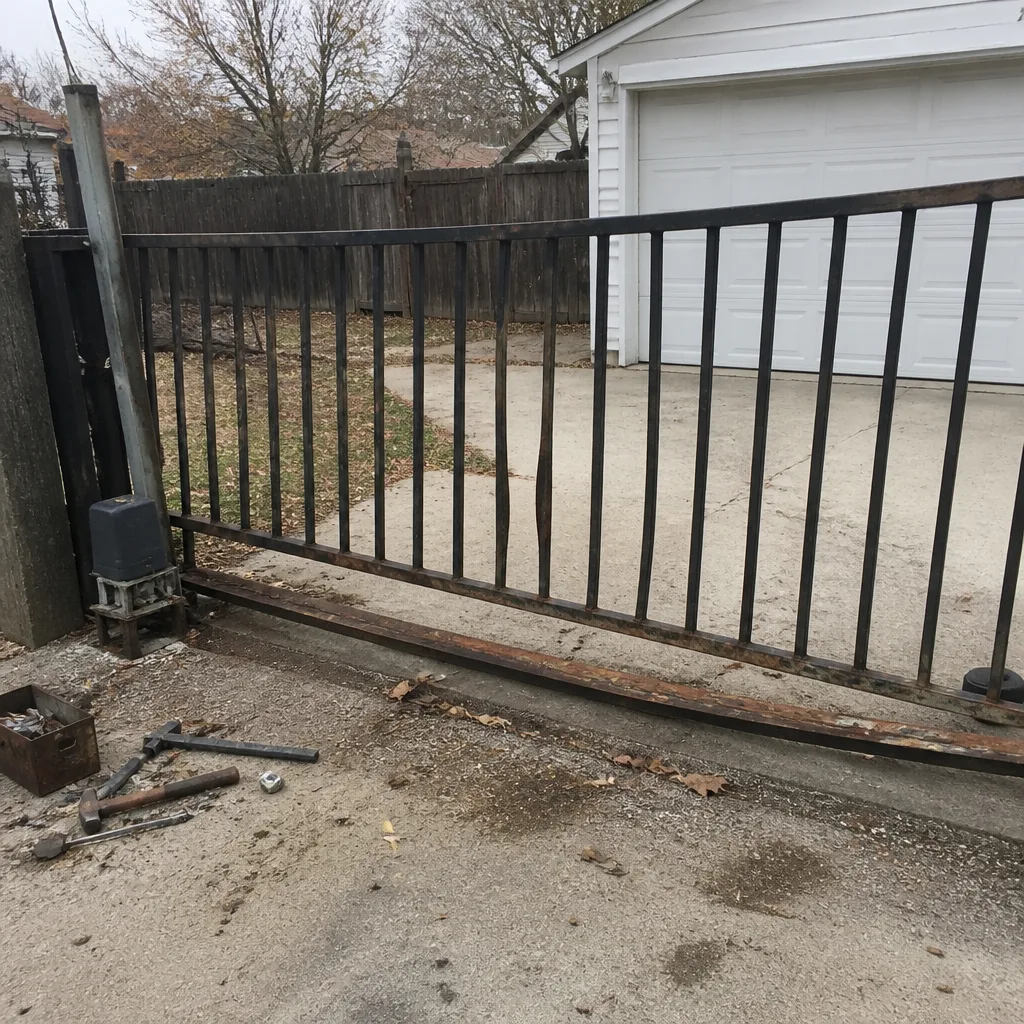 Before
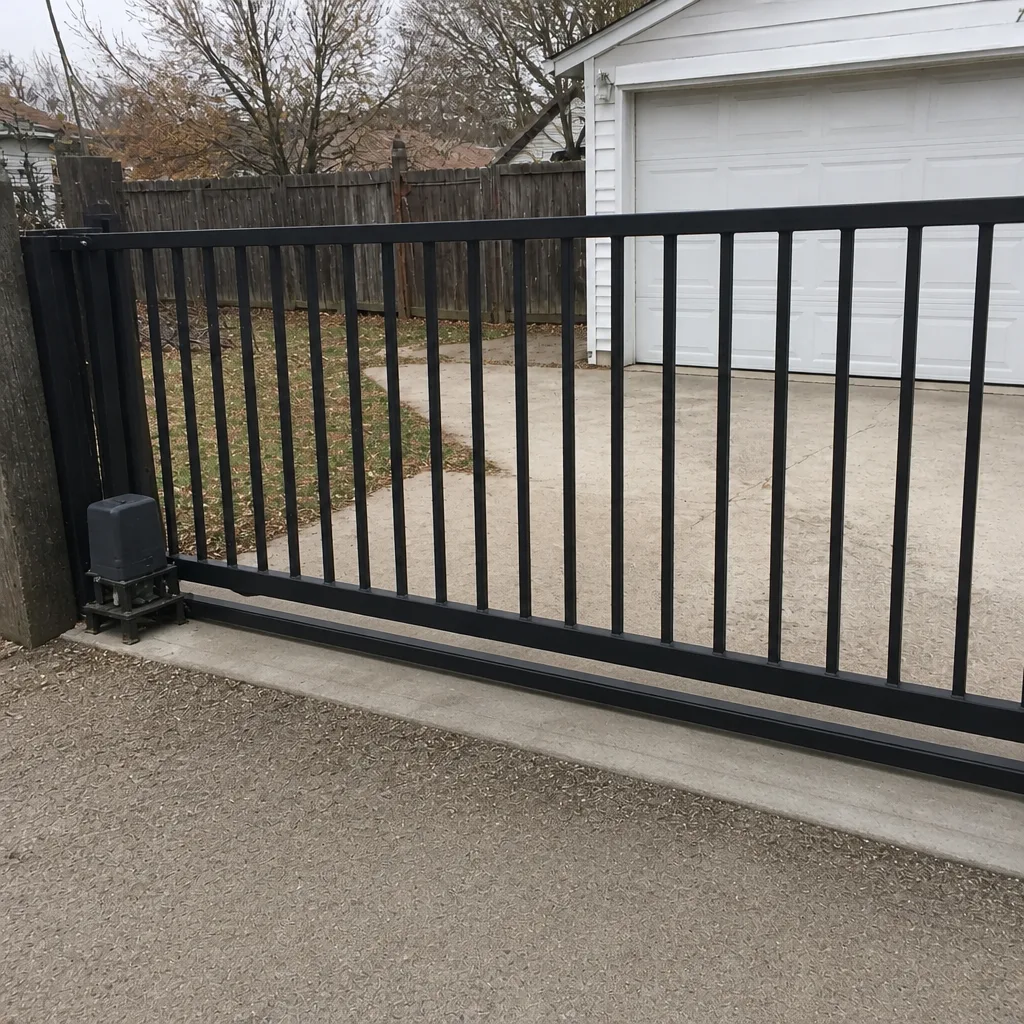 After
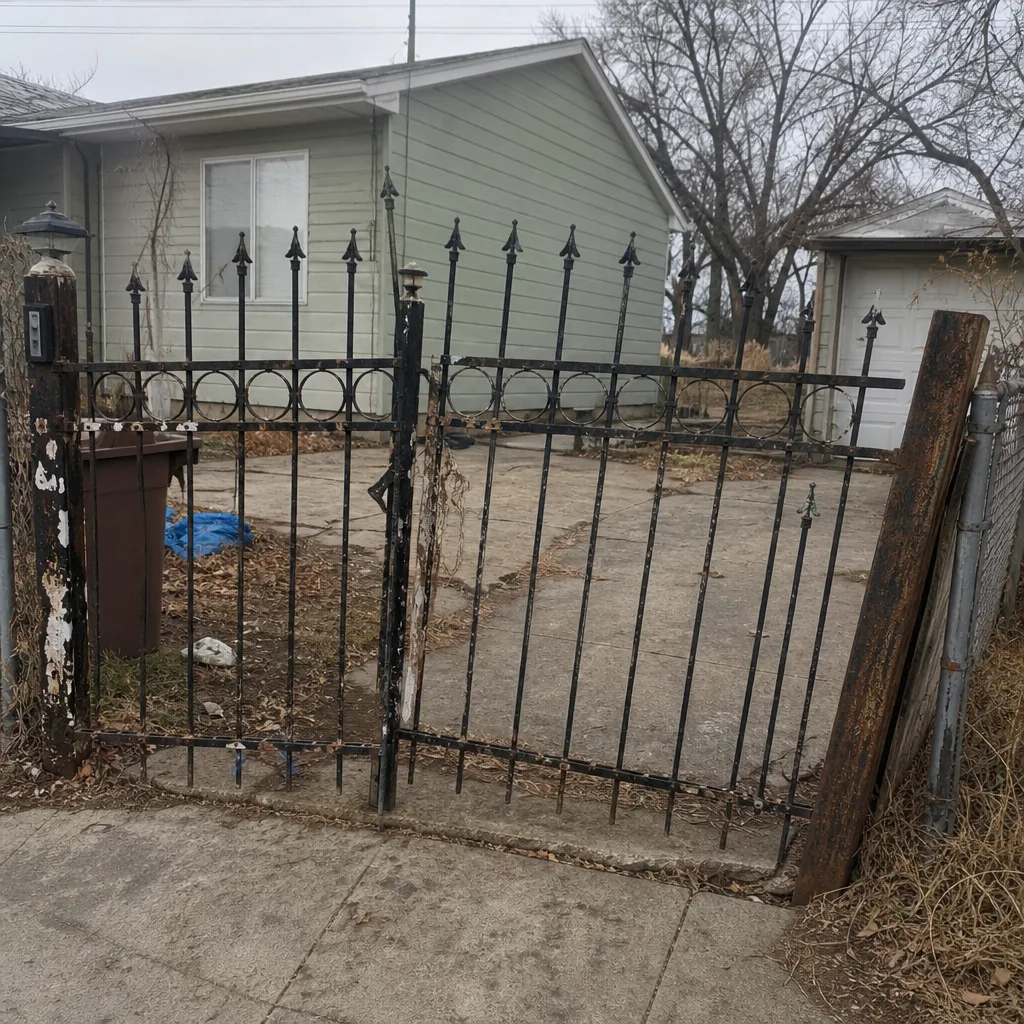 Before
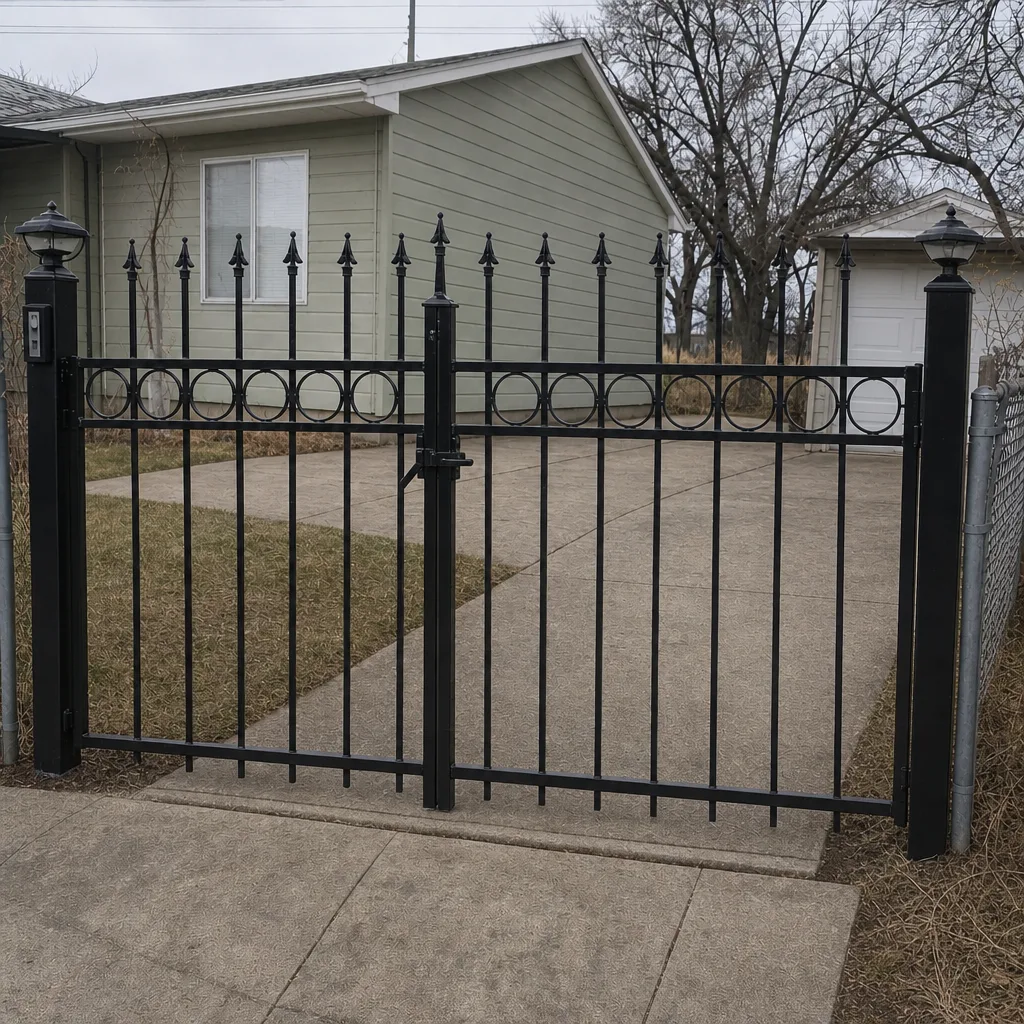 After
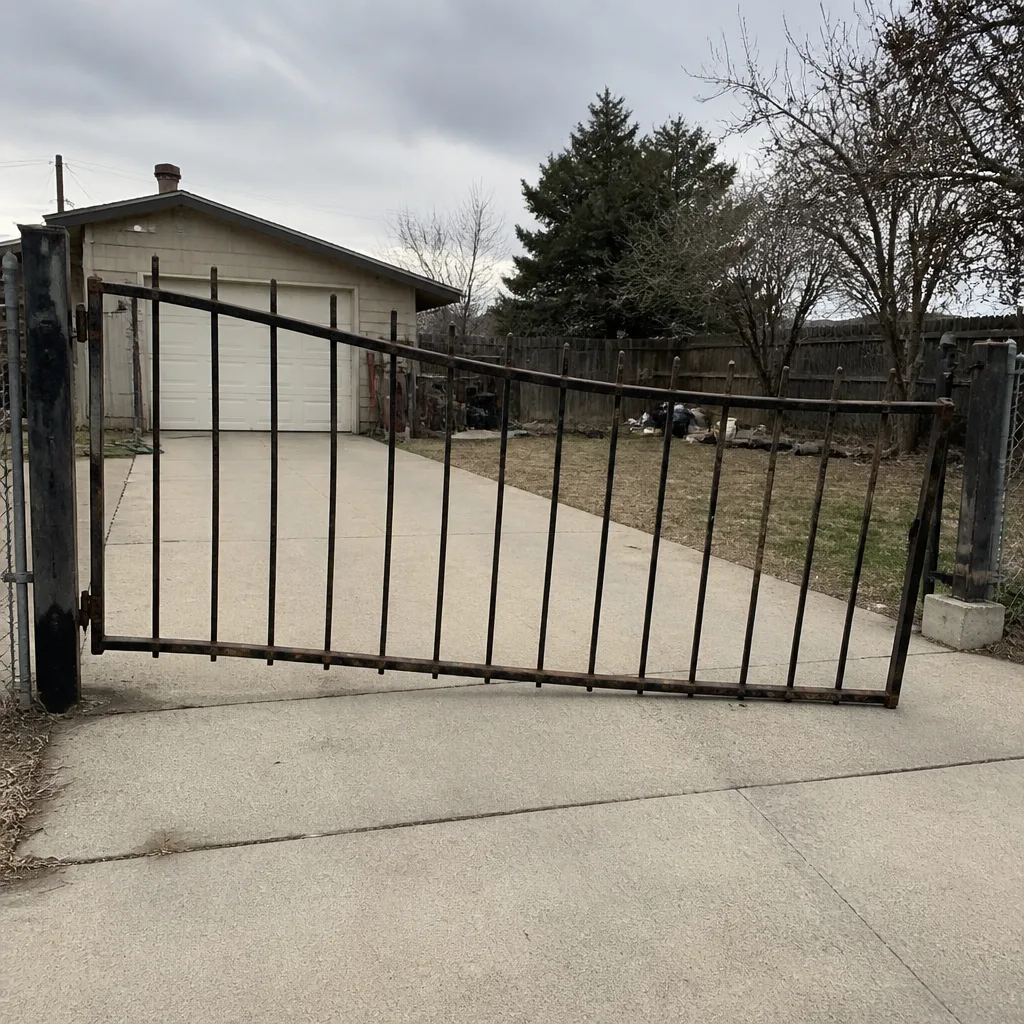 Before
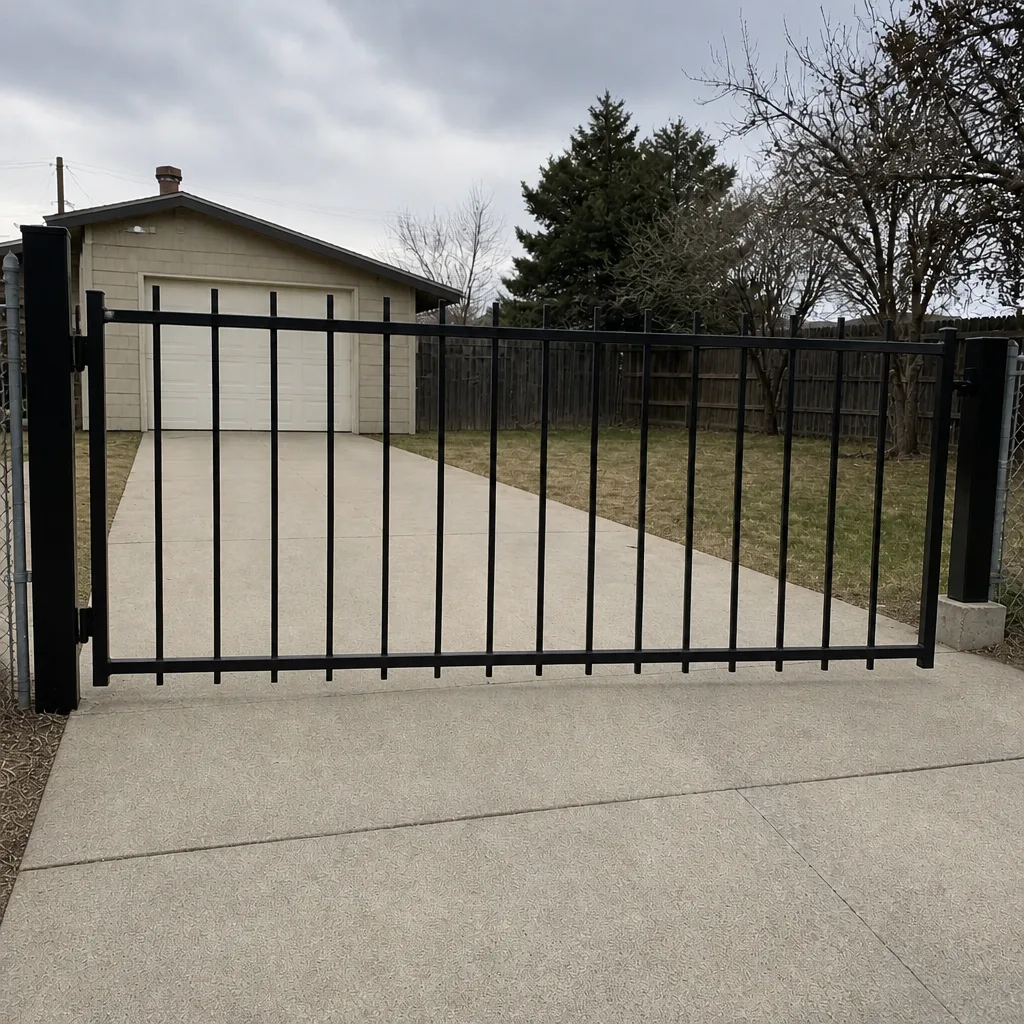 After
When to Call a Professional
Call a pro when the gate binds by hand and you can’t trace the resistance to an obvious obstruction, when the control box shows a fault on every cycle, when wiring is damaged, or when the only way to make the gate move is to bypass a safety device. Those are the cases where continued DIY risks damage or injury. For electric gate problems specifically, our electric gate repair team works across motors, control boards, sensors, and wiring, and can diagnose by cause instead of by symptom. We offer free estimates on gate work in Thornton; call (866) 389-4610 to book one. We answer 24/7, with fast dispatch from 7am to 7pm, Sunday through Friday. Our technicians have up to 15 years of experience, and Gate Repair Thornton specializes in gates and electric gates alone, from repair through full installation. When a gate needs more than a fix, we handle the install too, so you stay with one specialist from diagnosis to done.
Frequently Asked Questions
A safety sensor reading an obstruction, or a limit switch that’s off after a freeze-thaw cycle has shifted the gate. Clear the photo-eyes first, then check the limits. If both are clean and the gate still won’t close, the fault is usually in the wiring or the control board. Call (866) 389-4610 for a free estimate if it doesn’t clear.
You can safely handle sensor clearing, power-cycling, breaker checks, the manual-release test, and spotting mechanical binding. Don’t touch the control board, damaged wiring, a panel off its track, or a safety lockout. Those carry real danger and need a trained technician.
Freeze-thaw cycles heave posts and shift hinges, which throws the gate’s geometry off and knocks limit switches out of position. The operator then reads resistance or misses its stop, and the gate reverses or refuses to travel. It’s a structural issue, not a motor failure.
Disengaging the operator and moving the gate by hand tells you whether your problem is in the structure or the electronics. If it moves freely, the fault is electrical. If it binds, it’s mechanical. Run it before any other diagnostic.
We work on the major gate and operator systems, including BFT, Linear, Viking, Ghost Controls, LiftMaster, FAAC, DoorKing, Elite, and Mighty Mule. If your operator is a brand you don’t see listed here, call us and we’ll confirm.
The price is set per job by a written estimate, quoted and agreed before any work starts, and the estimate itself is free. What you pay depends on the cause and the parts involved, not on the symptom. Call (866) 389-4610 for an exact quote.
The Bottom Line
Diagnose by cause, not by symptom. Almost every gate failure in Thornton comes down to a mechanical misalignment, an electrical fault, or a safety lockout, and the manual-release test tells you which within minutes. Rule out the mechanical side first, because freeze-thaw heave and sagging hinges are the most common fakes. Check the post, hinges, and track before you touch the electronics. Leave control boards, damaged wiring, safety overrides, and heavy panels to a technician. A gate specialist sees these patterns daily and reads them faster than a generalist. For gate repair, electric gate repair, or a new install in Thornton, call (866) 389-4610 for a free estimate. We answer 24/7, with fast dispatch from 7am to 7pm, Sunday through Friday.
Written by the team at Gate Repair Thornton.