
Last updated November 15, 2026
 Wrought iron
 Wood & steel frame
 Farm & ranch
 Sliding driveway gates
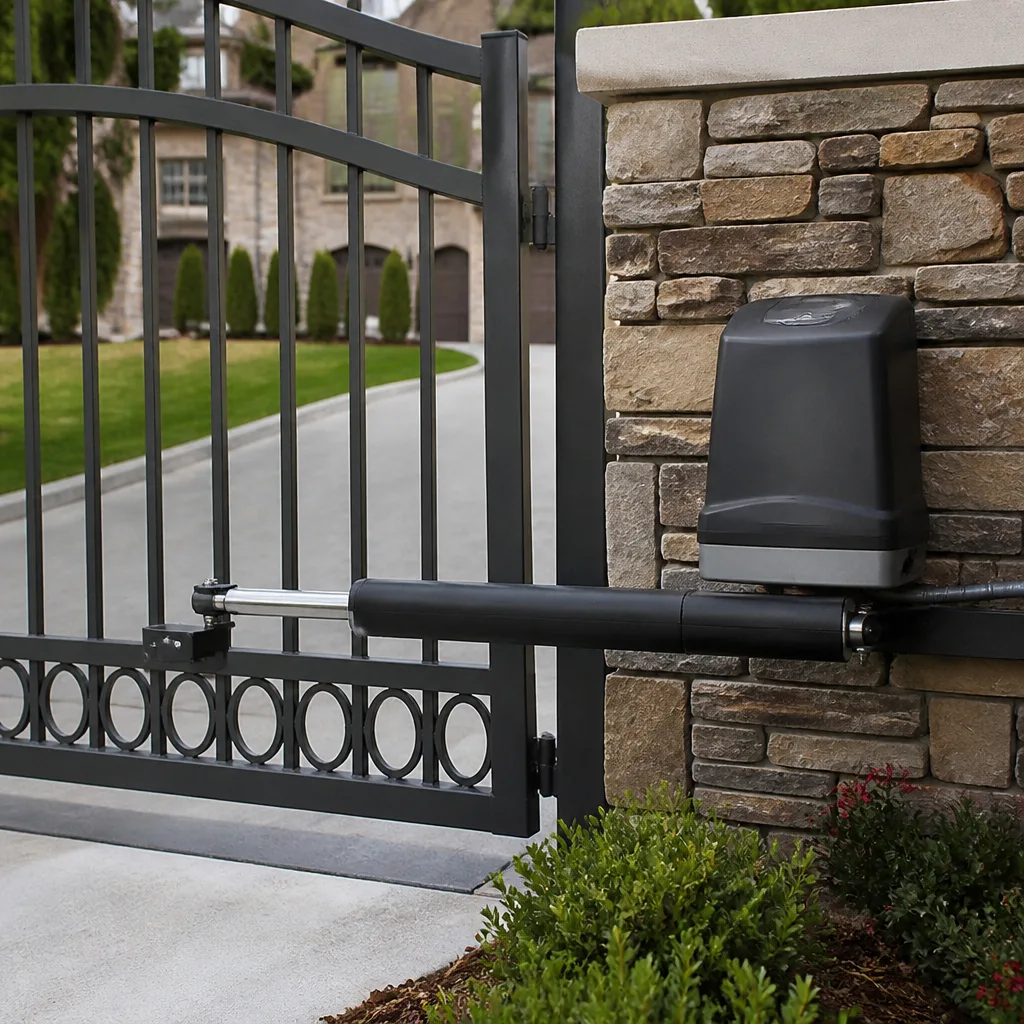 LiftMaster operators
Free on-site gate assessment - hinges, posts, and your LiftMaster or Nice gate operator checked before anything is quoted
The assessment is free and the quote is the invoice.
Get your free estimateGate Repair Emergency Preparedness Guide for Thornton Homes
If your automatic gate fails in the closed position at 6 a.m. on a Tuesday, do you know where your manual release is, and whether it’s been test-run in the last 12 months? Most Thornton homeowners don’t. They find out the hard way that the release lever is seized, the key is missing, or the operator’s battery backup died quietly months ago. A gate emergency here rarely comes down to who can find a good contractor the fastest. It comes down to three things you set up before anything breaks: a tested manual release, a posted information card, and a backup you’ve actually proven under load. This guide walks through all three, plus what to do when the gate jams open instead of closed. By the end you’ll know exactly how your system works, what to check, and what to say when you call.
Quick Answer
A prepared Thornton gate owner keeps three things ready before any failure: a manual release they’ve physically tested within the last year, an information card posted at the operator listing the gate type, brand, and access instructions, and a battery backup verified under real load rather than just a green indicator. With those in place, most gate failures turn into a manageable 20-minute release instead of a security problem. The rest of this guide shows you how to build each one, and how to soberly secure a gate that’s stuck open while you wait.
Styles & brands we work with
- Wrought iron
- Wood & steel frame
- Farm & ranch
- Sliding driveway gates
- LiftMaster operators
Table of Contents
- Why gate emergencies in Thornton hit at the worst time
- How to manually release every major gate operator type
- The three-item emergency information card
- How to safely secure a gate that failed in the open position
- What to tell a technician when you call
- Battery backup testing that proves it works under load
- Cold, wind, and settling soil: how Thornton conditions stress a gate
- What to do when the problem is power, not the gate
Why gate emergencies in Thornton hit at the worst time
Gates don’t fail when you’re standing next to them with time to spare. They fail after a cold snap, overnight, or the morning you’re already running late. This isn’t bad luck. It’s how the components age. Motors, control boards, sensors, and wiring all degrade slowly and then cross a threshold all at once. A limit switch that’s been drifting for weeks finally misses. A battery that’s been holding a charge at 60% finally can’t lift the arm. The failure looks sudden because you only notice it at the moment the gate won’t move.
Thornton’s conditions add steady pressure. Winters bring hard overnight drops followed by daytime thaws, and that freeze-thaw cycle works on gate posts, hinges, and the buried conduit that carries low-voltage wiring. Spring winds load the panels and work the operator harder than a still day. Summer heat bakes the control enclosure. None of this is exotic, but it means a Thornton gate lives a harder life than one in a mild climate, and the parts that fail first are usually the ones nobody checks.
The homeowners who handle a failure fastest aren’t the ones who know a great contractor. They’re the ones who prepared three specific things before anything broke:
- A manual release they’ve tested with their own hands within the last year
- An information card posted at the operator that a technician, family member, or first responder can read
- A battery backup they’ve proven under load, not just glanced at
Everything that follows is about building those three. It’s also about the fourth thing most guides skip: a gate that jams in the wrong direction. A gate stuck closed keeps you and your car in. A gate stuck open leaves your property exposed. Those are two different problems, and they call for two different responses. Our team handles both routinely, and the steps below are the same ones we’d walk you through on the phone before a technician arrives. If you’d rather start with a live conversation, you can reach Gate Repair Thornton for a straight answer.
How to manually release every major gate operator type
Every automatic gate on a Thornton driveway has a manual release, and every release is a physical mechanism you operate by hand when the operator won’t respond. The catch is that no two manufacturers make them look the same, and the instructions in the box often get lost or never read. Below is the general release method for the operator families most common on residential driveways. These are control mechanisms, not the gate itself, so no dangerous spring or heavy-panel force is involved in operating a release, but always keep hands clear of the moving gate while you use one.
LiftMaster (and similar residential swing operators): These typically use a key-operated release on the operator housing. Insert the release key, turn it, and pull the release lever or handle to disengage the drive. The gate arm then moves by hand. On arm-style openers there’s often a quick-release pin between the arm and the gate bracket. If the arm is under any tension, don’t force it, and call a professional rather than fighting the mechanism.
Viking: Viking swing and slide operators generally use a manual release lever or a keyed release cylinder on the unit. Turn the key or lift the lever to bring the drive gear out of mesh, then manually move the gate. The lever should move without extreme effort. If it doesn’t, something is seized, and forcing it causes more damage than the original fault.
FAAC: FAAC operators vary between swing, slide, and barrier units, but most use a keyed release handle or an unlock lever near the motor. Turn the key, pull the release, and push the gate by hand. FAAC commercial-grade units sometimes need the release rotated fully through its travel before the gate will free up. If the gate still resists, stop and call a specialist.
CAME: CAME residential swing operators typically release through a keyed cylinder on the motor body. Insert the key, rotate to the release position, and the gate swings free. Slide operators from CAME often use a lever release that disengages the pinion from the rack.
Once the gate is free, do these two things before you do anything else: prop or lock the gate where you want it, and note exactly what the release felt like. A release that moved easily is a good sign. One that was stiff, gritty, or nearly impossible is telling you the mechanism needs service before the next failure. Our technicians have up to 15 years of experience on these systems, and we work across the full range of brands including Ghost Controls, DoorKing, Elite, and Mighty Mule. If yours isn’t listed above, that’s normal, and electric gate repair covers the motor, release, and control side together.
The three-item emergency information card
The single most useful thing you can post next to your operator is a card that tells the next person, technician, family member, or first responder, exactly what they’re looking at. Without it, a technician arrives blind and a family member panics. With it, everyone moves fast. Make one for each gate on the property and mount it inside the operator enclosure or on the wall beside it, ideally in a small weatherproof pouch.
Build the card with these three items:
- System identification. Write down the gate type (swing or slide), the operator brand and model if you can read it off the housing, and whether it’s residential-grade (like Ghost Controls or Mighty Mule) or a commercial/high-cycle system (like FAAC or DoorKing). This one line tells a technician which parts and manuals to bring.
- Manual release instructions. Note where the release is and what tool it needs, such as a key kept on the same ring as the house key. Write the two or three steps in plain language.
- Emergency access note. Explain how to open the gate by hand or which entrance to use if the gate won’t move. Include a second way onto the property, since a gate stuck closed can block emergency access. Never write code numbers on the card, just where the code is kept or who holds it.
Post a second copy somewhere inside the house, and text a photo of it to anyone who might need it, including a house sitter or a property manager. When something fails at 6 a.m., the person on scene usually isn’t the one who knows the system. The card closes that gap. It’s the cheapest preparedness step on this list, and consistently the one that saves the most time. If your setup spans an HOA or a commercial property in Thornton with multiple operators, keep one card per gate rather than one card for the site.
How to safely secure a gate that failed in the open position
A gate that fails open is the harder problem, and most guides ignore it. Closed means you’re inconvenienced. Open means your driveway, yard, and whatever you’re protecting are exposed, and that exposure can last hours or overnight. Your response should be different, and it should be calm.
First, don’t climb the gate or wrestle a heavy swing panel to force it shut. Swing gates carry real weight, hinges fail, and a falling panel can crush a hand or a foot. A slide gate that has come off its track or out of its guide is especially dangerous, and it should not be moved by hand while it’s unstable. Keep people and pets clear until it’s stable.
If the gate moves freely by hand after you release the operator, here’s how to secure it:
- Release the operator using the method for your brand, so the gate swings or slides with light hand pressure.
- Close it manually and hold it there. On a swing gate, push a wheeled or weighted prop snug against the panel at ground level, on the inside face, so wind can’t push it back.
- Lock or pin it. Most swing gates have a drop rod or latch you can engage. A slide gate can be pinned through its track or held with a sturdy bar.
- Tie off the operator or switch off its power at the breaker so it doesn’t wake up and move while someone is standing there.
If the gate won’t close or won’t hold, treat the opening as exposed. Park across it if you can, move valuables and vehicles inside, and consider a temporary chain or a vehicle as a visual barrier while you get a technician out. This is where speed matters, so it’s worth calling rather than waiting to see if the gate fixes itself. A stuck-open gate on a Thornton property is the scenario where people often wish they’d prepared. For the same-day path, gate repair dispatch runs Sunday through Friday, 7am to 7pm.
What to tell a technician when you call
The difference between one trip and two is usually the phone call. A technician who knows your gate type, brand, and symptom before driving out can bring the right control board, release parts, or sensors instead of guessing. You don’t need to diagnose anything. You just need to pass along five pieces of information in a clear order.
Here’s what to have ready when you call:
- Gate type: swing or slide, and roughly how wide and heavy it is.
- Operator brand and model: read it off the housing or off your information card. If you can’t find it, say so. It’s a common situation and we work it out on site.
- What happened and when: “it stopped mid-travel,” “it ran but the arm didn’t move,” “it started and stopped three times then quit.” Specific symptoms point straight to a cause.
- What you’ve already tried: did you release it by hand, cycle the power, or press the remote? What changed, if anything?
- Access and safety: how the technician gets onto the property, whether pets are loose, and whether the gate is stuck open or closed.
That last point matters as much as any spec. If the gate is stuck open, say so, because the response and the parts are different from a stuck-closed call. The more precisely you describe the symptom, the more likely it’s a one-trip repair. We work on your brand, residential or commercial, and the full line of automation issues from the motor to the keypad, so most brands and symptoms are covered from the first visit. In our experience, a homeowner who runs through these five points on the phone shaves real time off the job. If you’re ever unsure what to say, start with the information card and read it out.
Battery backup testing that proves it works under load
A green indicator light on your operator’s battery backup means almost nothing. It tells you the charger is connected, not that the battery holds a charge or that it can move your gate when the power drops. The only test that counts is running the gate on battery power alone, under the load of the actual gate, and watching what happens.
Battery backup matters most in Thornton when a winter outage or a tripped breaker leaves the gate without power. That’s also the exact moment a weak battery can’t do the job. Here’s a safe load test you can run, without opening the control enclosure:
- Cycle the gate once or twice on normal power so you know it moves correctly. A gate that’s already dragging will fail a battery test for the wrong reason.
- Cut power at the operator’s dedicated breaker, with the gate closed and everyone clear of it.
- Trigger the gate once using the remote or keypad, and watch a full open and a full close cycle. It should move at close to normal speed.
- Listen and watch for weakness. Slow travel, stalling, a labored motor, or a gate that quits partway all mean the battery or charger needs attention.
- Restore power at the breaker and confirm the gate cycles normally again.
The best time to run this test is before cold weather sets in, not the night of an outage. Batteries lose capacity in the cold, so a backup that barely passed in the fall can fail in January. Never open the control panel or the battery enclosure yourself. Low-voltage gate wiring still carries current, and a misconnected battery is a real hazard, so leave the testing inside the box and any replacement to a trained technician. If your load test comes up short, that’s a repair, and calling about it before the power goes out means a scheduled fix instead of an emergency. Track the result on your information card so you know when you last checked.
Cold, wind, and settling soil: how Thornton conditions stress a gate
A gate on a Thornton property is doing more work than the homeowner realizes, mostly because of the weather. The freeze-thaw cycle is the biggest factor. Water gets into small cracks around a post footing, freezes, expands, and thaws, and over seasons that works its way under the posts and into the concrete. Posts lift and shift slightly. Hinges and latches go out of alignment. A swing gate that closed cleanly last year now drags at the bottom edge, which loads the operator on every cycle.
Wind is the second factor. Open-style gates and solid panels both catch it, and on a gusty spring day the operator is working against forces it wasn’t sized to fight every cycle. Repeated wind load shows up first in the gears, the limit switches, and the sensors that decide whether the gate can safely close. Heat in summer and hard cold in winter push the control board and the low-voltage wiring harder than mild climates do.
What this means for preparedness: most gate emergencies in Thornton start as small, seasonal misalignments that nobody corrects until something fails. The fix is unglamorous. Walk your gate once each season and check these:
- Whether the gate moves by hand with light, even pressure after release
- Whether it sits square in the frame and doesn’t drag or scrape
- Whether the operator cycles smoothly through a full open and close
- Whether the hinges, latches, and any rollers are loose, worn, or rusty
- Whether the sensors trigger a safe stop when something breaks the beam
A seasonal walk won’t catch everything, but it catches the drift before it becomes an emergency. It also tells you what to write on your information card, since you’ll know your brand and model by then. For a deeper look at how we approach the whole service area, see Thornton.
What to do when the problem is power, not the gate
Before you assume the operator failed, rule out a power problem. A surprising share of “dead gate” calls turn out to be a tripped breaker, an unplugged transformer, a dead remote battery, or a control board that lost its settings after an outage. That’s good news, because it’s the cheapest and fastest failure to resolve.
Work through these checks in order, all of them from outside any enclosure:
- Look for a dedicated breaker on the main panel that feeds the operator, and check whether it’s tripped. If it’s labeled, confirm you have the right one.
- Check for a plug-in transformer near the operator and make sure it’s seated and receiving power.
- Try a second remote, or the keypad, to see if the issue is the remote rather than the gate.
- Confirm the safety sensors aren’t blocked or misaligned, since a triggered sensor can stop a gate from moving at all.
- Note whether the operator responds at all, or responds and moves the gate only partway. That distinction points to power versus the drive.
Do not open the control board or any live-wiring enclosure to reset things yourself. Gate operators run on line voltage plus a low-voltage control circuit, and a loose wire or a misidentified terminal is a genuine shock hazard. If the gate’s power is fine at the panel and the operator still won’t respond, that’s a job for a technician. Wiring and control-board faults are exactly the kind of problem that a general handyman can’t safely touch, which is why a specialist is worth calling. If your gate is part of a commercial site or an HOA with a DoorKing or Elite access system, describe the panel when you call so the right parts come along. From the motor to the keypad, the diagnosis usually nails the cause from the first visit.
Common Mistakes to Avoid
- Never testing the manual release. A release that sat untouched for two winters is often seized when you need it. Test it with your own hands within the last year and note how it felt.
- Trusting the green battery light. The indicator shows the charger is on, not that the battery will move the gate under load. Run an actual power-off cycle test before winter.
- Forcing a heavy panel or a jammed slide gate. Swing panels carry real weight and slide gates can come off the track. If it won’t move by light hand pressure, stop and call.
- Fighting the release when it’s stiff. A release that needs real effort is telling you the mechanism is seized or the gate is under load. Forcing it breaks parts and can injure a hand.
- Calling with no system details. Without the brand, gate type, and symptom, a technician may make a second trip for the right parts. The information card prevents that.
- Ignoring a gate that fails open. A stuck-open gate leaves the property exposed. Secure it, treat the opening as exposed, and get a tech out rather than waiting.
- Opening the control enclosure to “reset” it. A dead gate is not a DIY electrical job. Low-voltage wiring still carries current, and a miswired terminal is a shock risk. Leave it to a trained technician.
See the difference
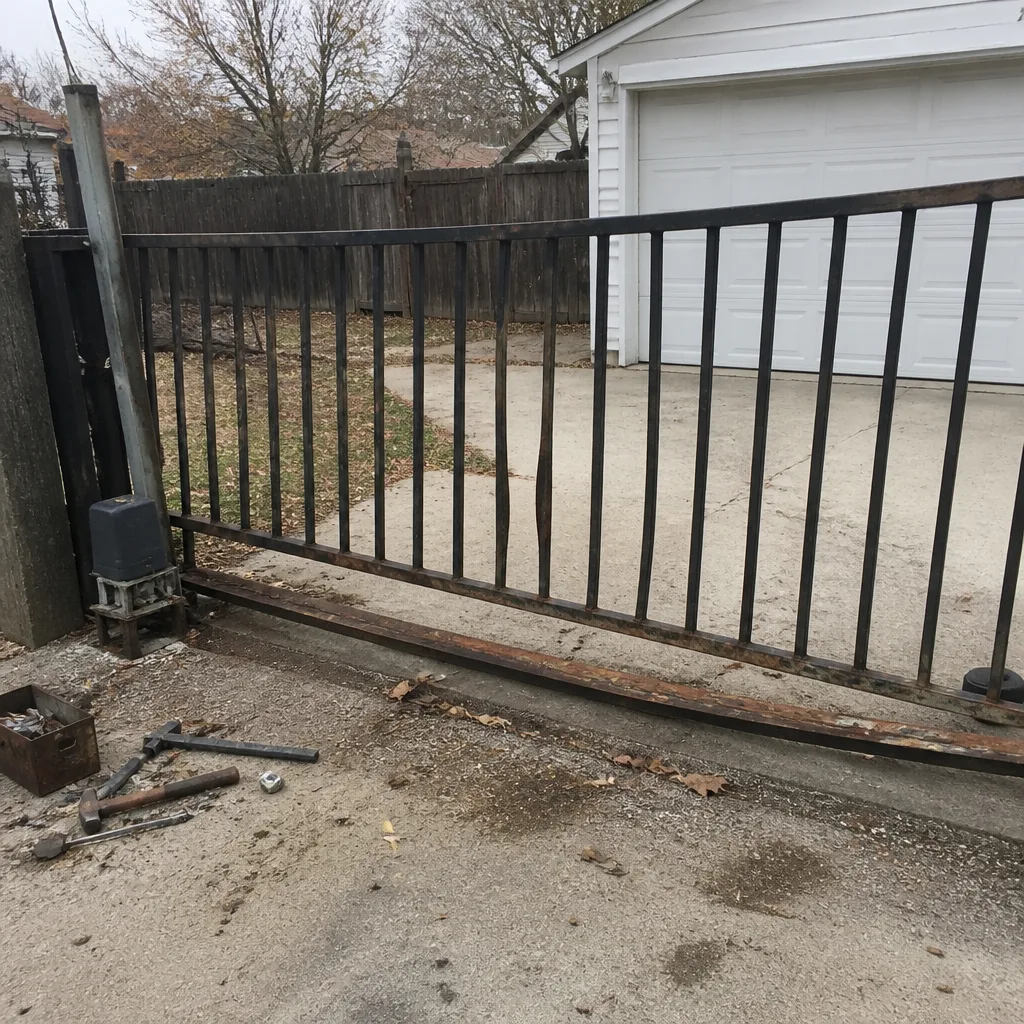 Before
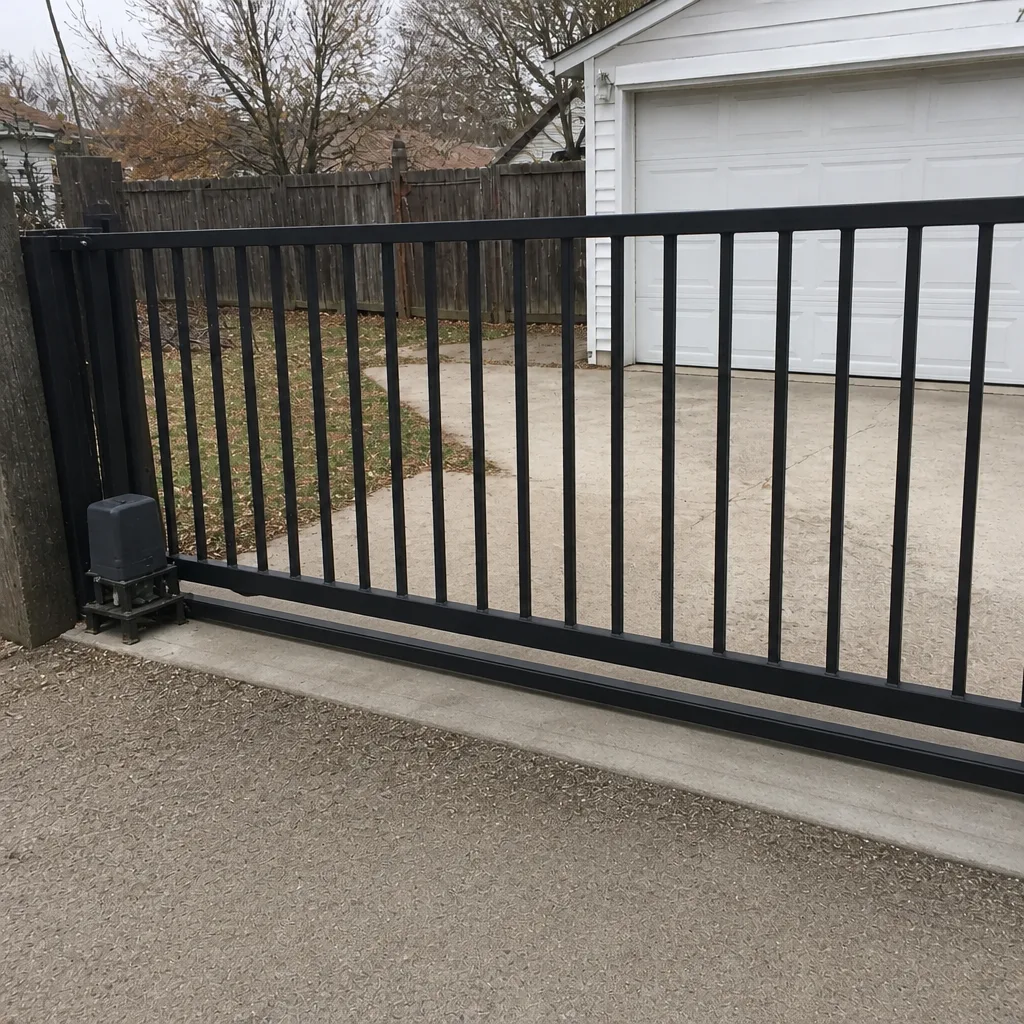 After
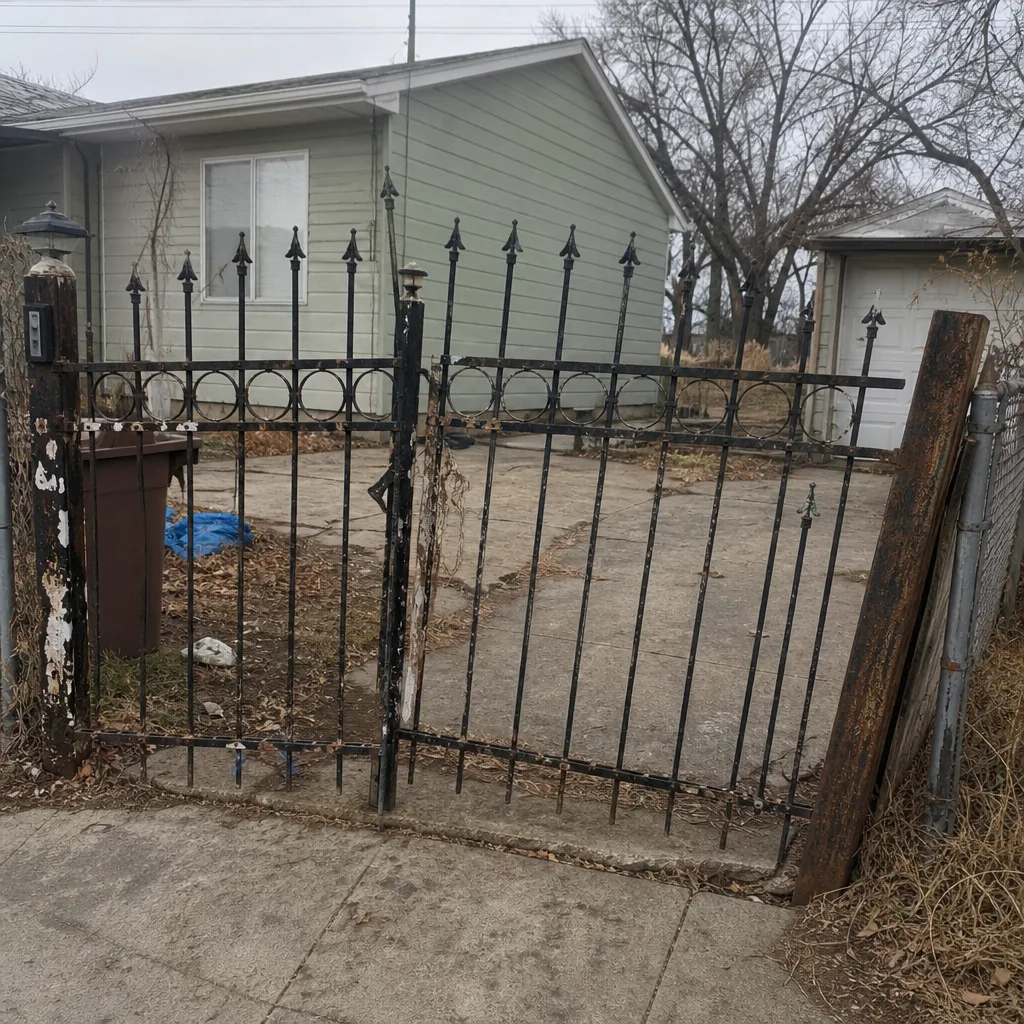 Before
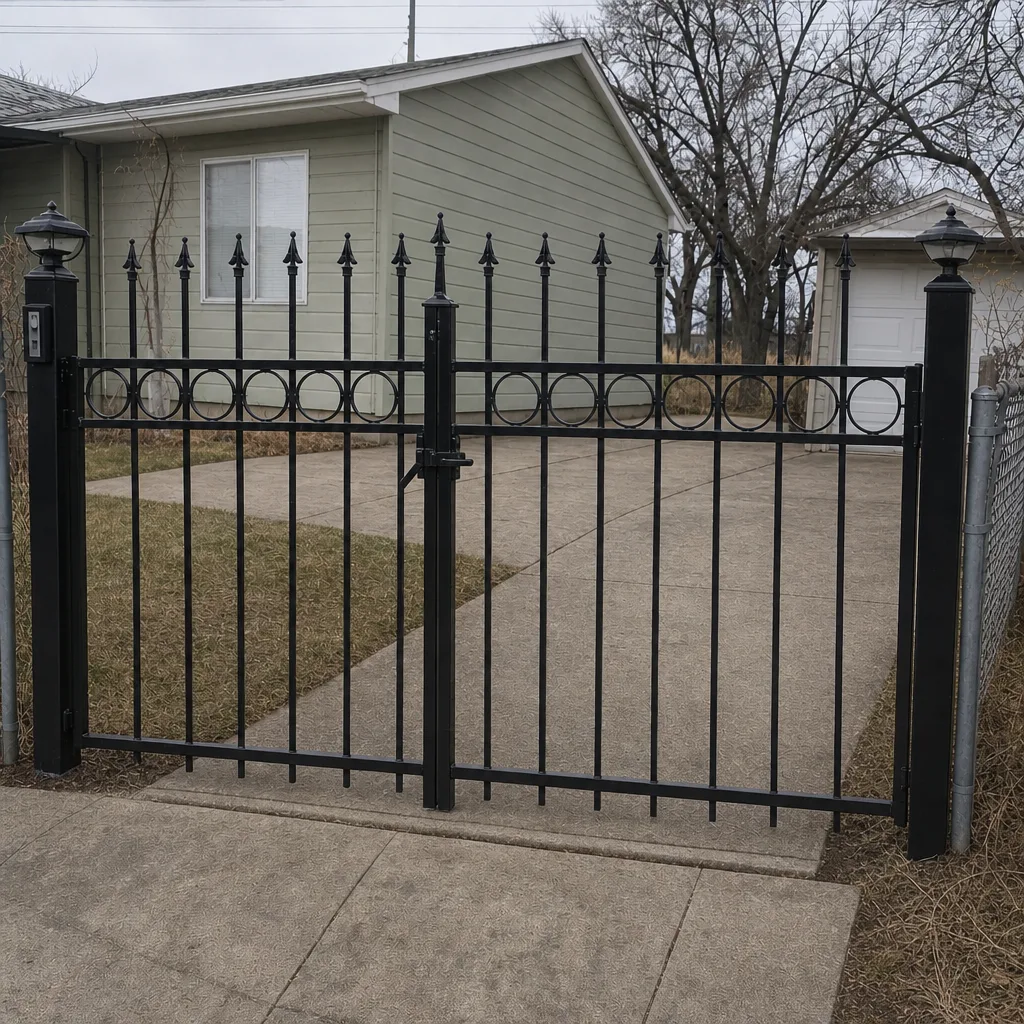 After
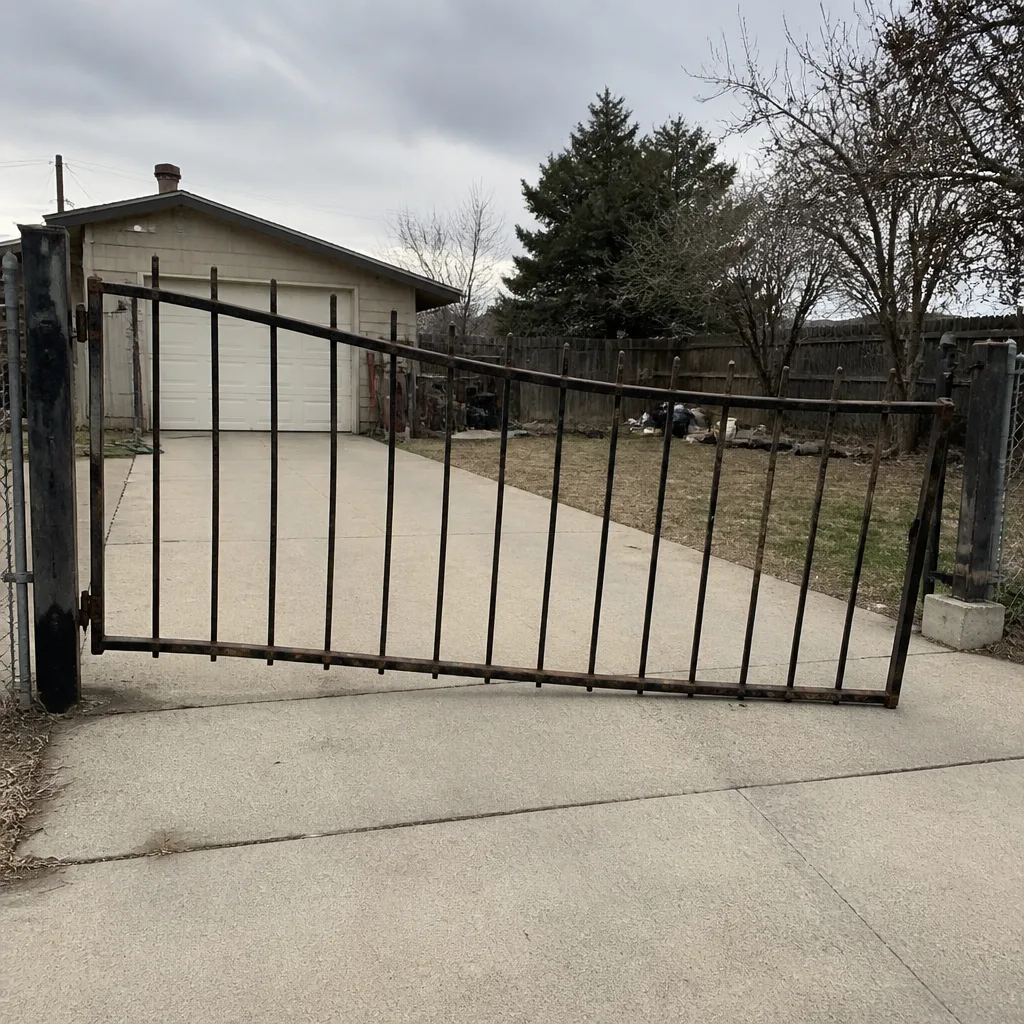 Before
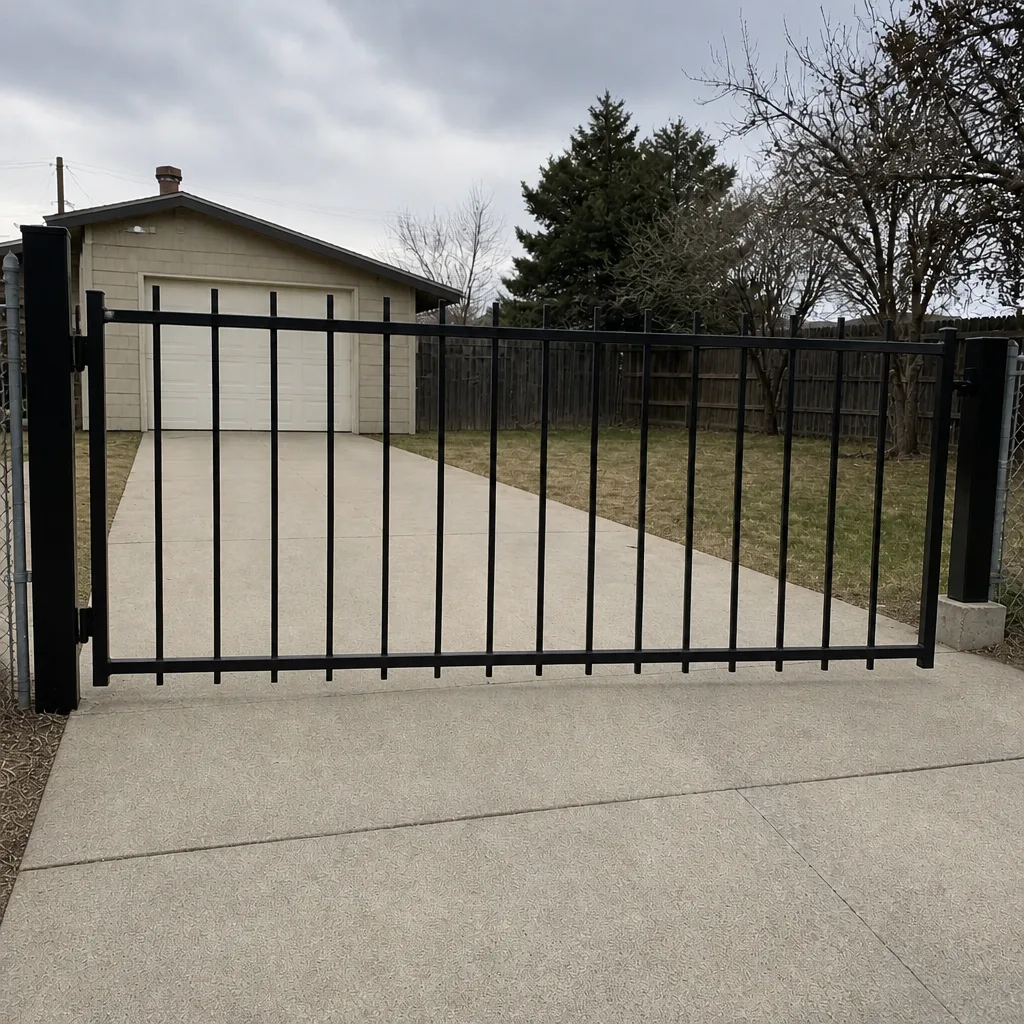 After
When to Call a Professional
Call a professional when the gate won’t respond after you’ve checked the breaker, the transformer, the remotes, and the safety sensors from outside the enclosures. Call when the manual release is seized or the gate won’t move by light hand pressure, and call right away when a swing panel or slide gate is unstable or off its track. Call when your battery load test comes up short, when a DriveKing or DoorKing access system locks out the whole site, or when a gate fails open and leaves the property exposed. Those are the situations where a specialist saves time and avoids a bigger repair. Gate Repair Thornton offers free estimates in Thornton. Call (866) 389-4610. We answer 24/7. Fast dispatch from 7am to 7pm, Sunday through Friday.
Frequently Asked Questions
The method depends on your operator brand, and every automatic gate has one. On most LiftMaster, Viking, FAAC, and CAME operators you turn a key or pull a lever to disengage the drive, then move the gate by hand. Keep hands clear of the moving gate and don’t force a stiff release. If it won’t budge, call (866) 389-4610 for a free estimate on the repair.
A gate stuck open is usually the more urgent failure because it leaves the property exposed. Don’t climb it or force the panel shut. Release the operator, close the gate by hand, prop and pin it, and switch off the operator’s power. Then call (866) 389-4610. We answer 24/7. Fast dispatch from 7am to 7pm, Sunday through Friday.
Only a load test tells you. Cut power at the operator’s breaker with the gate closed, trigger one full open and close on battery alone, and watch for slow travel, stalling, or a gate that quits partway. A green indicator light is not proof. If the test fails, call (866) 389-4610, and leave battery replacement to a technician.
Have your gate type (swing or slide), the operator brand and model, the exact symptom, what you’ve already tried, and your access and safety details like loose pets or a gate stuck open. That lets a technician arrive with the right parts. Call (866) 389-4610. The estimate is free and the price is set by the written estimate before any work starts.
A gate specialist is the safer choice, because the wiring, control boards, and operator internals involve live current and brand-specific parts. A generalist without gate training can miss the real cause or create a shock hazard. We work on your brand across nine major manufacturers, from motors to keypads. Call (866) 389-4610 for a free estimate.
Yes. We handle residential-grade operators like Ghost Controls and Mighty Mule along with commercial and high-cycle systems like FAAC, BFT, and DoorKing. That covers a single driveway gate, an HOA entrance, or a commercial access point. Call (866) 389-4610 for a free estimate and a written price before work begins.
The Bottom Line
The Thornton homeowners who get through a gate failure fastest aren’t lucky. They prepared three things: a manual release tested within the last year, an information card posted at the operator, and a battery backup proven under load rather than trusted by a green light. Add a seasonal walk to catch misalignment early, and most emergencies stay small. When the gate fails open, secure it calmly and treat the opening as exposed. When power isn’t the problem and the release won’t move, it’s time for a specialist. Handle those steps and a 6 a.m. failure becomes a 20-minute setback instead of a security problem.
If your gate is acting up, call (866) 389-4610 for a free estimate. We answer 24/7. Fast dispatch from 7am to 7pm, Sunday through Friday, and every price is quoted and agreed before any work starts.
Written by the team at Gate Repair Thornton.