
Last updated November 15, 2026
 Wrought iron
 Wood & steel frame
 Farm & ranch
 Sliding driveway gates
 LiftMaster operators
Free on-site gate assessment - hinges, posts, and your LiftMaster or Nice gate operator checked before anything is quoted
The assessment is free and the quote is the invoice.
Get your free estimateGate Repair Maintenance Schedule: What to Do and When
Most gate maintenance advice treats the year as one long, even stretch of weather. That’s the mistake. A gate in Thornton doesn’t face the same stress in January as it does in July, and a schedule built around a single annual checklist misses the moments when things actually break. In our experience, the failures that show up in spring were set in motion back in October, when nobody greased the moving parts before the first hard freeze. What follows is a month-by-month routine split into three seasonal windows, plus the lubrication, battery and cycle-count details that decide how long your operator lasts. You’ll finish knowing what to check yourself and what to hand to a technician before it becomes a repair call.
Quick Answer
A gate maintenance schedule in Colorado should run on three seasonal checkpoints, not one annual visit: an October pre-freeze inspection, a March post-thaw inspection, and a July inspection after peak sun and dust. Between those, check lubrication monthly, test the battery backup quarterly, and log operator cycle counts so you replace worn parts on a schedule instead of after a breakdown. Manual gates need far less; automated gates need all three windows plus battery checks to stay reliable.
Styles & brands we work with
- Wrought iron
- Wood & steel frame
- Farm & ranch
- Sliding driveway gates
- LiftMaster operators
Table of Contents
- Why one annual visit fails in Thornton’s climate
- The October pre-freeze window
- The March post-thaw window
- The July heat and dust window
- Lubrication by component type
- How to log cycle counts and predict wear
- Battery backup maintenance you’re probably skipping
- What you can maintain vs. what needs a technician
Why one annual visit fails in Thornton’s climate
A gate lives outdoors in conditions that swing hard. In Thornton, that means summer afternoons that push metal and plastic operator housings hot, dry air that pulls moisture out of rubber and nylon, fall dust that works its way into tracks and hinge pins, and a winter cold enough to turn a marginal bearing into a seized one. A single spring tune-up can’t respond to any of that because the stress arrives at different times.
Here’s how the three windows divide the work:
- October (pre-freeze): the gate is in good condition, so this is about protecting seals, lubricant film and moving parts before cold locks everything in place. This is the window that prevents the most failures.
- March (post-thaw): the gate has just come through freeze-thaw movement, ground settling and months of grit. This is about inspection and correction, not prevention.
- July (peak heat and dust): the gate faces thermal expansion, dry seals and dirt that finds every open joint. This is about cleaning and checking cooling-sensitive electronics.
The seasonal split is why a proper Gate Repair Thornton inspection looks different in October than in July. A homeowner who understands the pattern stops treating maintenance as a checkbox and starts anticipating it. The rest of this guide walks each window in turn, then covers the routines that run between them.
The October pre-freeze window
October is the most important maintenance window of the year in Thornton, full stop. The goal is to get a gate through winter without a stuck hinge, a cracked seal or a frozen drive. Work the checklist in this order:
- Grease the moving pivot points. Apply the right lubricant to hinge pins, swing gate pivots, guide rollers and the operator’s drive chain or rack before cold settles in. A dry pivot point seizes faster in cold weather.
- Inspect weather seals and gaskets on the operator housing. Any seal that’s cracked or pulling away lets in moisture that can freeze and expand. Replace them now, not in January.
- Clear the gate’s path. Check that the gate doesn’t drag on dirt, gravel or uneven pavement. As ground freezes and heaves, a gate that’s already dragging will bind badly.
- Test the safety edges. Run the gate toward an obstruction and confirm it reverses. Cold makes rubber edges stiffer, so a weak edge is more likely to fail when it counts.
- Test the battery backup. This is the one owners skip, and it’s the one that matters most in winter, when a power loss leaves you locked in or out. Do the quarterly test now, before it’s urgent.
- Check fasteners and framing. Tighten loose bolts on hinges, posts and operator brackets. Frost heave and settling move things; a loose bracket turns into a misaligned gate.
Don’t leave the operator’s control board out either. Clear any debris from the housing vents and confirm the enclosure is sealed. In our experience, water that gets into a control board during a freeze is one of the more expensive surprises a homeowner can face. If you run a FAAC or BFT operator, this is a good month to have the whole drive checked while the weather is still workable.
The March post-thaw window
By March the gate has survived the worst of the cold, and now you find out what the winter did to it. This window is about inspection and correction. Start with a walk-around while the gate is stationary:
- Look for frost heave that has shifted a post, sagged a gate panel or thrown the gate out of alignment with the operator arm.
- Check for rust on exposed steel where road salt and melting snow have sat against it.
- Look for cracks in concrete around the posts where expanding ice may have lifted them.
- Listen for grinding, scraping or uneven travel as the gate opens and closes. New noises after winter usually mean a bearing, roller or track problem.
- Confirm the gate fully latches and the operator reaches its open and closed limits without overrunning.
Then run the functional checks. Cycle the gate a few times and watch for hesitation, a slow spot or an arm that binds. Test the safety reversal. Re-test the battery backup, because a battery that sat cold all winter may have lost capacity even if it wasn’t used. And if your gate has a keypad or access control, confirm it still accepts codes after the winter.
March is also when many homeowners first notice an electric gate acting up. That’s expected: the problems were introduced in winter and surface when things thaw. In our experience the fix is usually a hinge, a roller, a limit adjustment or a control board setting, not a whole new operator. A focused diagnosis at this point saves a lot of money compared with waiting until the gate stops entirely in June. If you want a professional eye on this window, our gate repair service starts with exactly this kind of seasonal inspection.
The July heat and dust window
Summer brings a different set of stresses. Metal and plastic expand, seals dry out, and fine dust coats every surface that sees air movement. The July inspection is about cleaning and checking the parts most sensitive to heat and grit:
- Clean tracks and rails. Dust and grit pack into guide tracks; a dry brush and a wipe-down keeps rollers from grinding. Don’t flood tracks with lubricant, which just catches more dust.
- Check seals and bushings for drying and cracking. Heat makes rubber and nylon brittle; replace anything that’s started to crack before it fails.
- Confirm the operator housing has airflow. Clear vents and confirm the control enclosure isn’t baking in full sun. Electronics that run hot fail sooner.
- Check the safety sensors and photobeams. Dust and insect nests on sensor lenses cause false trips and phantom reversals. Wipe lenses and confirm alignment.
- Inspect the drive chain or rack for slack. Heat expansion can loosen a chain or cause a rack to ride unevenly. Adjust tension where the manual allows.
- Confirm the battery backup again. Heat degrades batteries too; this is the second test of the year if you tested in October and the third if you run quarterly checks.
The July window is also when dust-related failures peak in Thornton, because everything dry and airborne finds its way into open joints. Deep cleaning and a fresh, correct lubricant film on moving parts does most of the work. On a heavy commercial operator, like a DoorKing or a high-cycle system, the summer check should also include a look at the gearbox fluid and drive motor mounting, since heat compounds any existing wear.
Lubrication by component type
Lubrication is where well-intentioned maintenance does the most harm. The wrong grease on a rack-and-pinion drive can accelerate wear faster than no lubrication at all, because the wrong product attracts grit, dries into a paste, or fails to stay where it’s needed under load. The fix is matching the lubricant to the part:
- Rack-and-pinion drives: use a grease formulated for open gears and exposed metal surfaces. It needs to stay put under pressure. Never substitute a light spray oil or a household grease, which won’t carry the load and will attract dust.
- Drive chains: use a chain-specific lubricant that penetrates the links rather than sitting on the surface. Over-lubrication is a real problem here; too much catches grit and grinds the chain.
- Hinge pins and swing pivots: a mid-weight grease that stays put is right for high-load pivot points. Apply clean and wipe off excess.
- Rollers and guide tracks: tracks generally want clean and dry or a very light dry-film lubricant. Flooding a track with grease creates a paste that stalls rollers.
- Lock and latch mechanisms: a dry or light lubricant, not heavy grease, so it doesn’t gum up in cold weather.
Two rules override everything. Match the product to the component, and follow the operator manual for any lubrication points it specifies. On a brand with specific requirements, like FAAC or Linear, the manual is the authority. A technician who works on your system regularly will know which parts should be greased, which should stay dry, and which shouldn’t be lubricated at all.
How to log cycle counts and predict wear
Most modern electric gate operators track how many cycles they’ve run internally, and that number is the single best predictor of when components will wear out. A “cycle” is one open-and-close sequence. High-cycle operators on commercial properties or HOAs can run hundreds of cycles a day, while a homeowner’s gate might run a few dozen. That difference decides how often parts need attention.
Here’s a simple, practical logging habit:
- Record the cycle count once a month. On a display-equipped operator, it’s usually available in the diagnostic menu. On a simpler unit without a display, estimate from daily traffic instead.
- Note the date and the count together. Every month you build a small history of cycles-per-day, which is what you need to see patterns.
- Inspect high-wear parts at set cycle milestones. Rollers, hinges, bushings and limit switches wear on a cycle basis, not a calendar basis. When the count reaches the inspector’s suggested inspection point for those parts, have them checked.
- Track unusual jumps. A sudden spike in daily cycles usually means a malfunction or a changed usage pattern. If your gate suddenly runs twice as often, something is causing false cycles.
- Log every service visit. Note what was replaced and the cycle count at the time. That history makes the next service faster and cheaper.
This is where an operator’s own diagnostics earn their keep. DoorKing systems, for example, expose cycle and fault history that makes this routine straightforward. Once you have the numbers, you can predict wear rather than wait for the gate to fail. A part that’s due for replacement can be swapped on your schedule instead of on an urgent one.
Battery backup maintenance you’re probably skipping
Battery backup is the part of an electric gate that everyone forgets until they need it. The test most owners skip is the quarterly load test: cut power to the operator for a few minutes and confirm the gate completes at least two full open-and-close cycles on battery alone. If the gate slows, stalls or fails to complete the cycles, the battery has lost capacity and needs replacement.
A few practical notes for Thornton homeowners:
- Test a battery you’ve never used. A backup battery can sit idle for years and still degrade. The only way to know it will work is to test it under load.
- Check the terminals. Corrosion or a loose connection is as common a failure as a worn battery. Clean and tighten as needed.
- Watch the charge-light indicator. If the operator shows a charging fault, address it before the battery fails entirely.
- Replace on a predictable interval. Backup batteries in gate operators have a lifespan, and replacing one before it fails costs less than an unplanned repair and a stuck gate.
Cold weather is hard on battery capacity, which is another reason this test belongs in October. Do it a second time in spring and a third in summer, and you’ll rarely be caught off guard. The gate failing in a power outage isn’t a nuisance; it’s a security gap. A free estimate lets us confirm your backup system is correctly sized and wired, and can sort out a battery problem or a control board issue.
What you can maintain vs. what a licensed technician should handle
There’s a clear line between routine homeowner care and work that belongs to a technician, and crossing it can void a warranty or put you at risk. The safe split:
Safe for a homeowner: cleaning tracks and rails with a brush and cloth, wiping sensor lenses, checking hinges for looseness, confirming the gate path is clear, applying a small amount of the correct lubricant to accessible pivot points and chains, running the quarterly battery test, logging cycle counts and testing the safety reversal.
Work that needs a technician: any adjustment to the operator’s limit switches, control board settings or access programming; opening the operator housing to reach wiring; testing or replacing mains power wiring; repairing structural weld or post failure; and any diagnosis after a failed component.
Electric gate work involves line voltage. Opening the operator and touching wiring or the control board is hazardous, and it’s a common cause of damage when done by an untrained hand. If a gate is acting up, that’s when we recommend our electric gate repair service rather than an attempt to diagnose it yourself. A gate isn’t a device to experiment on. On the mechanical side, heavy swing panels and slide gates can crush hands, and a slide gate that’s jumped its track can injure someone; those should be handled by a trained professional.
One more reason to be cautious: many operator warranties make specific exclusions for unauthorized modifications. A technician familiar with the brand, whether that’s Linear or Viking, can identify whether a problem is covered or a wear item, and handle the diagnosis accordingly. A homeowner with a screwdriver often can’t make that call.
Common Mistakes to Avoid
- Collapsing everything into one spring visit. Skipping October is the single most preventable cause of spring failures. A gate that isn’t prepped for cold weather in Thornton is already at risk.
- Greasing everything with the same product. Household grease on a rack-and-pinion drive attracts grit and wears the metal faster than leaving it dry. Match the lubricant to the part.
- Forgetting the battery test. Owners treat the backup battery as a “set and forget” part, then discover it’s dead during an outage. Test it quarterly under load.
- Treating tracks like a grease job. Flooding the guide track with lubricant creates a gritty paste that wears rollers and can stall the gate. Clean tracks, don’t soak them.
- Ignoring the post-thaw season. Frost heave and ground movement in March shift posts and misalign gates. A quick walk-around in March prevents a June breakdown.
- Diagnosing electrical problems to save a call. Opening the operator housing or touching power wiring is hazardous work. It’s also one of the most common ways a small fault becomes a control board repair.
- Letting dust build up on the sensors. A dirty photobeam causes phantom reversals and false safety trips, which is a common summer call in Thornton. A clean lens solves more than you’d think.
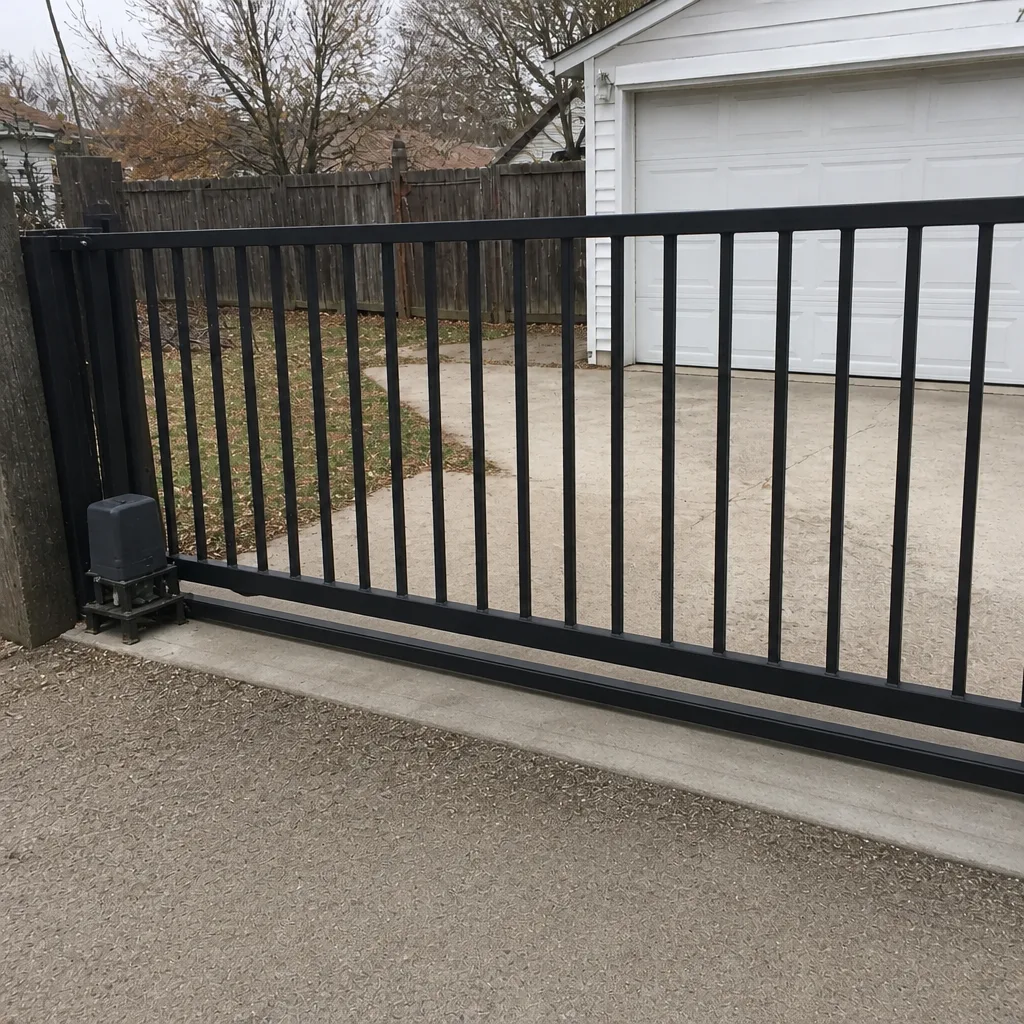
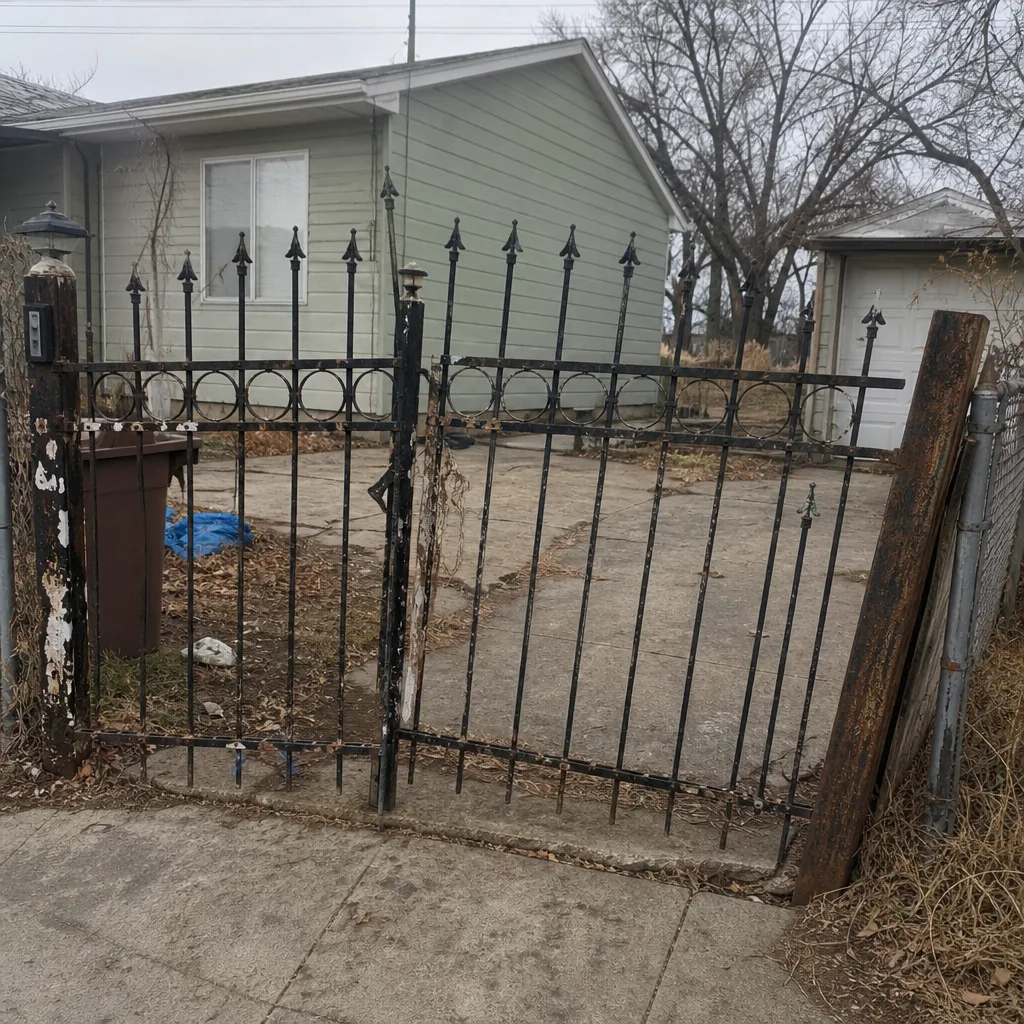
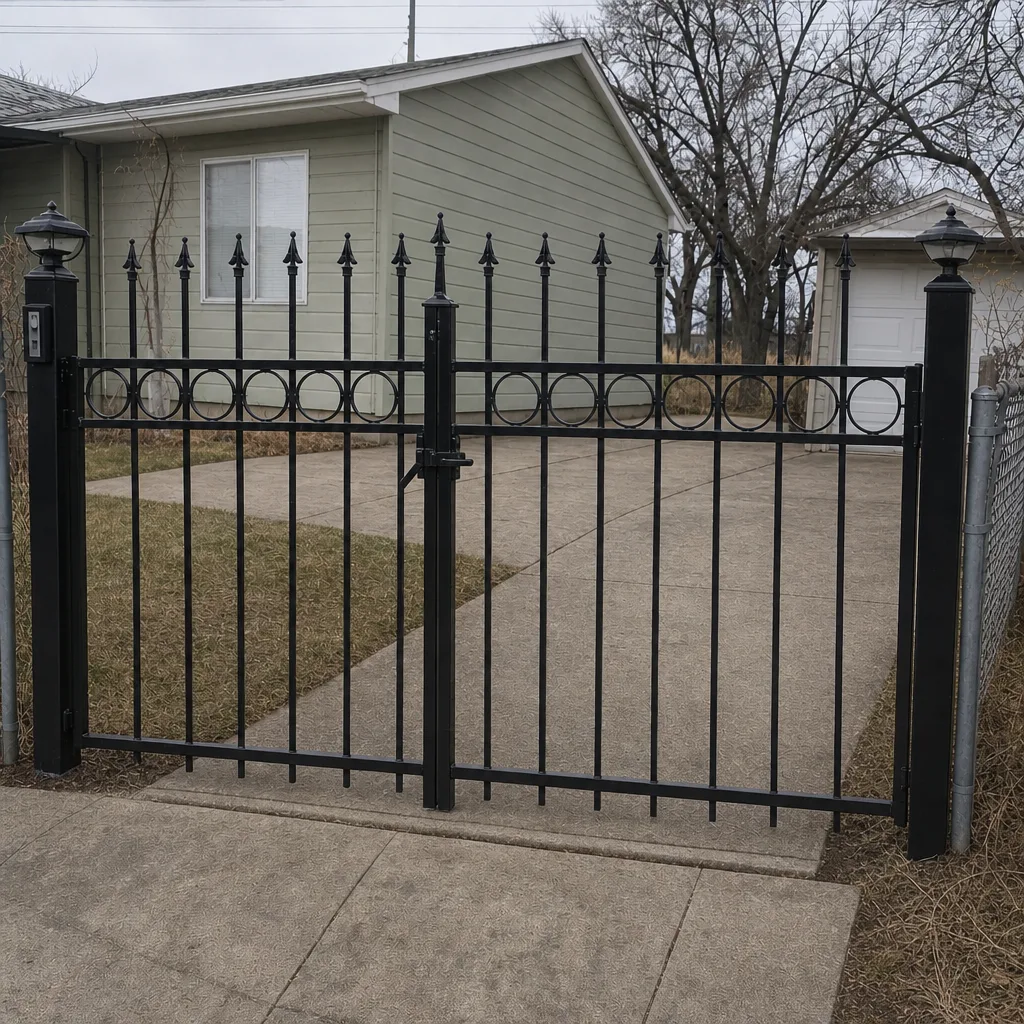
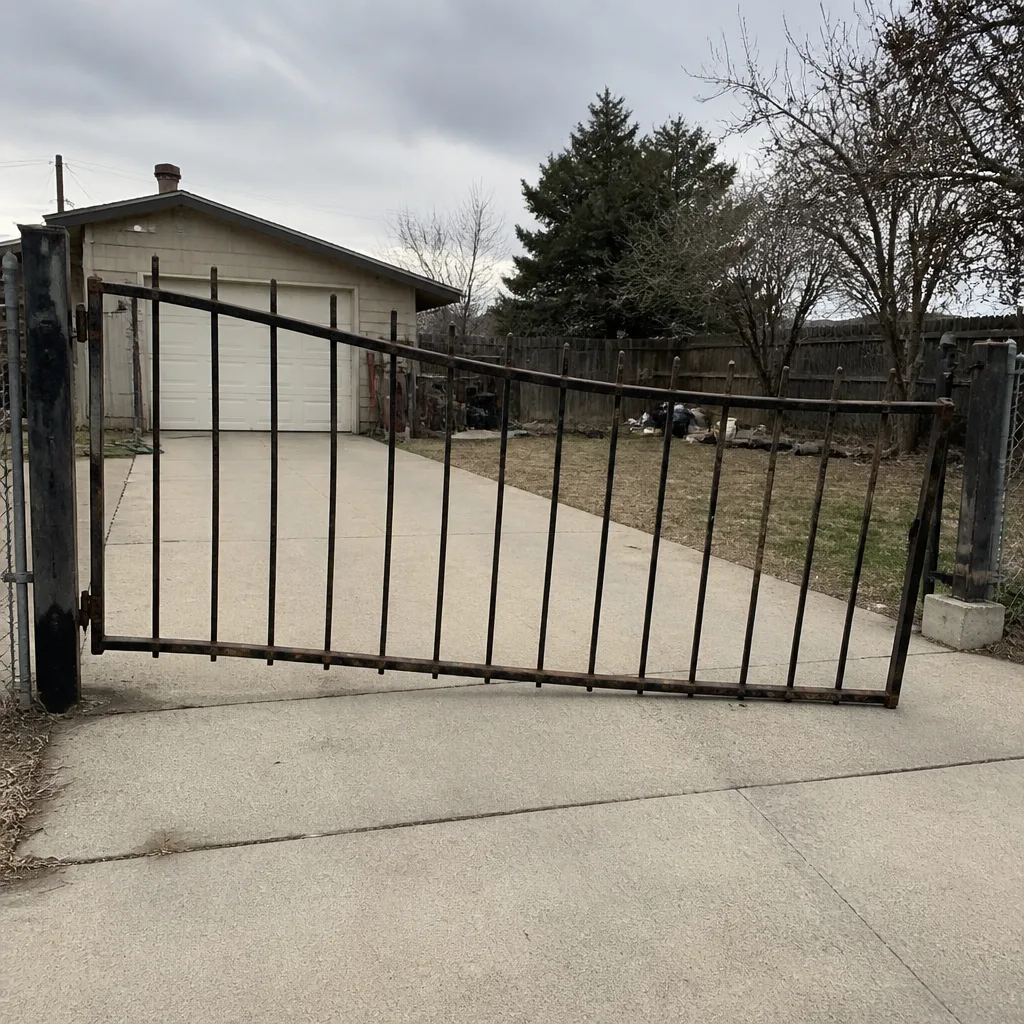
See the difference
 Before
 After
 Before
 After
 Before
 After
When to Call a Professional
Some problems are seasonal inspections; others are calls a homeowner shouldn’t postpone. Call a technician if the gate moves unevenly, grinds, or stops partway through a cycle; if the safety reversal fails; if the gate won’t stay on battery backup or the operator shows a charging fault; if a post has shifted and the gate won’t latch; or if anything has happened to the power wiring or control board. In our experience, the earlier you call on an electric gate issue, the simpler and cheaper the repair. If your gate is in our service area, we’re glad to look at it in Thornton. Gate Repair Thornton offers free estimates in Thornton – call (866) 389-4610. Our technicians have up to 15 years of experience and work with the brands your system likely runs, including FAAC, BFT, Linear and Viking.
Frequently Asked Questions
A gate in Colorado should get at least three checks a year: October before the freeze, March after the thaw, and July after peak heat and dust. Between those windows, check lubrication monthly and test the battery backup quarterly. Automated gates and high-traffic gates need the full routine; manual gates can often go longer between checks.
October is the most important maintenance window. It’s the one that prepares the gate for freeze-thaw cycling and cold, and it’s the one most often skipped. A gate that’s lubricated, sealed and aligned before the first hard freeze is far less likely to fail in spring. Call (866) 389-4610 for a free estimate if you want that window handled properly.
You can safely lubricate accessible hinge pins, pivots and drive chains with the correct product, and clean the tracks with a brush. Anything that involves opening the operator housing, adjusting the control board or limit switches, or touching power wiring should go to a technician. The wrong product on a rack-and-pinion drive can cause wear, so when in doubt, ask.
Cut power to the operator for a few minutes and confirm the gate completes at least two full open-and-close cycles on battery. If it slows or stalls, the battery has lost capacity and needs replacement. Test quarterly, and always before winter. Some operators store fault codes that make diagnosis easier, and our technicians use those.
Spring failures in Thornton usually trace back to winter damage: frozen or seized pivots, moisture that got into a seal or control board, ground frost that shifted a post or misaligned a gate, and a weakened battery. Most of these are set in motion in October and surface in March, which is why the pre-freeze window matters so much.
We work on nine major gate and operator brands, including FAAC, BFT, Linear and Viking, covering both residential-grade and commercial systems. Call (866) 389-4610 and tell us your brand and what’s happening. The estimate is free, and we’ll tell you what the next step is.
The Bottom Line
A gate maintenance schedule isn’t one annual checklist; it’s three routines tied to Colorado’s seasons, plus monthly lubrication and quarterly battery and cycle-count checks. In Thornton that means October to prepare for freeze, March to correct winter damage, and July to clean up after heat and dust. Lubricate by component, never with the wrong grease. Test the battery under load. Log cycle counts so parts get replaced on schedule, not in an emergency. Know the line between what you can safely do and what needs a trained technician. Do those things and your gate stays reliable; skip them and the gate collects the failure for you. For a full seasonal inspection, our Thornton team is ready to help.
Call (866) 389-4610. We answer 24/7. Fast dispatch from 7am to 7pm, Sunday through Friday. Estimates are free, and the price is quoted and agreed before any work starts.
Written by the team at Gate Repair Thornton.