
Last updated November 15, 2026
 Wrought iron
 Wood & steel frame
 Farm & ranch
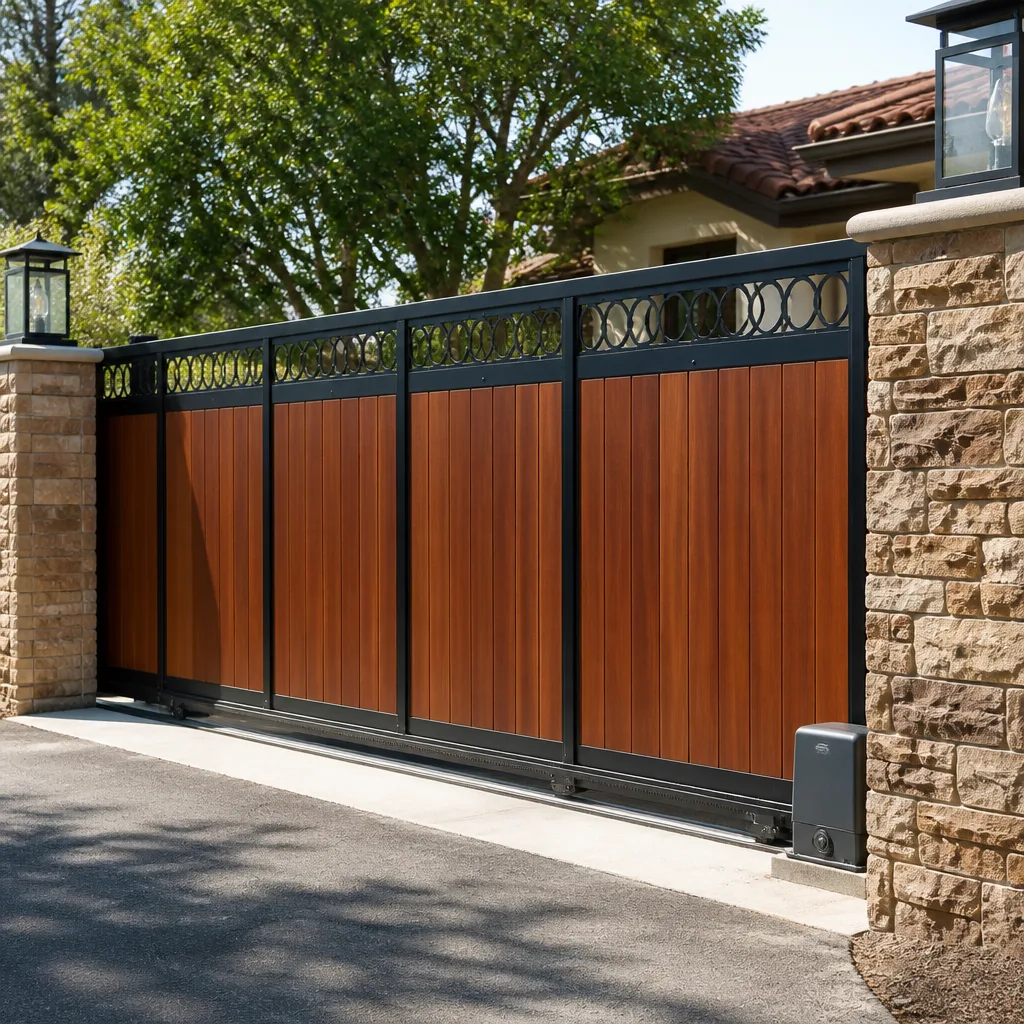 Sliding driveway gates
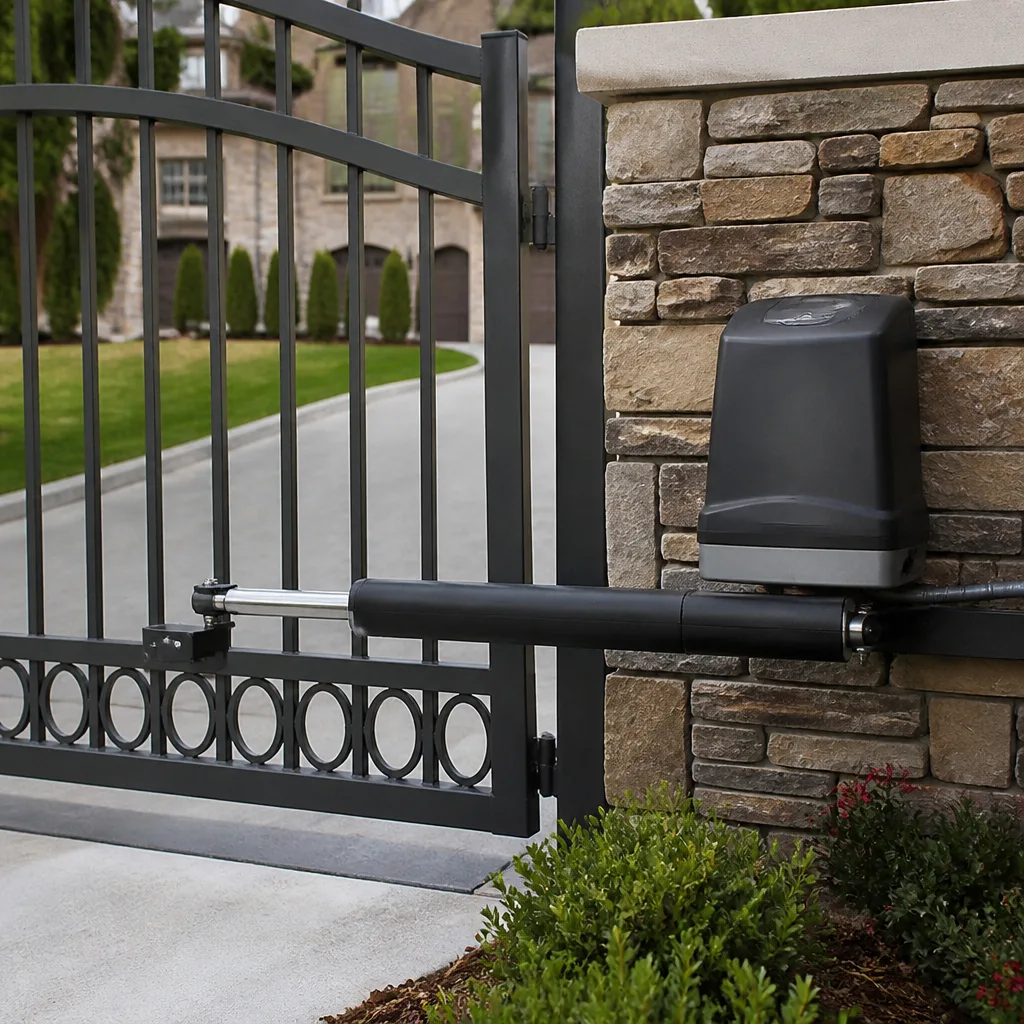 LiftMaster operators
Free on-site gate assessment - hinges, posts, and your LiftMaster or Nice gate operator checked before anything is quoted
The assessment is free and the quote is the invoice.
Get your free estimateDIY vs Professional Gate Repair: The Thornton Homeowner’s Decision Guide
Adjusting a gate hinge yourself is a weekend project. Adjusting the entrapment protection sensors on an automated gate yourself can void the operator’s warranty and put you on the wrong side of a legal line if that gate ever injures someone. That distinction is where the DIY vs professional question actually lives, and most DIY guides skip right past it. This guide draws the line clearly for Thornton homeowners: which manual gate repairs are genuinely safe to attempt, which automated gate components must be handled by a qualified technician under UL 325, and how to tell the difference before you pick up a wrench.
Quick Answer
Manual gate repairs – hinge tightening, latch adjustment, sagging gate realignment on a light residential gate – are reasonable DIY projects for a mechanically confident homeowner. Automated gate repairs are not. Any work involving the operator, control board, entrapment sensors, or power wiring falls under UL 325 safety standard requirements that call for a qualified technician, because a misadjusted automated gate is a crushing hazard and a liability exposure. When in doubt, the safe answer in Thornton is to call a specialist.
Styles & brands we work with
- Wrought iron
- Wood & steel frame
- Farm & ranch
- Sliding driveway gates
- LiftMaster operators
Table of Contents
- Why the DIY Line Isn’t About Skill Level
- Manual Gate Repairs That Are Genuinely DIY-Appropriate
- Automated Gate Components That Require a Technician Under UL 325
- How DIY Misdiagnosis Escalates Your Repair Bill
- Tools and Knowledge for the DIY Tasks That Are Safe
- HOA Gate Systems vs Private Residential Gates in Thornton
- What Thornton’s Climate Does to Gate Hardware
- Common Mistakes to Avoid
Why the DIY Line Isn’t About Skill Level
Most DIY gate repair content frames the decision as a confidence question. Are you handy enough? Do you have the tools? That framing is wrong, and it’s dangerous. The real dividing line is system type. A manual gate is a mechanical assembly of hinges, latches, posts, and panels. An automated gate is a mechanical assembly plus an operator, a control board, sensors, and a power feed – and that second category is governed by safety standards, not by how good you are with a socket set.
That matters in Thornton because the housing stock here spans both worlds. Older neighborhoods have plenty of manual swing gates on driveways and side yards. Newer developments and most planned communities run automated systems from operators like Ghost Controls or Mighty Mule on private driveways, and heavier commercial-grade equipment from brands like DoorKing and FAAC on shared access points. The same homeowner can face both a DIY-friendly manual gate and a hands-off automated one on the same property.
Here’s the honest version of the rule: you can safely learn on a manual gate because the failure mode is a gate that doesn’t close. You cannot safely learn on an automated gate because the failure mode is a gate that closes on a person, a pet, or a vehicle. That asymmetry is the whole guide in two sentences. Everything below is detail on where the line falls.
Manual Gate Repairs That Are Genuinely DIY-Appropriate
If your gate has no operator, no wiring, and no motor, you’re in DIY territory for a specific set of tasks. These are the repairs a mechanically competent Thornton homeowner can handle with basic tools, and where a mistake costs you a Saturday rather than a legal bill.
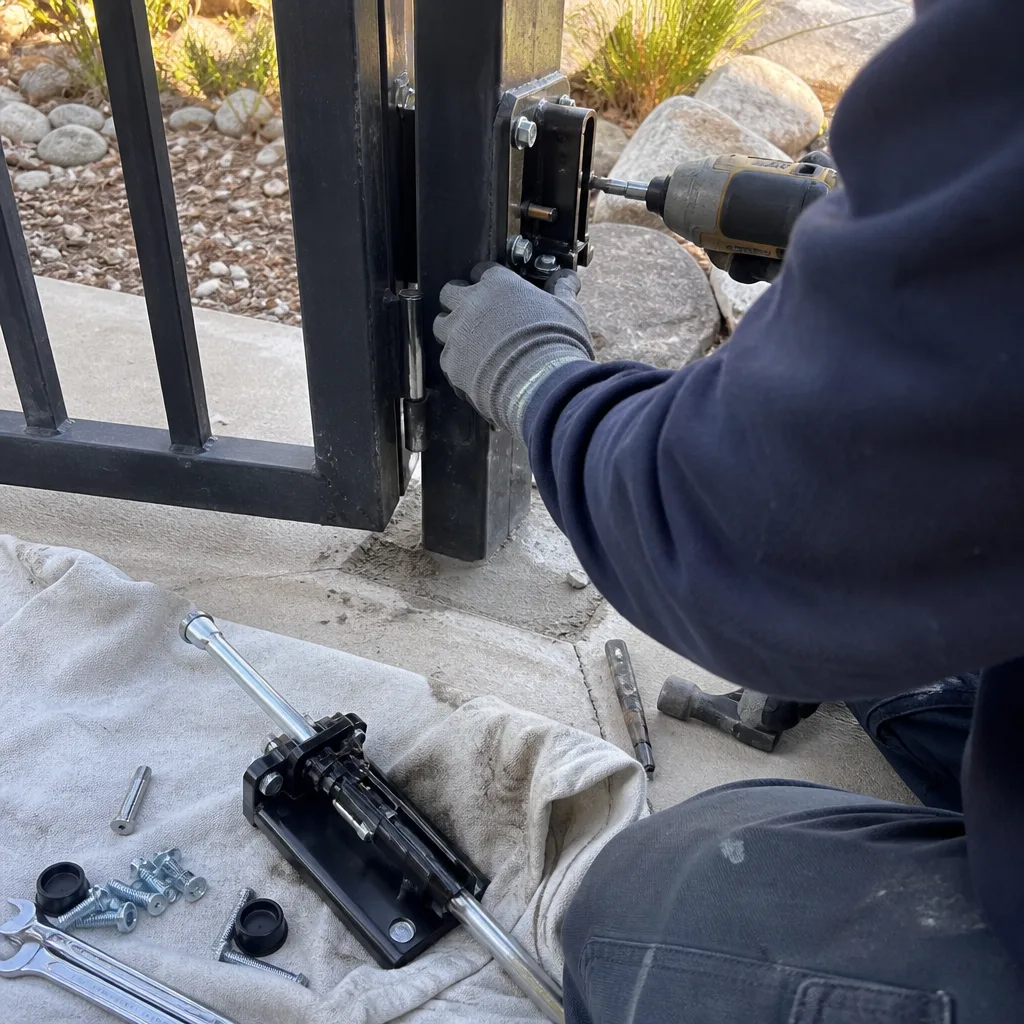
- Hinge tightening and lubrication. A gate that drags or squeals almost always has a loose or dry hinge. Tightening the bolts and applying a proper lubricant to the pivot points is a genuine DIY fix.
- Latch alignment. A latch that won’t catch usually means the gate has shifted a fraction of an inch. Adjusting the strike plate or the latch bar is straightforward.
- Sagging gate adjustment on a light residential gate. A wood or light metal gate that sags at the free end can often be corrected by adjusting the hinge tension or shimming a hinge. On a heavy gate, stop and call – a dropped heavy panel is a crush risk even without a motor.
- Replacing a worn latch or handle. Simple hardware swaps on manual gates are safe and cheap.
- Clearing debris and re-grading a swing path. A gate that scrapes the ground because dirt or gravel has shifted into its arc is a landscaping fix, not a gate repair.
- Tightening post bolts on a post that is still solid. If the post itself is loose in the ground, that’s footing work and worth a professional look.
Each of these keeps the gate a mechanical object. The moment a task touches a motor, a sensor, a control board, or a live wire, it leaves this list. For mechanical repairs beyond tightening and adjusting, our gate repair team is a phone call away.
Automated Gate Components That Require a Technician Under UL 325
UL 325 is the safety standard that governs automated gate operators and their entrapment protection. It exists because a powered gate is a machine that can kill. The standard requires specific entrapment protection – photo eyes, edge sensors, or equivalent – and requires that protection to be correctly installed, correctly adjusted, and functioning. This is not a preference. It’s the reason automated gate work needs a qualified technician rather than a confident homeowner.
The components that fall on the technician side of the line:
- The operator and motor. Any repair or adjustment to the motor, gearbox, or drive mechanism.
- The control board. Board-level diagnosis, replacement, and reconfiguration of operating parameters.
- Entrapment protection sensors. Photo eyes and edge sensors must be positioned and aligned so the gate reverses correctly. Misaligned sensors either stop the gate from working or, worse, fail to detect an obstacle.
- Safety edge and reversing logic. The force settings and reverse behavior are safety parameters, not convenience settings.
- Power wiring and the electrical feed. The line voltage to the operator is a genuine electrical hazard.
- Keypads, access control, and loop detectors. These integrate with the operator’s logic and must be wired and configured correctly.
If your automated gate is acting up – not opening, reversing randomly, or ignoring the remote – that’s a job for electric gate repair, not a DIY session. We work on your brand, including Ghost Controls, Mighty Mule, and DoorKing operators, and we can diagnose the full chain from the motor to the keypad.
How DIY Misdiagnosis Escalates Your Repair Bill
Here’s the pattern we’ve seen repeatedly: a homeowner with an automated gate that won’t close replaces the remote battery, then the receiver, then the control board, and the gate still doesn’t close – because the actual fault was a misaligned photo eye or a failed safety edge. The bill climbs with every part swapped, and the original fault is still there.
Automated gate symptoms are rarely where the fault lives. A gate that reverses mid-travel can be a sensor problem, a force-setting problem, a control board problem, or a mechanical bind that trips the safety logic. A gate that won’t open can be a dead operator, a bad limit switch, a wiring fault, or a keypad issue. Each of these has a different fix, and guessing at parts is an expensive way to learn.
A specialist diagnoses before replacing. In our experience, a single on-site diagnosis – free estimate, priced per job by written estimate – is almost always cheaper than the parts a homeowner burns through guessing. We’ve seen systems where the fix was a five-minute sensor realignment and the homeowner had already bought a control board. That’s the escalation cost in plain terms: not the repair, but the parts bought before the repair.
The principle applies to manual gates too, but the stakes are lower. If you’ve tightened the hinge and the gate still sags, the post is probably loose, and that’s footing work you shouldn’t guess at. For a full look at what a competent specialist checks, our Gate Repair Thornton team can walk you through it.
Tools and Knowledge for the DIY Tasks That Are Safe
If you’re going to attempt the manual gate repairs on the safe list, here’s what you should actually have on hand. This isn’t a beginner’s tool list; it’s the minimum for doing the job without making things worse.
- A socket and wrench set in the sizes that match your hinge and latch hardware. Loose hinge bolts are the most common manual gate fault, and the right socket matters more than force.
- A proper gate and hinge lubricant – not WD-40 as a long-term fix. Lubricant on the pivots reduces the load that causes sag.
- A level to check whether a sag is the hinge or the post. This one tool tells you whether you’re in DIY territory or footing territory.
- A hammer and a punch or drift for driving hinge pins if your gate uses them. Pin-style hinges are common on older Thornton gates.
- A block of wood and a jack for supporting a gate panel while you adjust a hinge – only for light panels you can safely lift.
What you should also have is the judgment to stop. If the post moves in the ground, if the gate is heavy steel, if the hinge hardware is rusted solid, or if the gate has any wiring at all, the task has left the safe zone. That’s not a failure of skill; it’s recognizing a different category of work. When a manual repair turns out to be structural, a professional on-site estimate is free, and the price is set per job in writing before anything starts.
HOA Gate Systems vs Private Residential Gates in Thornton
In a private residential gate, the homeowner owns the gate and the operator, and the decision to repair is the homeowner’s. In a Thornton HOA, the shared entrance gate is association property, and the association is responsible for its upkeep. That changes who’s authorized to touch it.
Here’s the practical split:
- Private residential gate: the homeowner can DIY the safe manual repairs and hires a technician for anything automated. No one else’s rules apply.
- HOA entrance gate: the association or its property manager authorizes repairs. A homeowner who adjusts or rewires a shared gate without authorization is creating liability for the association and for themselves.
- Shared automated systems: these are typically higher-cycle commercial-grade operators – FAAC, BFT, DoorKing, Elite – built for constant use. They’re not the same as a residential Mighty Mule on a driveway, and the tolerances are tighter.
If you’re a Thornton property manager or HOA board member, the practical upshot is that shared gate work belongs with a specialist who understands commercial operators and high-cycle systems, and who can diagnose across brands without sending you elsewhere. We handle both residential and commercial gate operators, and we carry the work from diagnosis through completed repair under a single point of contact. If you manage a shared gate in Thornton, get a free estimate before the next failure, not after.
What Thornton’s Climate Does to Gate Hardware
Thornton sits on the Front Range, and the climate here is hard on gate hardware in specific ways that shape which repairs come up and how often. That matters for the DIY decision because some failures are routine wear and some are structural.
The freeze-thaw cycle is the big one. Moisture works into hinge pivots, latch mechanisms, and post footings, then expands when it freezes and contracts when it thaws. Over a few seasons that loosens hinge bolts, widens the play in pivots, and slowly shifts posts. A gate that was perfectly aligned two winters ago can be dragging today without anything having “broken.”
The dry spells matter too. Long dry periods pull moisture out of the soil around post footings, and that movement loosens the footing. A post that’s loose in the ground is the one manual-gate fault we’d steer most homeowners away from DIY, because correcting it means re-setting the footing, not tightening a bolt. Spring wind here is another factor – a gate that catches gusts repeatedly puts load on hinges and, if it’s automated, can trip safety logic as the gate deflects.
The practical takeaway: in Thornton, lubricate your manual gate hinges before winter, check the level of the gate and the tightness of the hinge bolts each spring, and watch for a sag that appears after the first hard freeze. Those checks prevent most of the DIY-list repairs from becoming structural work. Automated gates in this climate need the same seasonal attention, but the sensor checks belong to a technician.
Common Mistakes to Avoid
- Treating an automated gate like a manual one. The most common mistake is assuming any gate work is DIY because the gate is on your property. Automated means safety standards apply. Two sentences of caution are cheaper than a claim.
- Bypassing or disabling entrapment sensors to “fix” a gate that won’t close. If a gate reverses, the sensor is doing its job. Disabling it removes the protection that keeps a person from being crushed. This is the single most dangerous DIY mistake on an automated gate, and it happens in Thornton too.
- Guessing at parts on an electric gate. Buying a control board before diagnosing is how a small repair becomes a big bill. Diagnose first, then buy.
- Tightening a hinge on a post that’s loose in the ground. You’re treating a symptom and the post will keep shifting. Check the level before you reach for the wrench.
- Adjusting a shared HOA gate without authorization. In Thornton HOA communities, the entrance gate is association property. Unauthorized work is a liability problem, not a helpful gesture.
- Ignoring seasonal maintenance in the Front Range climate. A hinge that’s lubricated before winter and checked in spring is a hinge that doesn’t become a sagging gate by summer.
- Attempting power wiring or operator repairs yourself. Line voltage and control-board work are not homeowner tasks. This is where a weekend project becomes an injury.
When to Call a Professional
Call a professional the moment the repair touches the operator, the control board, the sensors, the safety edge, the keypad, or any wiring on an automated gate. Call us if a manual gate has a post that’s loose in the ground, a panel too heavy to safely lift, hinge hardware that’s rusted solid, or a sag that persists after you’ve adjusted the hinge. Call us if you’ve already tried a fix and the gate still misbehaves, because guessing at parts gets expensive fast. And call us if you manage a Thornton HOA gate, since shared systems belong with a specialist. Gate Repair Thornton offers free estimates in Thornton – call (866) 389-4610 for an exact quote, with the price set per job by written estimate before any work begins. Our technicians have up to 15 years of experience, and we work on your brand across the major operators.
See the difference
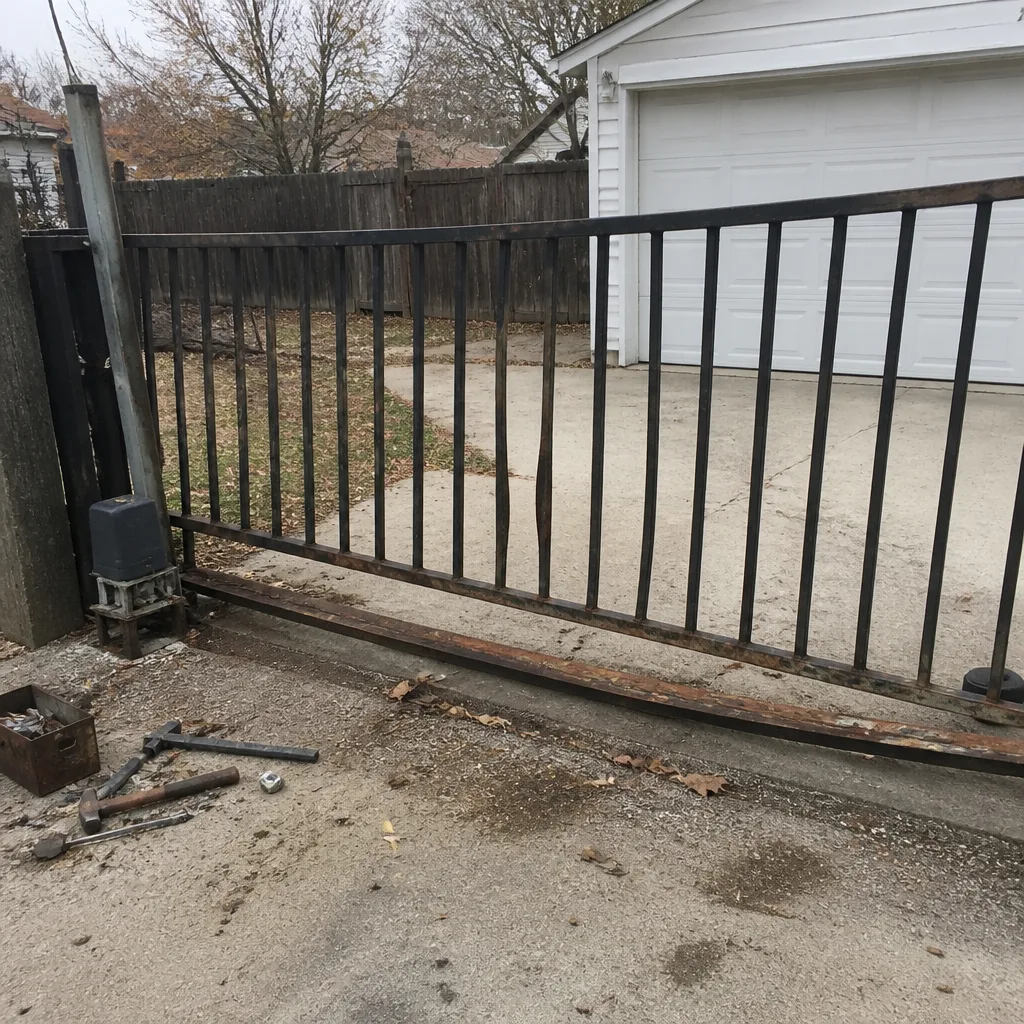 Before
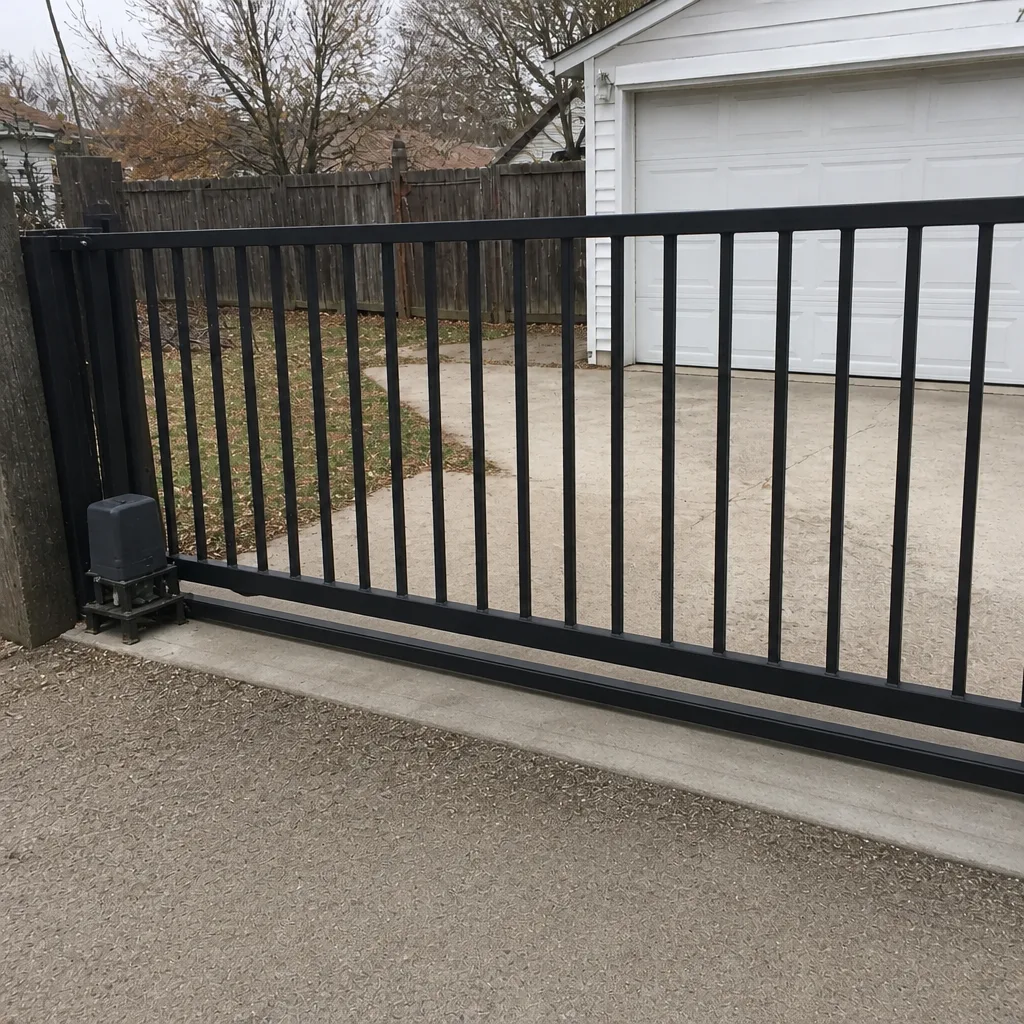 After
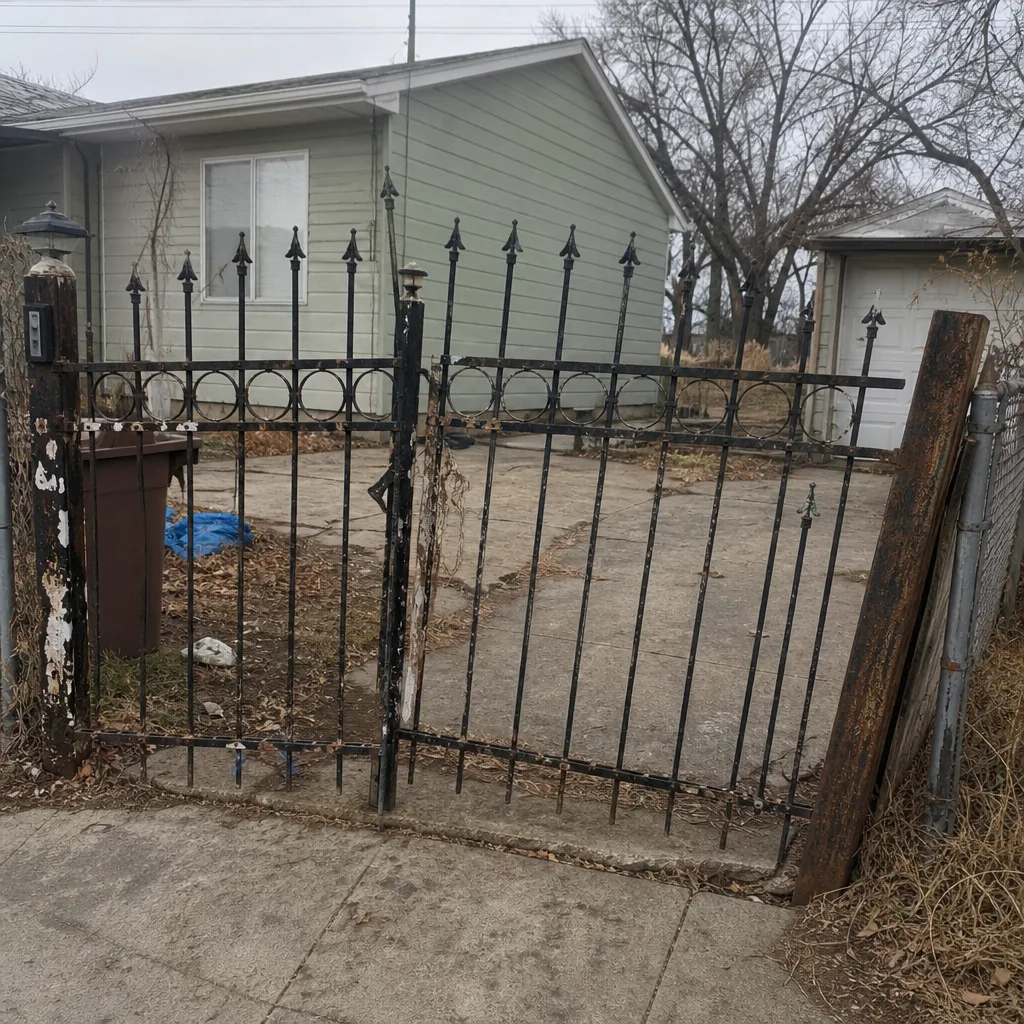 Before
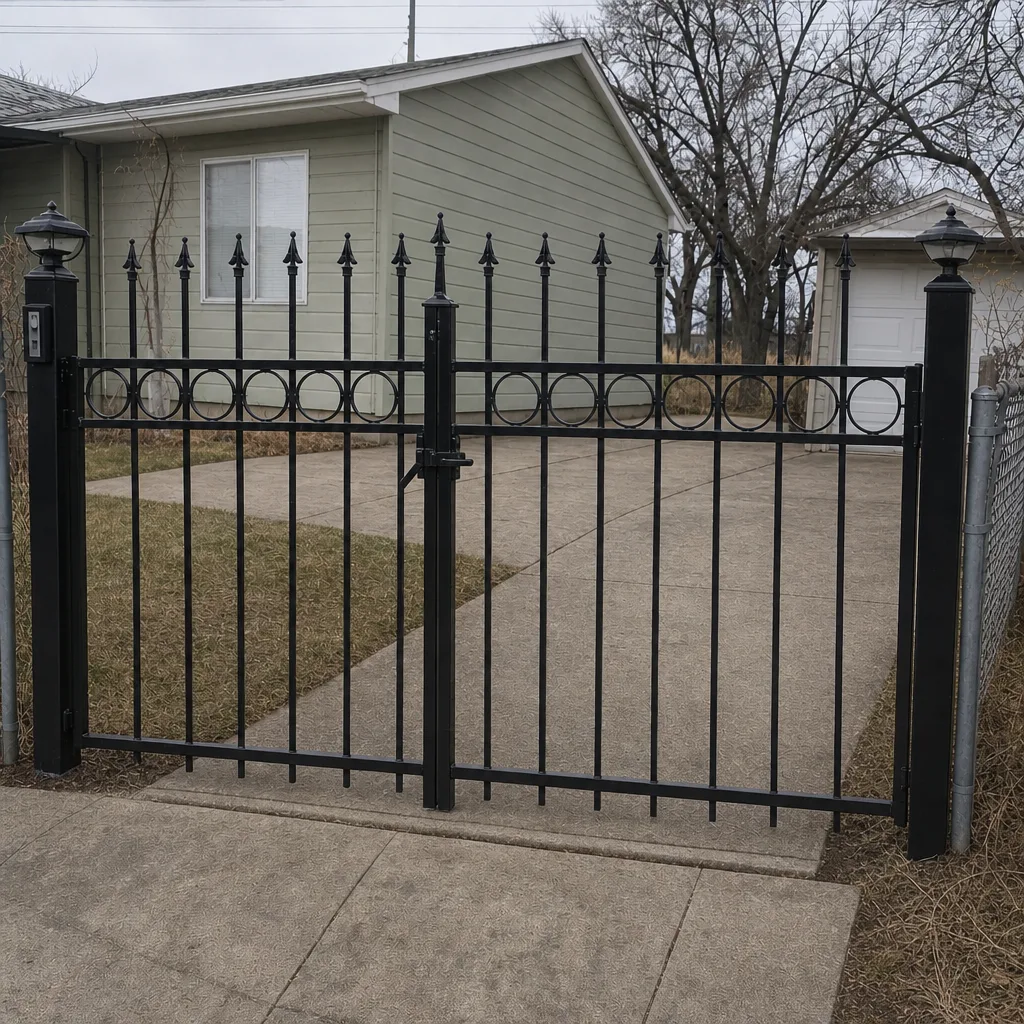 After
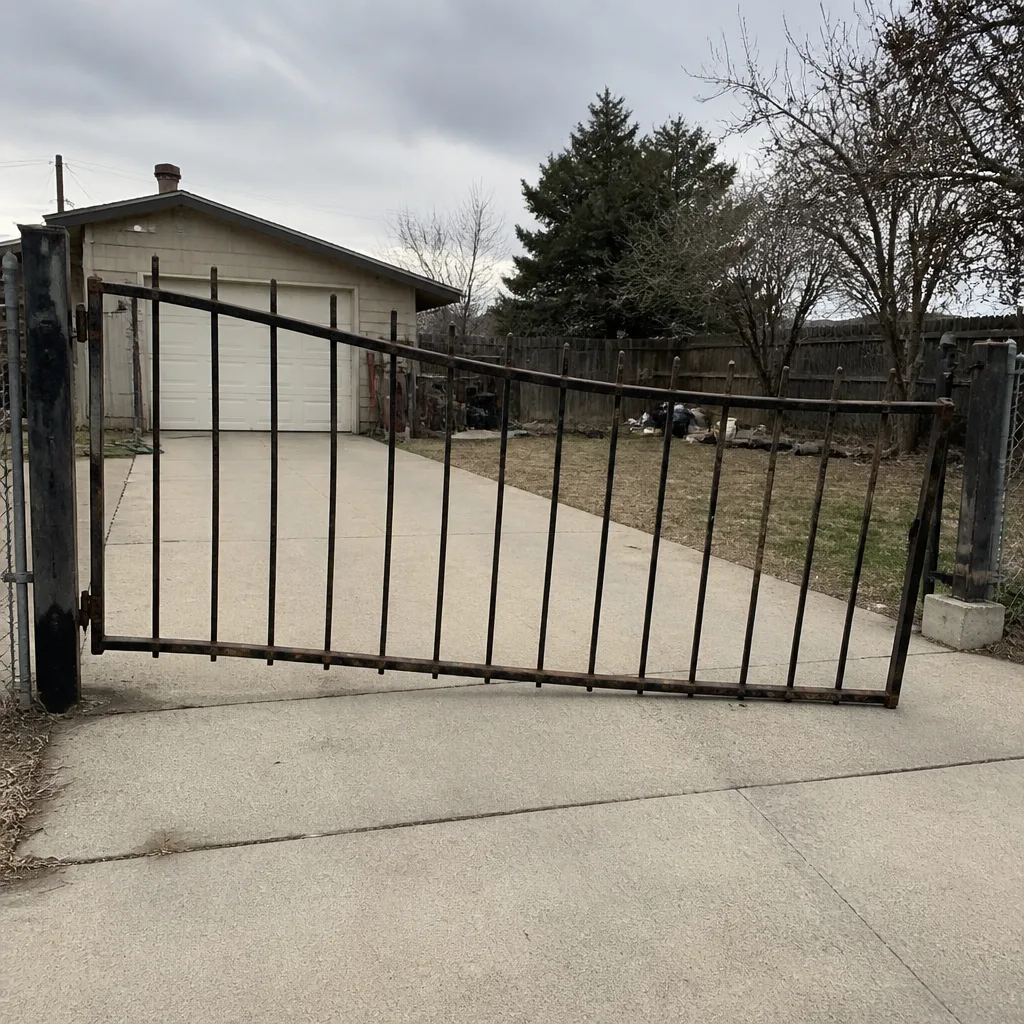 Before
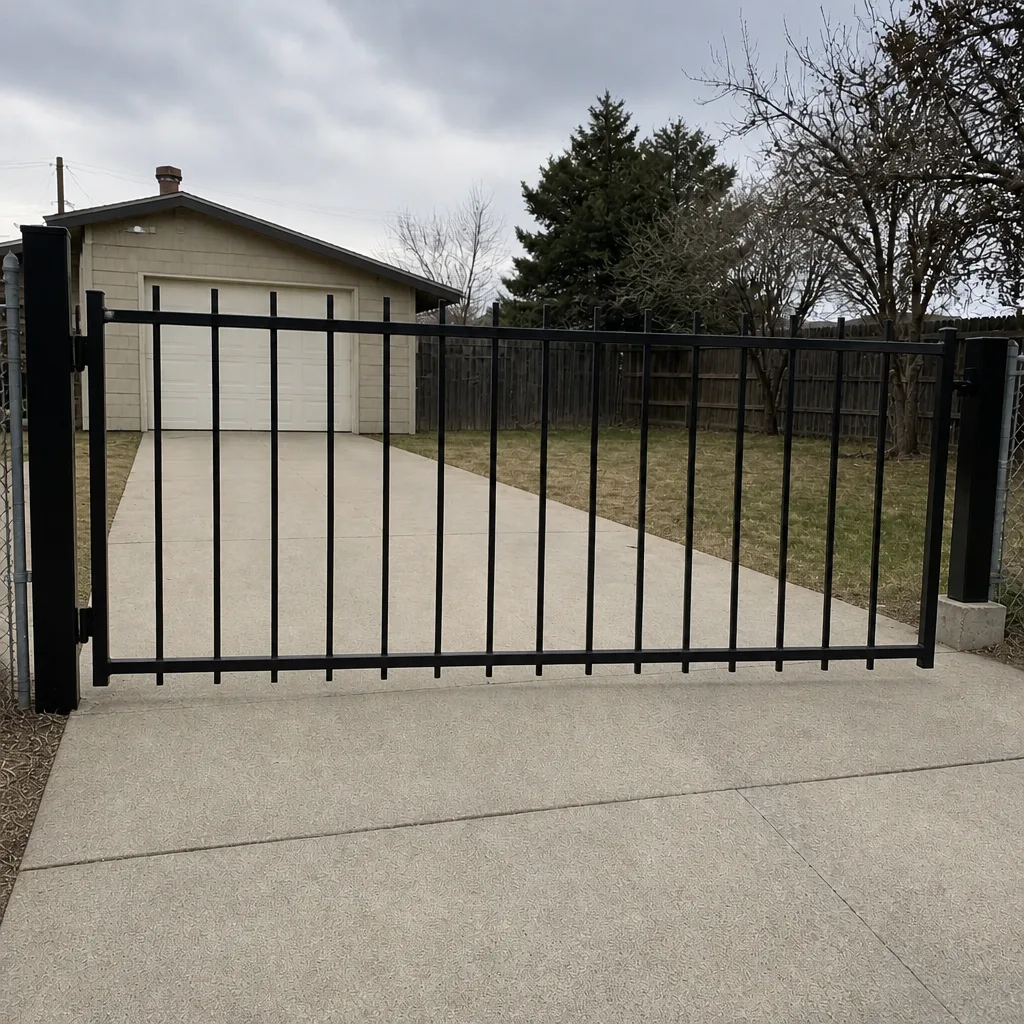 After
Frequently Asked Questions
You can safely handle manual gate repairs like hinge tightening, latch alignment, and light-gate sag adjustment. You should not attempt automated gate work – operator, control board, sensors, or wiring – because that work falls under UL 325 safety requirements and calls for a qualified technician. The dividing line is the system type, not your skill level.
The operator and motor, the control board, the entrapment protection sensors, the safety edge and reversing logic, and all power wiring should never be DIY. These components govern whether the gate stops or reverses when it meets an obstacle, and a mistake there is a crushing hazard. Diagnosis and repair of electric gate faults in Thornton belongs with a specialist.
Homeowner work on the operator, control board, or safety sensors can void the operator’s warranty, because those components must be installed and adjusted to the manufacturer’s specification. That’s true across brands – Ghost Controls, Mighty Mule, DoorKing, and the rest. A qualified technician preserves the warranty on automated work.
If the gate reverses before it fully closes, stops mid-travel, or ignores the remote, the cause could be a sensor, a force setting, the control board, or a mechanical bind – and the symptoms don’t tell you which. That’s exactly the ambiguity that makes DIY parts-guessing expensive. A specialist diagnoses the actual fault, and in our experience, a free estimate costs less than the parts you’d buy guessing.
The HOA or its property manager is responsible for a shared entrance gate, and repairs should be authorized by the association. Homeowners shouldn’t adjust or rewire a shared gate. These systems often run higher-cycle commercial operators, so the work belongs with a specialist who understands both residential and commercial gate systems.
We work on both – manual gate repair, electric gate repair, and new gate installation. That includes residential operators and commercial-grade systems, across brands like LiftMaster, FAAC, BFT, Linear, Viking, Ghost Controls, DoorKing, Elite, and Mighty Mule. A gate is our single trade, so the diagnosis is focused. For a free estimate in Thornton, call (866) 389-4610.
The Bottom Line
The DIY vs professional decision for gate repair in Thornton comes down to system type, not confidence. Manual gate mechanical repairs – hinge tightening, latch alignment, light-gate sag adjustment, and hardware swaps – are genuine weekend projects for a mechanically competent homeowner. Automated gate work is a different category: the operator, control board, sensors, safety edge, and wiring fall under UL 325, and DIY there is a liability and a safety risk, not a technical challenge. Don’t disable a sensor to make a gate close. Don’t guess at parts. Diagnose first. And when the job touches the automated side, or a post is loose in the ground, or you manage a shared HOA gate, call a specialist.
Get a Free Estimate in Thornton
If your gate needs a repair that’s beyond the safe DIY list – an automated system that won’t open, a sensor that’s misbehaving, a motor or control board fault, a post that’s shifted, or a full installation – call us. We answer 24/7. Fast dispatch from 7am to 7pm, Sunday through Friday. Call (866) 389-4610 for a free estimate; the price is set per job by written estimate before any work starts. We work on your brand, and every job is a gate job.
Written by the team at Gate Repair Thornton.